
Amy Bell
British stockbroker
About Amy Bell
Lived 1859 – 1920 (aged 61). Amy Bell was a business broker.
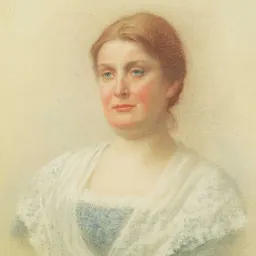
Amy Elisabeth Bell (13 February 1859 – 11 March 1920 ) was a British stockbroker. She may have been the first woman stockbroker in the United Kingdom, founding her own brokerage firm in London in 1886.
Early life Bell was born in Bangkok, Siam (now Thailand) in February 1859, to Charlotte (née Goodeve) and Charles Bell. Charles Bell had been vice consul of the British trade mission in Siam since 1857, arriving with Charlotte in Bangkok two years after the British pressured the King of Siam to sign the Bowring Treaty, opening the country to foreign trade. Bell was orphaned when she was only six months old, with both Charles and Charlotte dying within a week of each other in September 1859 from unknown causes. Bell was left in the care of Charlotte's brother John Goodeve in England, a medical student at Queens' College, Cambridge. He in turn placed Bell in the care of his childless uncle, Henry Goodeve, and his wife Isabel (née Barlow). Goodeve had turned to philanthropy after retiring as a military doctor, and among his many roles in Bristol civil society he was president of the board of a home for orphaned children. While Bell is recorded as the Goodeve's "daughter" in the 1861 census, whether this reflected a formal adoption is unclear – Bell was listed instead as a "great-niece" in the 1871 census, and the census records also show that the Goodeves took in several other children from both the Barlow and Goodeve sides of the family.
She lived a comfortable childhood on their large, prestigious estate, Cook's Folly, overlooking Avon Gorge, near Bristol, which Dr Goodeve had designed himself. Her adoptive parents encouraged her intellectual development, including hiring a Swiss governess as a languages tutor.
When Bristol University admitted its first female students in 1876, Bell, at 17, was one of the first three women (alongside Marian Pease and Emily Pakeman) to earn a scholarship. She later won a Goldsmiths scholarship to study at Newnham College, Cambridge. However, due to recurring bouts of poor health (which would persist throughout her life, until her death), she was unable to complete her full studies at either Bristol or Newnham. The 1881 census records her as living back at home at Cook's Folly, aged 22, unmarried and unemployed.
Career When Henry Goodeve died in 1884, Bell was an executor of his estate. She used her inheritance as capital to establish her own stockbroking business in Bristol, but by 1886 had moved to London. That year's edition of The Englishwoman's Review noted that Bell, "whom we mentioned on a former occasion as intending to settle in London in the hitherto untried profession for a woman of stock and share broker, has an office at 1, Russell Chambers, Bury Street, Bloomsbury."
At the time, brokers in the UK were required to join their local stock exchanges as members—in London, this meant the London Stock Exchange (LSE). However, joining any stock exchange at the time required a majority vote of existing members – and, as their existing members were all men, those women who did attempt to make a profession out of stockbroking were routinely blocked from attaining the legitimacy of accreditation; many men thought of stock exchanges as a form of gentleman's club. Even as late at 1936, when the Board of Trade convened the Bodkin Inquiry to determine whether stockbroking required a new regulatory framework, only one woman stockbroker was called to give evidence—Gordon Holmes—and she had to argue against the sector's institutional sexism being formalised as part of the new regulations. The LSE would later admit its first women in 1973, while the first woman to successfully join a regional exchange (Exeter) was Doris Mortimer in 1923.
As she was working in an era without any realistic chance of obtaining membership of an exchange, Bell instead became what was known as an "outside broker". She established working relationships with male members of the LSE who could perform trades on her behalf, or dealt in commodities which were traded outside of the exchanges (like government bonds). By 1899 she was still working, with chambers at 5 Gray's Inn Square. However, her recurring poor health forced her into early retirement sometime around 1910, when she handed her firm over to another woman, G. I. Brooke. Brooke's husband was severely injured in the Battle of Colenso during the Boer War, leaving him housebound and dependent on his wife's income. Brooke was herself mistakenly reported to be the "only" woman stockbroker in the UK in 1912 by The Sketch (a claim which was corrected in a later edition).
Personal life & legacy Bell never married, nor had children. After her retirement she became part of London's women's suffrage social scene, and would often stay in the homes of activist friends in between periods of travel. Gordon Holmes – who was also described as the "first" or "only" woman stockbroker in the UK during her lifetime by both peers and the media – began her career in London around the same time that Bell retired, and both women were supporters of women's suffrage, with social circles that likely overlapped. However, Holmes makes no mention of Bell in her autobiography, professionally or politically, and it is unknown whether they ever met, or were even aware of each other's existence.
On the night of the 1911 census Bell was recorded as staying at the Ivanhoe Hotel in Bloomsbury with her "lady's companion", Emily Whitford, and with her occupation listed as "private means", indicating that she was likely financially comfortable in her retirement. When Bell died in March 1920 from heart failure, caused by influenza, she was staying at 3 Alexandra Road, Hampstead – the home of Elizabeth Ashurt Biggs' sister, Maude. Bell received a glowing obituary in the feminist newspaper The Woman's Leader:"In her, workers for the women's cause have lost one of their pioneers. Her position was for many years unique, inasmuch as she was the first woman stockbroker, though, of course, as a penalty for her sex, the Stock Exchange excluded her from its membership. ... She opened an office on her own account in the city where, by her perfect straightforwardness, her genuine interest in the world's affairs, and her attractive personality, she won the sympathy of men of her own class and standing. ... She was also a woman of considerable literary taste, a great reader of poetry, and exceedingly fond of travel. Her mind, in short, was intensely alive."
Don’t just read it —
keep it.
Full-length biographies made to live with: read them, listen on the way to work, watch them tonight.
- E-book
- Audio
- Video
Instant download · yours to keep · every purchase keeps this site free
Important facts
People in Amy Bell's life
Named in this biography and alive at the same time





Related people
Same field, nearest in time




Contemporaries
People whose lives overlapped Amy Bell's


Frequently asked questions
Who was Amy Bell?
British stockbroker
When was Amy Bell born?
Amy Bell was born on 13 February 1859.
When did Amy Bell die?
Amy Bell died on 11 March 1920.
What was Amy Bell's occupation?
Amy Bell was a business broker.
Sources & further reading
Cite this page
APA: Biography.guide. (2026). Amy Bell. https://biography.guide/amy-bell/
MLA: "Amy Bell." Biography.guide, https://biography.guide/amy-bell/.
Chicago: "Amy Bell." Biography.guide. https://biography.guide/amy-bell/.
Data last updated: 2026-09-26 · Spot an error? Report a correction.
Page generated 2026-09-27 05:14 UTC