
About Ammonius Saccas
Lived 175 – 242 (aged 66–67). Ammonius Saccas was a Roman philosopher.
Ammonius Saccas (; ; 175–243 AD) was a Hellenistic Neoplatonic self-taught philosopher from Alexandria, Roman Egypt, generally regarded as the precursor of Neoplatonism or one of its founders. He is mainly known as the teacher of Plotinus, whom he taught from 232 to 243. Others have asserted that this is a misreading of "Sakkas" for "sakkophoros" (porter). Some others have connected the cognomen with the "Śākyas", an ancient ruling clan of India, claiming that Ammonius Saccas was of Indian origin. This view has both been subsequently contested and supported by more recent scholarship. Some scholars supporting Ammonius' Indian origin have also contended that this ancestry is consistent with the passion of his foremost student Plotinus for India, and helps to explain the philosophical similarities between Vedanta and Neoplatonism, which many scholars attribute to Indian influence. On the other hand, scholars contesting his Indian origins point out that Ammonius was from the Brucheion quarter of Alexandria, which was the royal quarter of the city inhabited mostly by Greeks, and that the name "Ammonius" was common to many Greeks, with a number of scholars and historians supporting a Greek origin for Ammonius. However, his name is theophoric to the deity Amun, indicating possible Egyptian origin.
Most details of Ammonius' life come from the fragments left from Porphyry's writings. The most famous pupil of Ammonius Saccas was Plotinus, who studied under Ammonius for eleven years. According to Porphyry, in 232, at the age of 28, Plotinus went to Alexandria to study philosophy: In his twenty-eighth year he [Plotinus] felt the impulse to study philosophy and was recommended to the teachers in Alexandria who then had the highest reputation; but he came away from their lectures so depressed and full of sadness that he told his trouble to one of his friends. The friend, understanding the desire of his heart, sent him to Ammonius, whom he had not so far tried. He went and heard him, and said to his friend, "This is the man I was looking for." From that day he stayed continually with Ammonius and acquired so complete a training in philosophy that he became eager to make acquaintance with the Persian philosophical discipline and that prevailing among the Indians.
According to Porphyry, the parents of Ammonius were Christians, but upon learning Greek philosophy, Ammonius rejected his parents' religion for paganism. This conversion is contested by the Christian writers Jerome and Eusebius, who state that Ammonius remained a Christian throughout his lifetime:
[Porphyry] plainly utters a falsehood (for what will not an opposer of Christians do?) when he says that ... Ammonius fell from a life of piety into heathen customs. ... Ammonius held the divine philosophy unshaken and unadulterated to the end of his life. His works yet extant show this, as he is celebrated among many for the writings which he has left.
However, we are told by Longinus that Ammonius wrote nothing, and if Ammonius was the principal influence on Plotinus, then it is unlikely that Ammonius would have been a Christian. One way to explain much of the confusion concerning Ammonius is to assume that there were two people called Ammonius: Ammonius Saccas who taught Plotinus, and an Ammonius the Christian who wrote biblical texts. Another explanation might be that there was only one Ammonius but that Origen, who found the Neoplatonic views of his teacher essential to his own beliefs about the essential nature of Christianity, chose to suppress Ammonius' choice of Paganism over Christianity. The insistence of Eusebius, Origen's pupil, and Jerome, all of whom were recognized Fathers of the Christian Church, that Ammonius Saccas had not rejected his Christian roots would be easier for Christians to accept than the assertion of Porphyry, who was a Pagan, that Ammonius had chosen Paganism over Christianity.
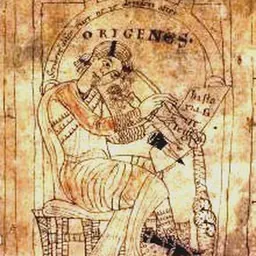
To add to the confusion, it seems that Ammonius had two pupils called Origen: Origen the Christian, and Origen the Pagan. He was the first who had a godly zeal for the truth in philosophy and despised the views of the majority, which were a disgrace to philosophy. He apprehended well the views of each of the two philosophers [Plato and Aristotle] and brought them under one and the same nous and transmitted philosophy without conflicts to all of his disciples, and especially to the best of those acquainted with him, Plotinus, Origen, and their successors.
According to Nemesius, a bishop and Neoplatonist c. 400, Ammonius held that the soul was immaterial.
Little is known about Ammonius's role in the development of Neoplatonism. Porphyry seems to suggest that Ammonius was instrumental in helping Plotinus think about philosophy in new ways: But he [Plotinus] did not just speak straight out of these books but took a distinctive personal line in his consideration, and brought the mind of Ammonius' to bear on the investigation in hand. Nemesius also refers to Ammonius Saccas as the teacher or the master of Plotinus (Nemesius, Nature of Man, 2.103).
Don’t just read it —
keep it.
Full-length biographies made to live with: read them, listen on the way to work, watch them tonight.
- E-book
- Audio
- Video
Instant download · yours to keep · every purchase keeps this site free
Important facts
People in Ammonius Saccas's life
Named in this biography and alive at the same time
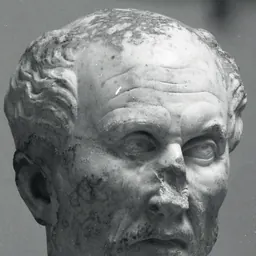
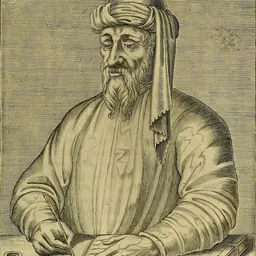

Related people
Same field, nearest in time

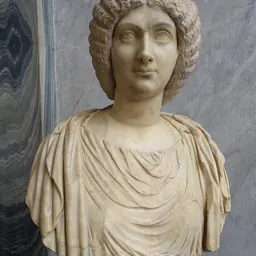



Contemporaries
People whose lives overlapped Ammonius Saccas's



Frequently asked questions
Who was Ammonius Saccas?
Hellenistic Platonist philosopher (175-242)
When was Ammonius Saccas born?
Ammonius Saccas was born in 175 in Alexandria.
When did Ammonius Saccas die?
Ammonius Saccas died in 242 in Alexandria.
What was Ammonius Saccas's occupation?
Ammonius Saccas was a philosopher.
What nationality was Ammonius Saccas?
Ammonius Saccas was Roman.
Sources & further reading
Cite this page
APA: Biography.guide. (2026). Ammonius Saccas. https://biography.guide/ammonius-saccas/
MLA: "Ammonius Saccas." Biography.guide, https://biography.guide/ammonius-saccas/.
Chicago: "Ammonius Saccas." Biography.guide. https://biography.guide/ammonius-saccas/.
Data last updated: 2026-09-20 · Spot an error? Report a correction.
Page generated 2026-09-27 05:14 UTC