
About Amir Zaki
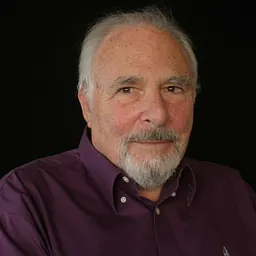
Born 1974. Amir Zaki is an American photographer.
Amir Zaki (born 1974, Beaumont, California) is an American artist based in Southern California. He is best known for "hybridized" photographs using digital and analog technologies that explore the rhetoric of authenticity, vocabulary of documentary, and acts of looking and constructing images. His work often focuses on the iconography and landscape of Southern California, simultaneously celebrating the banal and vernacular and subverting its related mythology. Zaki has exhibited nationally and internationally, and been featured in shows at the Whitney Museum of American Art, Orange County Museum of Art (California Biennial, 2006), His work is held in the public collections of the Los Angeles County Museum of Art, Hammer Museum, New Museum, and Whitney Museum, among many, and appears in the anthologies Vitamin Ph, and Both Sides of Sunset: Photographing Los Angeles (2015). Amir Zaki, Untitled (OH_04X), Ultrachrome archival photograph, 70” x 89”, 2004. Whitney Museum of American Art collection.
Zaki's art has been featured in Artforum, Flash Art, Art in America, ARTnews, the Los Angeles Times, The New York Times, and The Seattle Times, among many publications. New York Times critic Martha Schwendener described his early images of domestic architecture as "graphic and abstract, with meaning hovering at the edge of the frame, they read like metonyms for Los Angeles itself." Zaki's monographs include: Building + Becoming (2022), California Concrete: A Landscape of Skateparks, with essays by Tony Hawk and Peter Zellner (2019), Eleven Minus One (2010), and VLHV (2003). He is Professor of Photography and Digital Technology in the Art Department at University of California, Riverside. He did graduate work with James Welling at the University of California, Los Angeles (UCLA), earning an MFA in 1999. Upon graduating, he actively exhibited locally (Los Angeles Municipal Art Gallery, Santa Barbara Museum of Art and Los Angeles Contemporary Exhibitions) and nationally (New Museum and Whitney Museum). In 2018, Zaki was one of ten international photographers invited by the Dalian Modern Museum in China to create work for the exhibit, "Eye of the World: Shots of Dalian," and was also featured in a survey exhibition there. Zaki captures ubiquitous, eclectic Southern California iconography, often in a flat, documentary style that maintains an initial sense of veracity, which he disrupts by limiting references of scale, perspective, spatial logic and context or making digital alterations. He works in two primary veins: built landscape series and "natural" landscape series.
Built landscape series Amir Zaki, Concrete Vessel 55, photograph, 60" x 75", 2019. "Empty Vessel" series. Zaki's early "Photographs From" (1999) and "Various Recordings" (2001) series feature long-exposure images of depopulated Los Angeles night scenes whose rooftop vantage points call attention to the act of looking and suggest portent. Presented in tight, unconventional vertical formats that flatten and abstract the space, the images contain small, intensified bursts of color highlighting spare signs of life and mysterious, digitally excised absences. anticipatory moments "like held breaths" that conjured Edward Hopper and science fiction noir. The later "A Question Marks the Spot" series (2007), engages semiology, with straight-on images of post-war strip mall architecture in which Zaki replaced identifying signage with a cryptic, invented iconography of symbols, squiggles, and emblems. Focused on vernacular domestic architecture, the series both amplified and undermined its associations with solidity, rootedness and Southern California affluence through disorienting angles and perspectives, claustrophobic compositions and selective subtractions and additions. Critic Peter Frank described them as "absurd, but thrilling and menacing"; others identified them as "heady, unsettling image of impending doom" that played on Southern California's unstable landscape and mythology of living on the edge.
Zaki's move to the Orange County beachside turned his attention to lifeguard huts in the "Relics" series (2010). Here, he also shot from below, eliminating contextualizing clues (sand, water) to starkly isolate the towers against the sky, then digitally stripped away functional elements (ladders and ramps) before re-pairing the towers with different skies to create off-key color and lighting effects. and uncanny portraits of alien sculptures suspended mid-air. He produced the skatepark images using a hyper-detailed, multi-image, compositing technical process that exaggerates spatial depth and temporality, rendering the already-otherworldly sites more contradictory and alien; reviewers compared their worn, sculptural monumentality to landscape sites such as Yosemite's Half Dome, and suggested that the juxtaposition alongside the broken ceramics transformed both image sets into spaces of contemplation and potentiality. Theatrically lit, and digitally altered, the constructed images beckon to California modernists Wynn Bullock and Edward Weston, yet render the familiar alien, leading reviewers to regard Zaki's formalism as commentary pointing beyond the photographic to "a deeper form of truth in artifice."
Amir Zaki, Rock #29, Ultrachrome archival photograph. 65" x 60", 2016. "Formal Matter" series. The "Time Moves Still" works (2011–3) explore instability, pliability and resistance, pairing images of "discordant amalgamations of geology, civil engineering, and residential construction" lining cliffsides with studies of "hobbled though strangely beguiling urban trees." The cliff series (e.g., Coastline Cliffside_08, 2012) uses long exposures that harken to early photography, compositing dozens of sequenced image-captures into seemingly instantaneous photographs that nonetheless yield clues to their extended temporality. and "Formal Matter" (2017) series pair works that take dichotomous analog or digital paths to abstraction, the blurring of perception, or "truth." In the ocean images, Zaki seamlessly merged photographs to create disorienting, horizon-line-free images of blue, green and foaming white waves crisscrossing and exploding at impossible, gravity-defying angles; in their abstraction, they evoke forms ranging from the microscopic to rock, obsidian, or fur.
Collections and recognition Zaki's work belongs to public and private collections across the country including those of the J. Paul Getty Museum, Whitney Museum, and Nevada Museum of Art. He has also been recognized with a Foundation for Contemporary Arts grant (2010) and a James D. Phelan Art Award in Photography (2005).
Don’t just read it —
keep it.
Full-length biographies made to live with: read them, listen on the way to work, watch them tonight.
- E-book
- Audio
- Video
Instant download · yours to keep · every purchase keeps this site free
Important facts
People in Amir Zaki's life
Named in this biography and alive at the same time






Related people
Same field, nearest in time

Contemporaries
People whose lives overlapped Amir Zaki's




Frequently asked questions
Who is Amir Zaki?
American artist (born 1974)
When was Amir Zaki born?
Amir Zaki was born on 27 August 1974 in Beaumont.
What is Amir Zaki's occupation?
Amir Zaki is a photographer.
What nationality is Amir Zaki?
Amir Zaki is American.
Sources & further reading
Cite this page
APA: Biography.guide. (2026). Amir Zaki. https://biography.guide/amir-zaki/
MLA: "Amir Zaki." Biography.guide, https://biography.guide/amir-zaki/.
Chicago: "Amir Zaki." Biography.guide. https://biography.guide/amir-zaki/.
Data last updated: 2026-09-20 · Spot an error? Report a correction.
Page generated 2026-09-27 05:34 UTC