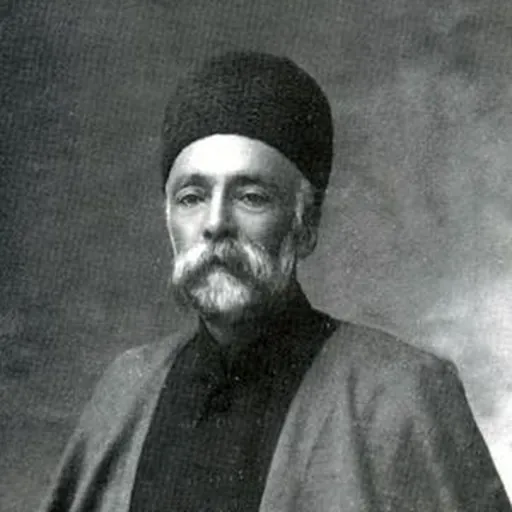
About Amir Bahador-Jang
Lived 1855 – 1917 (aged 61–62). Amir Bahador-Jang was an Iranian politician.
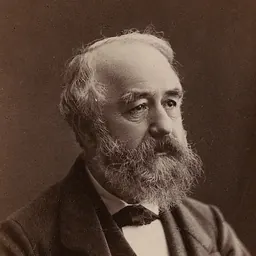
Hoseyn Pasha Khan (; ca. 1855 – 1918) mainly known by his title Amir Bahador Jang was an high-ranking statesmen during Qajar era who served as Chief of Royal Guard, Minister of Court, and Minister of War under Mozaffar ad-Din Shah Qajar and Mohammad Ali Shah Qajar.
Life Hoseyn Pasha was born on into an military family in Azarbaijan, he was the son of Mohammad-Sadeq Khan Qarabaghi Ajudanbashi he was descendant of Haj Kazem Khan Tofangdar.
Military Service In 1885 Hoseyn Pasha was entered the service to Crown prince Mozaffar ad-Din Mirza in Tabriz, In same year he became Yuzbashi (captain). In 1886 he was promoted to rank of Qollar-Aghasibashi (Lord of Slaves); retaining the latter title, in 1309/1891-92 he also became Chief Adjutant (Ajudanbashi) to the crown prince in his capacity as Brigadier general and was called Ajudanbashi-e Azerbaijan. In 1892 or 1893 he received title Amir Bahador Jang.
Reign of Mozaffar ad-Din Shah During Mozaffar al-Din Shah’s reign, in 1896 or 1897 he first replaced as Chief of Royal Bodyguard (Keshikchibashi). In 1903 he was promoted to the rank of Sardar and later replaced Mirza Mahmud Khan Hakim ol-Molk as the Minister of Court. Under the army reorganization plan in early 1905 he was given to command of about 9,000 men stationed chiefly in Kerman, Isfahan, and Fars. Shah Abdol-Azim bast On December 1909 protests began in Shah Abdol-Azim Shrine, which included clergy and merchants who demanded dismissal of Prime Minister Soltan Abdol Majid Mirza Eyn od-Dowleh, Amir Bahador was sent with a large cavalry in an unsuccessful mission to appease the protestors. Protests resulted in further consolidation of opposing party, protestors alo demands to removal of Belgian citizen M. Naus from the control of Persian customs and establishment more importantly House of justice, this bast was also prelude of Constitutional movement.
Mozaffar al-Din Shah had immense confidence in Amir Bahador in result he became very influential figure at court, and amassed a great fortune; he also accompanied the shah on his three visits to Europe in 1900, 1902 and 1905.
Reign of Mohammad Ali Shah After Mohammad Ali Shah's accession, Amir Bahador was first ignored by shah, but Anti-Constitutionalist zeal soon drew them together and he was reappointed to Command the royal bodyguard. His oath of allegiance to First Majles in 1 October 1907 did not alter his highly unpopular image with the Constitutionalists who later attributed the shah's abortive coup d'état of December 1907, to his influence. By early 1908 Amir Bahādor gained full control over Silakor regiment, stationed in and around the palace. Persian Constitutional Revolution
Following constitutionalist demonstrations on late May 1908, he was temporarily removed from office but continued cooperating with the shah against the Constitutionalists. He later took control of the royal artillery and helped strengthen the forces based at Bagh-e Shah, the headquarters of the anti-Constitutionalist faction. After the Bombardment of the Majlis, Amir Bahador was appointed Commander-in-chief (Sepahsalar-e Azam) and became Minister of War for second time. During the counterrevolutionary period, he became one of the most influential figures at court and was described by British officials as one of most powerful men in Persia. Under pressure from Britain and Russia, later he was removed from office but remained close to the shah.
Aftermath and Death After Triumph of Tehran in 13 July 1909, Amir Bahador followed Mohammad Ali Shah into exile. Due to his opposition to Constitutional movement, he was excluded from the general amnesty and accompanied the former shah in attempts to regain power. He participated in Mohammad Ali Shah's failed revolt attempt in 1911, later settled in Vienna and eventually returned to Tehran, where he died in 1918.
Don’t just read it —
keep it.
Full-length biographies made to live with: read them, listen on the way to work, watch them tonight.
- E-book
- Audio
- Video
Instant download · yours to keep · every purchase keeps this site free
Important facts
People in Amir Bahador-Jang's life
Named in this biography and alive at the same time
Related people
Same field, nearest in time





Contemporaries
People whose lives overlapped Amir Bahador-Jang's





Frequently asked questions
Who was Amir Bahador-Jang?
Iranian politician
When was Amir Bahador-Jang born?
Amir Bahador-Jang was born in 1855 in Tabriz.
When did Amir Bahador-Jang die?
Amir Bahador-Jang died in 1917 in Tehran.
What was Amir Bahador-Jang's occupation?
Amir Bahador-Jang was a politician.
What nationality was Amir Bahador-Jang?
Amir Bahador-Jang was Iranian.
Sources & further reading
· Wikipedia: Amir Bahador-Jang
Cite this page
APA: Biography.guide. (2026). Amir Bahador-Jang. https://biography.guide/amir-bahador-jang/
MLA: "Amir Bahador-Jang." Biography.guide, https://biography.guide/amir-bahador-jang/.
Chicago: "Amir Bahador-Jang." Biography.guide. https://biography.guide/amir-bahador-jang/.
Data last updated: 2026-09-22 · Spot an error? Report a correction.
Portrait: Wikimedia Commons · author & licence
Page generated 2026-09-27 05:02 UTC