
About Amina Memon
Amina Memon was a psychologist.
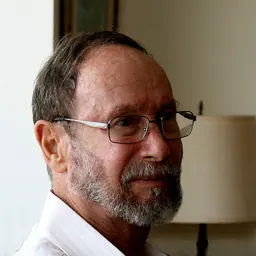
Amina Memon (born 1961) is a social and cognitive psychologist, academic, and author. She is a professor of psychology at Royal Holloway, University of London. Her work focuses on understanding the impact of cognition, emotion and social contexts on memory and decision making in legal and forensic settings to help ensure that vulnerable eyewitnesses, including children, young adults, seniors, and people with autism spectrum disorder, are able to recall reliable information and receive appropriate treatment in court. She is credited for the development of Scottish Executive 2003 guidance on interviewing child witnesses and the 2005 code of practice for supporting child witnesses in court. Her parents had emigrated to London, United Kingdom in the 1950s, and she grew up in East End of London watching them struggle to make a living. She developed an interest in understanding the psychological explanations for human behaviour while studying advanced psychology in school; her teacher, Richard Gross, provided her with individual tutoring on the science behind psychology. She wasn't "allowed to leave home" and as a "last-minute" decision to avoid an arranged marriage, she enrolled in University of East London (formerly known as North East London Polytechnic) in 1979 to study psychology. Her tutors at the psychology department realized that Memon "came from a vulnerable background," and ensured that she didn't drop out to be "married off." Her personal tutor, Ernie Govier, instilled in her the importance of establishing a "good grounding in all areas of psychology." Her lecturers Ray Bull and Brian Clifford inspired her to focus on cognitive and social psychology, in particular the topic of personal identification where "one has to understand the social context in which behaviour occurs." For example, the ability of an eyewitness to effectively recognize a face is influenced by numerous factors, including but not limited to conditions at the time of encoding, witness demographics, events preceding and succeeding the witnessing experience, whether the decision is made in the presence of others, and whether the witness is being threatened or intimidated. In 1982, after Memon joined the University of Nottingham to pursue a PhD in psychology, she worked with Vicki Bruce to "isolate the individual components used in questioning witnesses" in an attempt to "understand which several techniques elicited the most detailed information from eyewitnesses." From 1999 to 2010, she was a professor at University of Aberdeen, Scotland, tasked with teaching, research, and administrative responsibilities in the areas of psychology, law, and eyewitness memory. She ran The Eyewitness Laboratory equipped with relevant literature, test materials for experimental manipulations including a collection of video simulations of criminal events and mugshot photos, software for constructing E-FITs and morphing, and a diverse participant pool with access to non-student samples.
Since 2009, she has been a professor at Royal Holloway, University of London, where she also chairs the department of psychology, directs the interdisciplinary Research Centre for the Study of Emotion and Law, and is a member of the Social and Affective Processes (SAP) research group that employs a variety of behavioural, developmental, and neuroscientific techniques to study typical and atypical populations.
In 2012, Memon received an LLM degree in human rights from Birkbeck, University of London with her dissertation focusing on restorative justice. She is a fellow of the British Psychological Society, Association for Psychological Science and Royal Society of Arts.
Research Memon was one of the first researchers in the UK to study the psychological aspects of the cognitive interview techniques for witnesses based on theoretical memory retrieval principles. Her work has had “important implications” for the ways in which children, young adults, people with autism, and seniors are supported during witness interviews, and how police officers, judges and other judiciary personnel undertake and process these interviews.
Through several instances of trial and error during her earliest doctoral work, Memon learned that separating the effects of individual cognitive interview components and the corresponding techniques that work was a challenging process. She conducted multiple studies and detailed analyses of the interviewers and the interviewees to establish the importance of interview skill and structure while communicating with witnesses. She is also responsible for the development of 2005 code of practice for supporting child witnesses in court. Between 2003 and 2007, she trained Scotland family court judges on effectively interviewing child witnesses.
In 2020, Memon collaborated with researchers from the University of Münster and Mainz, Germany to study the prevailing conspiracy theories related Corona virus pandemic in post-Brexit Britain. With a sample size of 498 UK citizens, the team examined the "associations between traits and conspiracy beliefs and prejudice against social groups perceived as powerful (e.g. Jews, Chinese people)." Preliminary findings from testing the pre-registered hypotheses revealed that "people on political extremes showed higher conspiracy theory agreement than [those] in the middle."
Memon has published over 150 peer-reviewed articles. As a member of the project advisory board for Asylum Aid, Memon aims to address concerns related to the perceived credibility of information gathered during interviews with asylum seekers. She believes that Home Office personnel can benefit from training in this area.
Personal life Memon was married to Frank Barker, an oil-industry geologist who died in 2011. To honour the memory of her late husband, she set up the Frank Barker Prizes, awarded annually to first, second, and third year Royal Holloway students who have demonstrated the biggest improvement from their previous year of study. In addition, MPX, a Guildford, Surrey-based oil company where Barker worked, set up the Frank Barker Award that annually recognizes the best third year student continuing on the Master of Science programme.
Selected publications
Books
Memon, Amina; Vrij, Aldert; Bull, Ray (2003). Psychology & law: truthfulness, accuracy and credibility. Chichester: Wiley. . Memon, Amina; Bull, Ray, eds. (1999). Handbook of the psychology of interviewing. Chichester Weinheim: Wiley. .
Book chapters
Memon, Amina; Gawrylowicz, Julie (2018-07-16), Hargie, Owen (ed.), "The Cognitive Interview", The Handbook of Communication Skills (4 ed.), Routledge, pp. 511–530, , , retrieved 2025-09-22 Memon, Amina; Henderson, Sarah E. (2002-03-14), "Chapter 11. What Can Psychologists Contribute to the Examination of Memory and Past Mental States?", Retrospective Assessment of Mental States in Litigation, Library, American Psychiatric Association Publishing, pp. 307–333, , , retrieved 2025-09-22 Bartlett, James C.; Memon, Amina (2014-05-12), "Eyewitness Memory in Young and Older Adults", Handbook Of Eyewitness Psychology 2 Volume Set (1 ed.), New York: Routledge, pp. 309–338, , , retrieved 2025-09-22
Journal articles
Memon, Amina; Given-Wilson, Zoe; Ozkul, Derya; Richmond, Karen McGregor; Muraszkiewicz, Julia; Weldon, Ella; Katona, Cornelius (2024–04). "Artificial Intelligence (AI) in the asylum system". Medicine, Science and the Law. 64 (2): 87–90. . . Morrison, Louisa; Given‐Wilson, Zoe; Memon, Amina (2024–03). "The impact of emotionally evocative information on interpreting accuracy in a mock asylum interview". Applied Cognitive Psychology. 38 (2). . . Vredeveldt, Annelies; Given-Wilson, Zoe; Memon, Amina (2023-05-09). "Culture, trauma, and memory in investigative interviews". Psychology, Crime & Law: 1–21. . . Ko, Hayley; Memon, Amina (2023-04-21). "Secondary traumatization in criminal justice professions: a literature review". Psychology, Crime & Law. 29 (4): 361–385. . .
Don’t just read it —
keep it.
Full-length biographies made to live with: read them, listen on the way to work, watch them tonight.
- E-book
- Audio
- Video
Instant download · yours to keep · every purchase keeps this site free
Important facts
Related people
Same field, nearest in time




Frequently asked questions
Who was Amina Memon?
Professor of Psychology, Royal Holloway, University of London
What was Amina Memon's occupation?
Amina Memon was a psychologist.
Sources & further reading
Cite this page
APA: Biography.guide. (2026). Amina Memon. https://biography.guide/amina-memon/
MLA: "Amina Memon." Biography.guide, https://biography.guide/amina-memon/.
Chicago: "Amina Memon." Biography.guide. https://biography.guide/amina-memon/.
Data last updated: 2026-09-20 · Spot an error? Report a correction.
Page generated 2026-09-27 05:04 UTC