
Ambrosio Padilla
Filipino basketball player and senator
About Ambrosio Padilla
Lived 1910 – 1996 (aged 85). Ambrosio Padilla was a Filipino basketball player, university teacher, writer, politician and jurist.
Ambrosio "Paddy" Bibby Padilla (; December 7, 1910 – August 11, 1996 ) was a Filipino basketball player, lawyer, and an elected member of the Senate of the Philippines. He was one of the most important figures in Asian basketball development.
Early life Padilla was born as the eighth of eleven children of Dr. Nicanor Padilla and Ysabel Bibby. He married Lourdes de las Alas on May 4, 1941, the eldest daughter of Taaleño senator Antonio de las Alas. Padilla fathered ten children: six boys and four girls.
Athletic career Padilla was born in Lingayen, Pangasinan. He studied at the Ateneo de Manila for his high school and college education. In college, he was the team captain of the 1928 Ateneo de Manila Blue Eagles varsity basketball squad that won the 1928 NCAA (Philippines) basketball championship under coach James A. Martin, S.J. Later, he studied law at the University of the Philippines and became a varsity player of the university's baseball team in the early 1930s.
In 1930, Padilla played for the Philippines which won the gold medal of the 9th Far Eastern Games basketball tournament in Tokyo, Japan. He played alongside Jacinto Ciria Cruz and Mariano Filomeno. In 1934, he captained the national team that retained the basketball championship in the 10th Far Eastern Games held at home for the final time.
In 1936, Padilla as team captain of the national basketball team led the Philippines to a fifth-place finish in the 1936 Summer Olympics held in Berlin, Germany. It remains the best finish by an Asian country in men's Olympic basketball history. The team was coached by Dionisio Calvo and, aside from Padilla, boasted of great players like Ciria Cruz and Charles Borck.
Padilla retired from basketball and became the chair of the Philippine Amateur Athletic Federation (PAAF) Basketball Committee from 1938 to 1954.
The international governing body, FIBA, appointed Padilla as its vice president for Asia from 1956 to 1964. He was one of the forefathers and later elected President of the Asian Basketball Confederation (ABC), now known as FIBA Asia, from 1960 to 1966 with his former coach Dionisio Calvo as the Secretary-General. When he finished his term, he served as the ABC president emeritus from 1967.
He became the sixth President of the Philippine Amateur Athletic Federation (PAAF), the forerunner of the Philippine Olympic Committee (POC), in 1970 and became the first president of the POC when PAAF was renamed POC in 1975.
Political career President Ramon Magsaysay appointed Padilla as Solicitor General in 1954. He later resigned in 1957 to run for the Senate as a Liberal candidate and won. Padilla had become a Liberal Party (LP) member at the request of former senator José Yulo, who was the LP's official nominee for president in 1957.
Padilla served as Senate Minority Floor Leader from January 1958 until January 1960; Padilla's tenure as minority leader ended as a result of a feud between him and fellow Liberal Senator Ferdinand Marcos, the latter of whom had been designated as the Liberal Party's new choice for the position. Soon after, Padilla was expelled from the LP by its executive committee for refusing to allow Marcos to become Senate minority leader and for participating in the formation of a third party coalition (the Grand Alliance) during the 1959 midterm election. After Macapagal's election in late 1961, the LP executive committee's resolution expelling Padilla was revoked, and Padilla would vote for Marcos as Senate President in 1962.
Padilla served in the Senate until 1972 when Marcos, by then president of the Philippines, declared martial law. Notwithstanding his stature and brushing aside the dangers arising from his opposition to the martial law regime, he actively fought the Marcos regime with his legal skills and belief in freedom.
In 1985, Padilla became president of the Bagong Alyansang Makabayan (Bayan), a political alliance of opposition groups from across the political spectrum; he had succeeded former senator Jose W. Diokno, who resigned as president due to being reportedly uneasy about the growing influence of the Communist Party of the Philippines (CPP) on the alliance. Soon, however, Padilla would also resign from his position by January 1986 due to Bayan's boycott of the 1986 snap presidential election, in which Padilla supported the candidacy of Corazon Aquino.
After Marcos was overthrown in the 1986 People Power Revolution, President Corazon Aquino appointed Padilla to the 1986 Constitutional Commission which was tasked to draft a new constitution for the country. Padilla was elected vice-chair of the commission with former Supreme Court Associate Justice Cecilia Muñoz-Palma as its chair. During debates on the draft, Padilla opposed the abolition of capital punishment from the new constitution, but came to a compromise due to arguments against the death penalty by human rights commissioners. The new constitution was officially ratified by the Filipino people in a plebiscite held on February 2, 1987.
Legacy
Padilla, who died on August 11, 1996, was inducted into the Philippine National Basketball Hall of Fame in January 1999 along with other Filipino basketball greats like Carlos Loyzaga, Lauro Mumar, Jacinto Ciria Cruz, Charles Borck, Edgardo Ocampo, Mariano Tolentino, and his own Olympic coach Chito Calvo. The Ateneo de Manila University's Ambrosio Padilla Award, which is given out annually to the university's best academically performing college varsity player from any sport, is named in his honor.
A classroom at Malcolm Hall of the University of the Philippines College of Law is named in his honor.
Personal life He is the father of Francisco "Frank" Padilla, founder and Servant General of the Catholic renewal group Missionary Families of Christ. Another of Padilla's children is Alexander Padilla, also a graduate of the UP College of Law in 1981, and the CEO and President of Philippine Health Insurance Corporation from 2013 to 2016, who also became Undersecretary of the Department of Health. Padilla was a junior faculty member when he helped found the UP Alpha Phi Beta fraternity in 1939, together with mentored students such as Renato Constantino.
Electoral history + Electoral history of Ambrosio Padilla Year Office Party Votes received ResultTotal %.Swing 1957 Senator of the Philippines Liberal 1,636,202 32.03% 6th 1963 3,384,064 43.88% 4th 1969 3,999,662 48.76% 5th
Awards and achievements 1928 NCAA Philippines champions 1930 Far Eastern Games champion 1934 Far Eastern Games champions 1936 Summer Olympics, fifth place Philippine National Hall of Fame (1999)
Don’t just read it —
keep it.
Full-length biographies made to live with: read them, listen on the way to work, watch them tonight.
- E-book
- Audio
- Video
Instant download · yours to keep · every purchase keeps this site free
Important facts
People in Ambrosio Padilla's life
Named in this biography and alive at the same time


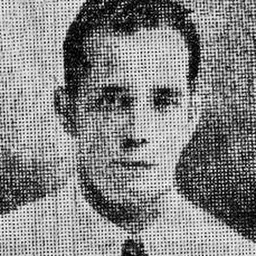

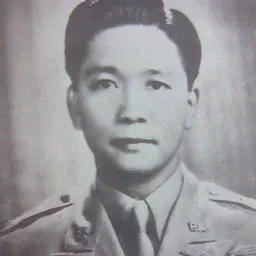


Related people
Same field, nearest in time
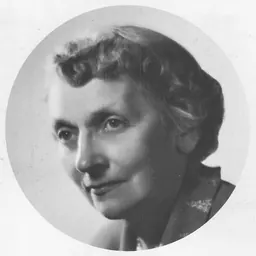
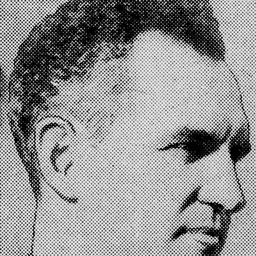
Contemporaries
People whose lives overlapped Ambrosio Padilla's






Frequently asked questions
Who was Ambrosio Padilla?
Filipino basketball player and senator (1910-1996)
When was Ambrosio Padilla born?
Ambrosio Padilla was born on 7 December 1910 in Lingayen.
When did Ambrosio Padilla die?
Ambrosio Padilla died on 11 August 1996 in Quezon City.
What was Ambrosio Padilla's occupation?
Ambrosio Padilla was a basketball player, university teacher, writer, politician and jurist.
What nationality was Ambrosio Padilla?
Ambrosio Padilla was Filipino.
Sources & further reading
Cite this page
APA: Biography.guide. (2026). Ambrosio Padilla. https://biography.guide/ambrosio-padilla/
MLA: "Ambrosio Padilla." Biography.guide, https://biography.guide/ambrosio-padilla/.
Chicago: "Ambrosio Padilla." Biography.guide. https://biography.guide/ambrosio-padilla/.
Data last updated: 2026-09-20 · Spot an error? Report a correction.
Page generated 2026-09-27 05:28 UTC