
About Ambalavaner Sivanandan
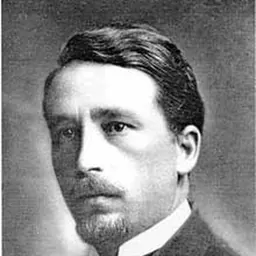
Lived 1923 – 2018 (aged 94). Ambalavaner Sivanandan was a Sri Lankan novelist, librarian, writer and political scientist, known for Institute of Race Relations (United Kingdom).
Ambalavaner Sivanandan (20 December 1923 – 3 January 2018), commonly referred to as A. Sivanandan or "Siva", was a Sri Lankan Tamil novelist, activist and writer, director of the Institute of Race Relations (IRR), a London-based think tank. His first novel, When Memory Dies, won the 1998 Commonwealth Writers' Prize in the Best First Book category for Europe and South Asia. He left Sri Lanka after the 1958 riots.
Early career The son of Ambalavaner, a worker in the postal system who came from the village of Sandilipay in Jaffna in the north of the island of Sri Lanka (formerly Ceylon), Sivanandan was educated at St. Joseph's College, Colombo. There he was taught by J. P. de Fonseka, who inspired him with a love of the English language alongside his native Tamil. Sivanandan later studied at the University of Ceylon, graduating in Economics in 1945. He went on to teach in the Ceylon "Hill Country" and then worked for the Bank of Ceylon, where he became one of the first "native" bank managers. The library on race relations built up by Sivanandan was, in 2006, moved to the University of Warwick Library, where it is known as the Sivanandan Collection.
At the Institute of Race Relations In 1972, following an internal struggle at the IRR (in which Sivanandan was a principal organiser) with staff and members on one side and the Management Board on the other, over the type of research the IRR should undertake and the freedom of expression and criticism staff could enjoy, the majority of Board members were forced to resign and the IRR was reoriented, away from advising government and towards servicing community organisations and victims of racism. Sivanandan was appointed as its new director.
In 1974, he was appointed editor of the IRR's journal Race, which was renamed Race & Class. Under his editorship, Race & Class – a journal for Black and Third World Liberation – became the leading international English-language journal on racism and imperialism, attracting to its editorial board Orlando Letelier, Eqbal Ahmad, Malcolm Caldwell, John Berger, Basil Davidson, Thomas Lionel Hodgkin, Jan Carew, and Manning Marable, among others.
Writing and publishing Sivanandan was regarded as one of the leading political thinkers in the UK. Most of his work was first published in the journal Race & Class. "The liberation of the black intellectual" (1977) examined identity, struggle and engagement during decolonisation and Black Power. "Race, class and the state" (1976) provided the first coherent class analysis of the black experience in Britain, examined the political economy of migration and coined the idea of state, structured racism. "From resistance to rebellion" (1981) tells the story of black protest in the UK from 1940 to 1981. "RAT and the degradation of black struggle" (1985) made the crucial distinction between personal racialism and institutional or state racism. Changes in productive forces, especially the technological revolution, were themes taken up in "Imperialism and disorganic development in the silicon age" (1979) and "New circuits of imperialism" (1989)
Sivanandan's political non-fiction articles were published in a number of collections: A Different Hunger: writings on black resistance, 1982 (Pluto Press); Communities of Resistance: writings on black struggles for socialism, 1990 (Verso); Catching History on the Wing: Race, Culture and Globalisation, 2008 (Pluto Press). He was highly critical of some trends in modern leftism, such as the New Times political initiative of Marxism Today in the late 1980s, and of Postmodernism.
Sivanandan published an epic novel on Sri Lanka entitled When Memory Dies (Arcadia Books, 1997), which won the Commonwealth Writers' First Book Prize (for Eurasia) and the Sagittarius Prize. A collection of his short stories was published entitled Where the Dance Is (Arcadia Books, 2000). In the same year, Sivanandan collaborated with British band Asian Dub Foundation in their album Community Music, providing one of his treatises as lyrics for the track "Colour Line", and also lending his voice.
National Life Stories conducted an oral history interview (C464/76) with Ambalavaner Sivanandan in 2010 for its National Life Stories collection held by the British Library.
He is co-credited with coining the term xenoracism.
Personal life Sivanandan's first marriage in 1950 was to Bernadette Wijeyewickrema; they divorced in 1969, and he married his long-time partner, Jenny Bourne, in 1993.
Don’t just read it —
keep it.
Full-length biographies made to live with: read them, listen on the way to work, watch them tonight.
- E-book
- Audio
- Video
Instant download · yours to keep · every purchase keeps this site free
Important facts
People in Ambalavaner Sivanandan's life
Named in this biography and alive at the same time


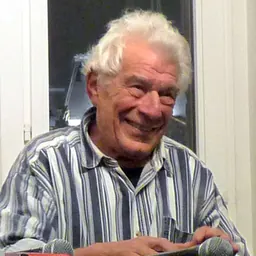
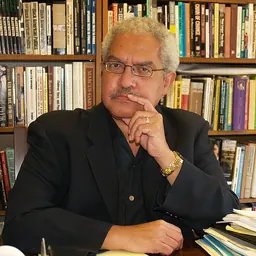
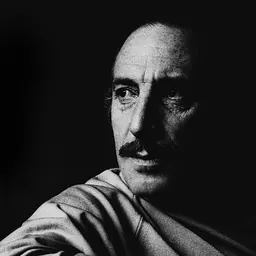

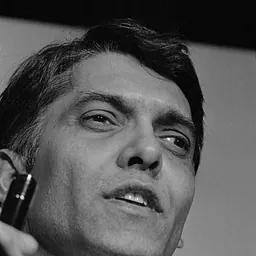
Related people
Same field, nearest in time



Contemporaries
People whose lives overlapped Ambalavaner Sivanandan's
Frequently asked questions
Who was Ambalavaner Sivanandan?
Sri Lankan writer (1923-2018)
When was Ambalavaner Sivanandan born?
Ambalavaner Sivanandan was born on 20 December 1923 in Jaffna.
When did Ambalavaner Sivanandan die?
Ambalavaner Sivanandan died on 3 January 2018 in London.
What was Ambalavaner Sivanandan's occupation?
Ambalavaner Sivanandan was a novelist, librarian, writer and political scientist.
What was Ambalavaner Sivanandan known for?
Ambalavaner Sivanandan was known for Institute of Race Relations (United Kingdom).
What nationality was Ambalavaner Sivanandan?
Ambalavaner Sivanandan was Sri Lankan.
Sources & further reading
· Wikipedia: Ambalavaner Sivanandan
· DBpedia: Ambalavaner Sivanandan
Cite this page
APA: Biography.guide. (2026). Ambalavaner Sivanandan. https://biography.guide/ambalavaner-sivanandan/
MLA: "Ambalavaner Sivanandan." Biography.guide, https://biography.guide/ambalavaner-sivanandan/.
Chicago: "Ambalavaner Sivanandan." Biography.guide. https://biography.guide/ambalavaner-sivanandan/.
Data last updated: 2026-09-22 · Spot an error? Report a correction.
Page generated 2026-09-27 05:30 UTC