
About Alvin Toffler
Lived 1928 – 2016 (aged 87). Alvin Toffler was an American futurist, journalist, essayist, sociologist and writer.
Alvin Eugene Toffler (October 4, 1928 – June 27, 2016) was an American writer, futurist, and businessman known for his works discussing modern technologies, including the digital revolution and the communication revolution, with emphasis on their effects on cultures worldwide. He is regarded as one of the world's outstanding futurists.
Toffler was an associate editor of Fortune magazine. In his early works he focused on technology and its impact, which he termed "information overload". In 1970, his first major book about the future, Future Shock, became a worldwide best-seller and has sold over 6 million copies.
He and his wife Heidi Toffler (1929–2019), who collaborated with him for most of his writings, moved on to examining the reaction to changes in society with another best-selling book, The Third Wave, in 1980. In it, he foresaw such technological advances as cloning, personal computers, the Internet, cable television and mobile communication. His later focus, via their other best-seller, Powershift, (1990), was on the increasing power of 21st-century military hardware and the proliferation of new technologies.
He founded Toffler Associates, a management consulting company, and was a visiting scholar at the Russell Sage Foundation, visiting professor at Cornell University, faculty member of the New School for Social Research, a White House correspondent, and a business consultant. Toffler's ideas and writings were a significant influence on the thinking of business and government leaders worldwide, including China's Zhao Ziyang, and AOL founder Steve Case.
Early life Alvin Toffler was born on October 4, 1928, in New York City, and raised in Brooklyn. He was the son of Rose (Albaum) and Sam Toffler, a furrier, both Polish Jews who had migrated to America. He had one younger sister. In their first factory jobs, Heidi became a union shop steward in the aluminum foundry where she worked. Alvin became a millwright and welder. In the evenings Alvin would write poetry and fiction, but discovered he was proficient at neither.
They returned to New York City in 1959 when Fortune magazine invited Alvin to become its labor columnist, later having him write about business and management.
Toffler was hired by IBM to conduct research and write a paper on the social and organizational impact of computers, leading to his contact with the earliest computer "gurus" and artificial intelligence researchers and proponents. Xerox invited him to write about its research laboratory and AT&T consulted him for strategic advice. This AT&T work led to a study of telecommunications, which advised the company's top management to break up the company more than a decade before the government forced AT&T to break up.
In the mid-1960s, the Tofflers began five years of research on what would become Future Shock, published in 1970. The book has never been out of print and has been translated into dozens of languages. He claimed that one of the side effects of the digital age has been "information overload". Yet another term he coined is "prosumer", which describes a person who is simultaneously a producer and consumer.
In 1990, he wrote Powershift, also with the help of his wife, Heidi.
Toffler stated many of his ideas during an interview with the Australian Broadcasting Corporation in 1998.
His opinions about the future of education, many of which were in Future Shock, have often been quoted. An often misattributed quote, however, is that of psychologist Herbert Gerjuoy: "Tomorrow's illiterate will not be the man who can't read; he will be the man who has not learned how to learn."
Early in his career, after traveling to other countries, he became aware of the new and myriad inputs that visitors received from these other cultures. He explained during an interview that some visitors would become "truly disoriented and upset" by the strange environment, which he described as a reaction to culture shock. From that issue, he foresaw another problem for the future, when a culturally "new environment comes to you ... and comes to you rapidly." That kind of sudden cultural change within one's own country, which he felt many would not understand, would lead to a similar reaction, one of "future shock", which he wrote about in his book by that title.
In The Third Wave, Toffler describes three types of societies, based on the concept of "waves"—each wave pushes the older societies and cultures aside. He describes the "First Wave" as the society after agrarian revolution and replaced the first hunter-gatherer cultures. The "Second Wave," he labels society during the Industrial Revolution (ca. late 17th century through the mid-20th century). That period saw the increase of urban industrial populations which had undermined the traditional nuclear family, and initiated a factory-like education system, and the growth of the corporation. Toffler said:
The Second Wave Society is industrial and based on mass production, mass distribution, mass consumption, mass education, mass media, mass recreation, mass entertainment, and weapons of mass destruction. You combine those things with standardization, centralization, concentration, and synchronization, and you wind up with a style of organization we call bureaucracy. The Tofflers claimed to have predicted a number of geopolitical events, such as the collapse of the Soviet Union, the fall of the Berlin Wall and the future economic growth in the Asia-Pacific region.
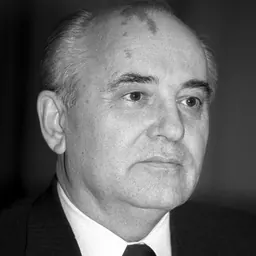
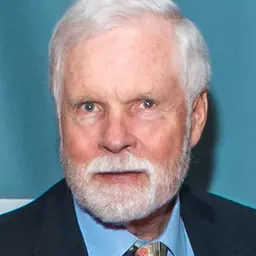
In 1980, Ted Turner founded CNN, which he said was inspired by Toffler's forecasting the end of the dominance of the three main television networks. Turner's company, Turner Broadcasting, published Toffler's Creating a New Civilization in 1995. Shortly after the book was released, the former Soviet president Mikhail Gorbachev hosted the Global Governance Conference in San Francisco with the theme, Toward a New Civilization, which was attended by dozens of world figures, including the Tofflers, George H. W. Bush, Margaret Thatcher, Carl Sagan, Abba Eban and Turner with his then-wife, actress Jane Fonda.
Mexican billionaire Carlos Slim was influenced by his works, and became a friend of the writer.
Since the 1960s, people had tried to make sense out of the effect of new technologies and social change, a problem which made Toffler's writings widely influential beyond the confines of scientific, economic, and public policy. His works and ideas have been subject to various criticisms, usually with the same argumentation used against futurology: that foreseeing the future is nigh impossible.
Musician Curtis Mayfield released a disco song called "Future Shock," later covered in an electro version by Herbie Hancock. Toffler has also been described in a Financial Times interview as the "world's most famous futurologist". In 2006, the People's Daily classed him among the 50 foreigners who shaped modern China, which one U.S. newspaper notes made him a "guru of sorts to world statesmen." He convened conferences to discuss The Third Wave in the early 1980s, and in 1985 the book was the No. 2 best seller in China.
Newt Gingrich became close to the Tofflers in the 1970s and said The Third Wave had immensely influenced his own thinking and was "one of the great seminal works of our time."
Personal life Toffler was married to Heidi Toffler (born Adelaide Elizabeth Farrell), also a writer and futurist. They lived in the Bel Air section of Los Angeles, California, and previously lived in Redding, Connecticut.
Alvin Toffler died in his sleep on June 27, 2016, at his home in Los Angeles. No cause of death was given. He is buried at Westwood Memorial Park.
Don’t just read it —
keep it.
Full-length biographies made to live with: read them, listen on the way to work, watch them tonight.
- E-book
- Audio
- Video
Instant download · yours to keep · every purchase keeps this site free
Important facts
People in Alvin Toffler's life
Named in this biography and alive at the same time




Related people
Same field, nearest in time




Contemporaries
People whose lives overlapped Alvin Toffler's

Frequently asked questions
Who was Alvin Toffler?
American writer, futurist and businessman
When was Alvin Toffler born?
Alvin Toffler was born on 4 October 1928 in New York City.
When did Alvin Toffler die?
Alvin Toffler died on 27 June 2016 in Los Angeles.
What was Alvin Toffler's occupation?
Alvin Toffler was a futurist, journalist, essayist, sociologist and writer.
What nationality was Alvin Toffler?
Alvin Toffler was American.
Sources & further reading
Cite this page
APA: Biography.guide. (2026). Alvin Toffler. https://biography.guide/alvin-toffler/
MLA: "Alvin Toffler." Biography.guide, https://biography.guide/alvin-toffler/.
Chicago: "Alvin Toffler." Biography.guide. https://biography.guide/alvin-toffler/.
Data last updated: 2026-09-25 · Spot an error? Report a correction.
Page generated 2026-09-27 05:12 UTC