
Alvah Dunning
American Adirondack guide, hunter, trapper, and hermit
About Alvah Dunning
Lived 1816 – 1902 (aged 85–86).
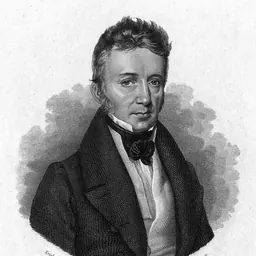
Alvah G. Dunning (June 1816 – overnight March 10–11, 1902) was an American hunter, trapper, and professional guide in the Adirondack Mountains of northern New York. He became one of the best-known members of the first generation of Adirondack guides and was closely associated with Raquette Lake, where he lived for much of the second half of the nineteenth century.
Dunning guided visiting sportsmen and explorers, lived at several remote camps, and participated in Verplanck Colvin's 1870 expedition to Mount Seward. His career spanned the period in which the central Adirondacks changed from a sparsely settled working landscape into a destination shaped by tourism, private camps, railroads, game regulation, and state conservation. Accounts published during and after his lifetime turned him into a symbol of the older Adirondack woodsman, although later treatments have also emphasized his violence, hostility toward neighbors, and complicated dependence on the tourist economy he disliked.
Early life
Dunning was born in June 1816 in the southern Adirondacks, probably near Lake Pleasant or Piseco in Hamilton County, New York. The exact day is uncertain. Later sources commonly gave his full name as Alvah G. Dunning and described his father as a hunter and trapper. Alfred L. Donaldson's 1921 history stated that Dunning began accompanying his father into the woods at six, killed his first moose at eleven, and guided travelers into the Raquette Lake country at twelve. These stories were recorded decades after the alleged events and are better understood as traditional accounts of his childhood than as precisely documented milestones.
He was associated with the minister and travel writer William Henry Harrison Murray, whose 1869 book Adventures in the Wilderness helped produce a surge of tourism in the Adirondacks. Dunning initially lived at Indian Point on Raquette Lake and in the autumn of 1869 occupied an open camp on Osprey Island that Murray had used. Dunning enclosed the structure and remained on the island after it burned in 1875, replacing it with another rough camp.
Stories about Dunning's hunting were a major part of his public reputation. He claimed to have killed the last native moose in the Adirondacks in March 1862, but the claim was disputed even in early historical accounts. Donaldson compared it with a separate report that a guide named Palmer killed a cow moose near Raquette Lake in 1861 and concluded that the question could not be resolved.
The party traveled by way of Cold River and climbed through rain, fog, dense forest, and dwarf balsam. Colvin made barometric observations from the summit on October 15. His report became an early statement of the case for protecting Adirondack forests because of their importance to New York's water supply. Dunning's role placed an experienced local guide inside an expedition later associated with the mapping and conservation of the region, even though the regulations and formal control that followed often conflicted with the hunting and land-use practices he defended.
His position was not a general opposition to restraint. Donaldson's informants remembered him objecting to wasteful killing and refusing to tolerate mistreatment of his dogs. One guide who knew him described him as willing to take deer or trout outside the legal season when he needed them, but opposed to killing game without using it.
Later life and death
After selling his Raquette Lake claim in 1899, Dunning traveled west in search of another place to live but returned to the Adirondacks within about a year. By then his health and independence had declined. He stayed near Golden Beach or South Inlet, accepted help and employment from summer residents, and spent winters with relatives, particularly a sister in Syracuse, New York.
Donaldson devoted a full chapter of his 1921 A History of the Adirondacks to Dunning. That account preserved testimony from people who knew him, but its language also reflected the period's tendency to cast rural guides as "primitive" survivors. Modern regional histories continue to identify Dunning as one of the earliest and best-known Adirondack guides while treating his legend more critically.
Don’t just read it —
keep it.
Full-length biographies made to live with: read them, listen on the way to work, watch them tonight.
- E-book
- Audio
- Video
Instant download · yours to keep · every purchase keeps this site free
Important facts
People in Alvah Dunning's life
Named in this biography and alive at the same time
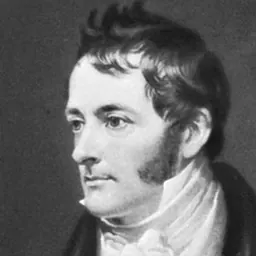
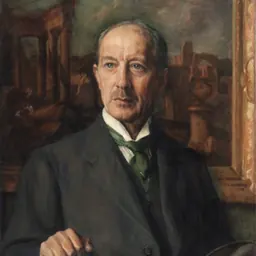

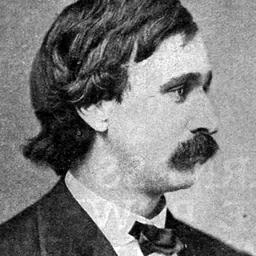
Contemporaries
People whose lives overlapped Alvah Dunning's





Frequently asked questions
Who was Alvah Dunning?
American Adirondack guide, hunter, trapper, and hermit (1816–1902)
When was Alvah Dunning born?
Alvah Dunning was born in 1816.
When did Alvah Dunning die?
Alvah Dunning died in 1902.
Sources & further reading
Cite this page
APA: Biography.guide. (2026). Alvah Dunning. https://biography.guide/alvah-dunning/
MLA: "Alvah Dunning." Biography.guide, https://biography.guide/alvah-dunning/.
Chicago: "Alvah Dunning." Biography.guide. https://biography.guide/alvah-dunning/.
Data last updated: 2026-09-20 · Spot an error? Report a correction.
Page generated 2026-09-27 05:07 UTC