
About Altaf Hussain Hali
Lived 1837 – 1914 (aged 76–77). Altaf Hussain Hali was an Indian poet, literary critic, essayist, researcher and writer.
Early life He was born in Panipat to Khwaja Ezad Baksh and was a descendant of Abu Ayyub al-Ansari, a close companion of the Islamic prophet Muhammad. Hali belonged to the Panipat Ansari clan,
Hali's father died when he was nine years old and his mother suffered from dementia. He was in the care of his elder brother Khwaja Imdad Husain after the death of his parents and when he was fifteen, upon the forcing of his elder brother, married his cousin Islam-un-Nisa. Hali studied, and memorized, the Quran under Hafiz Mumtaz Husain, Arabic language under Haji Ibrahim Husain and Persian under Syed Jafar Ali.
Hali composed an essay in Arabic that supported the dialectics of Siddiq Hasan Khan, who was an adherent of Wahhabism. His teacher, Maulvi Navazish Ali, belonged to the Hanafi school and when he saw the essay he tore it up.
Writing The Indian rebellion of 1857 was an armed uprising in British India against the oppressive and destructive British colonial rule and was also popularly remembered as the 'First War of Independence'. This was a turning point in Hali's life because he was an eyewitness to the catastrophe. His family took in a widowed girl who lived with them for the rest of her life. Her plight left a deep impression on Hali and he composed two poems on the condition of women: Munajaat-e-Beva (Supplication of the Widow) and Chup ki Daad (Homage to the Silent). Therefore, Syeda Saiyidain Hameed calls Hali "Urdu's first feminist poet".
Annemarie Schimmel called Hali the "founder of literary tradition in Urdu". He had, by this time, changed his takhallus from "Khasta" to "Hali", which means "contemporary" or "modern".
While in Lahore, Hali saw a new form of Mushaira, where instead of reciting poetry at will, poets were given a subject to write about. This was begun by Muhammad Husain Azad and the Director of Public Education, W. R. M. Holroyd. Hali composed four poems for this purpose: Nishat-e-Umeed (Delight of Hope), Manazra-a-Rahm-o-Insaaf (Dialogue between Mercy and Justice), Barkha Rut (Rainy Season) and Hubb-e-Watan (Patriotism). Hali taught at the Anglo Arabic School in Delhi. He was granted a stipend by the Chief Minister of Hyderabad State in 1887, after which he immediately took retirement from the school to be able to devote himself full-time to creative writing.
Sir Syed also called it the "mirror of the nation's condition and an elegy expressive of its grief".
The poem was very popular and apart from the first couple of editions, Hali dedicated the poem to the nation and took no royalties. Some scholars of Pakistani nationalism also consider the Mussadas an important text for the articulation of a future Muslim nation, Pakistan, which eventually was created in 1947. During an international seminar on Hali held in Delhi on 29 November 2001, scholars concluded that Hali could not have written the Musaddas without reading at least 5,000 pages of Islamic history.
After Sir Syed Ahmad Khan's death, Hali wrote his biography, Hayat-e-Javed, which was published in 1901. He was awarded the title Shamsul Ulema ("Sun among Scholars") by the British India government. Hali's Mussadas-e-Hali also contains 'Mehnat ki Barkaat', which is an extract intended to spread awareness in Muslims.
Death and legacy At the age of 52 in 1889, Hali finally returned to Panipat, where he shared home with his wife for the remaining twenty-five years of his life. Altaf Hussain Hali died in 1914. Pakistan Post issued a commemorative postage stamp in his honor on 23 March 1979 in its 'Pioneers of Freedom' series. "His great 'Musaddas' is one of the most inspiring poems in Urdu literature and had a lasting influence on the minds and attitudes of the Muslims in the sub-continent and continues to inspire them to this day." Hali also wrote a poem "Barkha Rut" Naat titleLyrics bySung by RemarksWoh Nabion Mein Rahmat Laqab Paanaywala Altaf Hussain Hali Junaid Jamshed A still very popular Naat song written in the 19th century, sung by many singers in both Pakistan and India
Don’t just read it —
keep it.
Full-length biographies made to live with: read them, listen on the way to work, watch them tonight.
- E-book
- Audio
- Video
Instant download · yours to keep · every purchase keeps this site free
Important facts
People in Altaf Hussain Hali's life
Named in this biography and alive at the same time
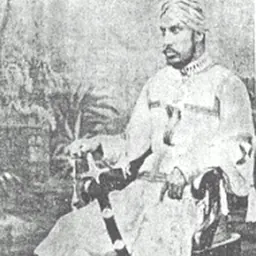
Related people
Same field, nearest in time
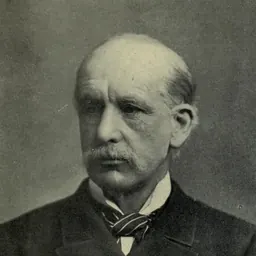

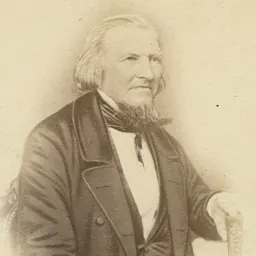
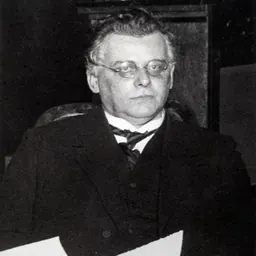
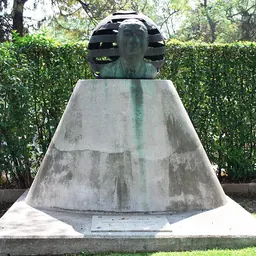
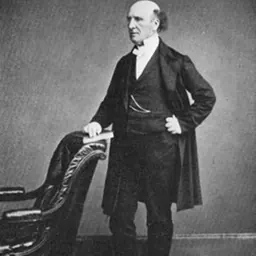
Contemporaries
People whose lives overlapped Altaf Hussain Hali's




Frequently asked questions
Who was Altaf Hussain Hali?
Urdu poet and writer
When was Altaf Hussain Hali born?
Altaf Hussain Hali was born in 1837 in Panipat.
When did Altaf Hussain Hali die?
Altaf Hussain Hali died on 31 December 1914 in Panipat.
What was Altaf Hussain Hali's occupation?
Altaf Hussain Hali was a poet, literary critic, essayist, researcher and writer.
What nationality was Altaf Hussain Hali?
Altaf Hussain Hali was Indian.
Sources & further reading
· Wikipedia: Altaf Hussain Hali
Cite this page
APA: Biography.guide. (2026). Altaf Hussain Hali. https://biography.guide/altaf-hussain-hali/
MLA: "Altaf Hussain Hali." Biography.guide, https://biography.guide/altaf-hussain-hali/.
Chicago: "Altaf Hussain Hali." Biography.guide. https://biography.guide/altaf-hussain-hali/.
Data last updated: 2026-09-20 · Spot an error? Report a correction.
Page generated 2026-09-27 05:31 UTC