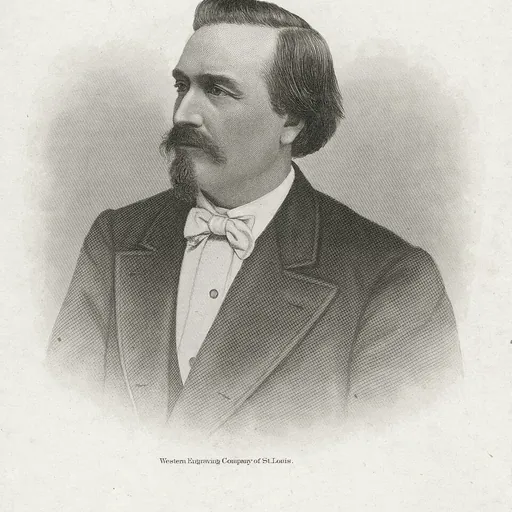
About Alonzo W. Slayback
Lived 1838 – 1882 (aged 43–44). Alonzo W. Slayback was an American lawyer and military officer.
Alonzo William Slayback (July 4, 1838 – October 13, 1882) was an American Confederate military officer and a founder of the Veiled Prophet Parade and Ball in St. Louis, Missouri. He was shot and killed in self-defense by the managing editor of the St. Louis Post-Dispatch.
Personal Slayback was born July 4, 1838, in Plum Grove, Marion County, Missouri, the son of Alexander Lambdin Slayback, an attorney, and Anna Maria Minter.
Nicknamed "Lon", he was tutored by his mother, and at age 10 he passed an examination which enabled him to enter the Masonic College in Lexington, Missouri. He graduated in 1856, with highest honors
After college he went to St. Joseph, Missouri, where he read law under Bela M. Hughes and taught school. He was admitted to the bar in 1857, his first partner being Joseph P. Grubb.
During his military service with the Confederate Army in the American Civil War, he was gravely ill with typhoid fever but was nursed back to health by his wife.
Professional
Military
It was said that Slayback "was a participant in the Border Ruffian troubles in 1855–56, living at St. Joseph, Missouri, at that time."
Slayback served in the Confederate States of America. He was practicing law in Lexington, Missouri, when, following the lead of Claiborne Fox Jackson, he raised a regiment of cavalry, of which he was elected colonel, and he joined General Sterling Price's command of the Missouri State Guard in June 1861.
The next month, he was visiting his wife in Lexington when he was captured by Union Army troops. He was imprisoned for three weeks, some of the time in Masonic College, where he had gone to school and which had been converted into a prison. He escaped when he hit his guard with a bucket while they were gathering water at a spring.
Civilian
Slayback was a schoolteacher while studying law. He was admitted to the bar in September 1857 in St. Joseph, Missouri, and practiced there until the outbreak of the Civil War in 1860.
Editor Sol. Miller of The Kansas Chief newspaper described Slayback "as much a rebel as ever" who said in an August 1868 speech that only by electing a Democratic presidential ticket headed by Horatio Seymour could "God's chosen people, the noblest men who ever lived, the gallant sons of the South," gain what they had fought for."
A lifelong Democrat and in the Ninth District against Erastus Wells. He ran also for United States Senator, but withdrew his name during the legislative session considering the appointment.
Governor Charles Henry Hardin appointed Slayback as Missouri's representative to a May 1875 centennial celebration of the signing of the Mecklenburg Declaration of Independence in Charlotte, North Carolina. In the same year, Slayback attended a meeting to help form "a society to provide lectures for the working classes."
Publications In August 1873, the Inland Monthly published Slayback's "The Next National Necessity", setting forth "that gentleman's views of the temper and action of the people of the North and South in their relations with each other."
Slayback published a book of poems dealing with "war and love." After his death, his wife published a memorial volume of his writings, with an uncredited biography as the introduction.
The Rolla (Missouri) Weekly Herald noted that the speech "seems to meet with almost universal approval, as expressive of a returning spirit of fraternity, by which alone is the genuine work of reconstruction to be accomplished." The Cash-Book of Jackson, Missouri, however, said it spoke for "thousands of ex-Rebs, who utterly deny that Slayback represented the prevailing sentiment of the South at the time of the surrender" and that the speech was "silly twaddle."
Veiled Prophet celebration
Historian Thomas M. Spencer has credited Slayback with "all of the work" that the latter "had put into creating" the organization
In 1882, a movement by St. Louis Irish Americans forced the parade organizers to withdraw a float that was to have featured, in the words of historian Spencer, "a Donnybrook Fair with several jig-dancing and seemingly drunken Irishmen, [which] was certainly in accordance with the usual stereotype of the Irish at the time."
Death
Editorial page article
Slayback was a law partner of James O. Broadhead, and "bitter controversy had arisen" between Broadhead and John M. Glover "over a race for Congress."
On Friday, October 13, 1882, the editorial page of the St. Louis Post-Dispatch printed the following (quoted only in part):
Shooting and inquest
Slayback went later that day to the Post-Dispatch editorial offices "to demand retraction or seek satisfaction." He had a gun with him, and, according to testimony at a coroner's inquest, he threatened John A. Cockerill, the managing editor and chief editorial writer of the newspaper. Cockerill had his own weapon and fired, killing Slayback.
Five members of the six-man coroner's jury and all witnesses took the oath at the Slayback home in the presence of the body, as was "usual" in homicide cases, and then the inquest adjourned to the Criminal Court chambers. After testimony of Cockerill and other witnesses, the jurors adopted a verdict that Slayback had died "from the effects of internal hemorrhage, caused by a penetrating gunshot wound in the chest, inflicted with a bullet fired from a revolver in the hand of J. A. Cockerill, a few minutes before death."
Although jailed for a time and the object of Grand Jury investigations, Cockerill was never put on trial.
Funeral
The funeral service at the Slayback residence on October 15 "was perhaps the largest that ever occurred in St. Louis", it was reported. The cortege "consisted of 142 carriages and about fifty buggies containing members of the family and friends, the Knights of St. Patrick, Legion of Honor, Bar Association, Southern Historical Society and Benevolent order of Elks[, which] proceeded directly to Bellefontain Cemetery."
Slayback's body was taken to Lexington, Missouri, aboard a special car donated by the Missouri Pacific Railway, where it was received by a party of Confederate veterans headed by General Joseph O. Shelby. It was interred in "the old cemetery" (Machpelah Cemetery) within sight of the Masonic College "where Col. Slayback received his education and where he fought his first battle."
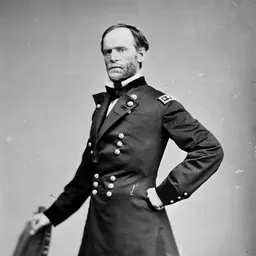
Tributes Slayback was honored with a memorial service at the St. Louis Exchange. A matinee of Shakespeare's Antony and Cleopatra was given by "the well-known actor" and "very warm friend of Col. Cockerill", John McCullough (who acted as Brutus), at the Olympic Theater, St. Louis, as a benefit for the Slayback family. It netted between $7,000 and $8,000. Receipts at the door amounted to $6,797. "The building was jammed from pit to dome," one newspaper reported. "It was, perhaps, the grandest audience that ever greeted this great tragedian." Union General William Tecumseh Sherman said: "I knew both of the parties well. Col. Slayback was one of nature's noblemen, generous to a fault, and had an unlimited number of friends. Mr. Cockerill's father was in my command during the war."
Insurance
Questions were raised whether insurance companies would pay a benefit on Slayback's policies "if it is proved that Col. Slayback went into the Post-Dispatch office with a drawn revolver." Eventually, there was an insurance payout of $20,000, although another report put the sum at "fully $40,000" based on more than one policy, and some said that the total sum available to the family, including the benefit, was fifty thousand dollars.
Don’t just read it —
keep it.
Full-length biographies made to live with: read them, listen on the way to work, watch them tonight.
- E-book
- Audio
- Video
Instant download · yours to keep · every purchase keeps this site free
Important facts
People in Alonzo W. Slayback's life
Named in this biography and alive at the same time



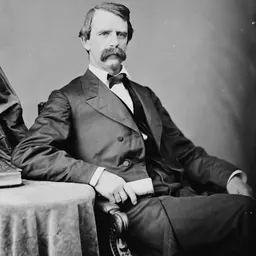

Related people
Same field, nearest in time


Contemporaries
People whose lives overlapped Alonzo W. Slayback's

Frequently asked questions
Who was Alonzo W. Slayback?
American lawyer
When was Alonzo W. Slayback born?
Alonzo W. Slayback was born in 1838.
When did Alonzo W. Slayback die?
Alonzo W. Slayback died in 1882.
What was Alonzo W. Slayback's occupation?
Alonzo W. Slayback was a lawyer and military officer.
What nationality was Alonzo W. Slayback?
Alonzo W. Slayback was American.
Sources & further reading
· Wikipedia: Alonzo W. Slayback
Cite this page
APA: Biography.guide. (2026). Alonzo W. Slayback. https://biography.guide/alonzo-w-slayback/
MLA: "Alonzo W. Slayback." Biography.guide, https://biography.guide/alonzo-w-slayback/.
Chicago: "Alonzo W. Slayback." Biography.guide. https://biography.guide/alonzo-w-slayback/.
Data last updated: 2026-09-21 · Spot an error? Report a correction.
Portrait: Wikimedia Commons · author & licence
Page generated 2026-09-27 04:59 UTC