
About Alma Webster Powell
Lived 1869 – 1930 (aged 60). Alma Webster Powell was an American screenwriter, opera singer, suffragist and women's suffrage.
Alma Webster Hall Powell (November 20, c. 1869 – March 11, 1930),
Personal life leftHall met future husband Adoniram Judson Powell in New York City. She was singing contralto at a "leading church"; Judson, the organist and a piano manufacturer, recognized her talent and began working with her to develop it. On April 16, 1890, they married in Brooklyn. He had one son, Everett J. Powell, from a previous marriage. In 1892, Alma Webster Powell gave birth to a daughter, named Marian Webster Powell.
The Powells lived in an "elegant brownstone" on President Street in Park Slope, Brooklyn, where Alma Webster Powell was known for converting the roof into a "star parlor" with a "bewildering array of rugs, hammocks, cushions and easy chairs," according to a 1908 article in the New York Times.
In 1922, Variety reported that Powell sued for $75,000 in damages and was awarded $13,000 from the New York Central Railroad, for injuries received in a train wreck on July 2, 1920. Her husband likewise sued for $20,000 in damages for injuries in the same wreck, and was awarded $2,000.
Operatic career
After working with her husband to develop her voice, Alma Webster Powell traveled to Europe in 1894 to further her studies. She made her operatic debut at the Grand Opera of Frankfort-on-Main, as Queen of the Night in Mozart's The Magic Flute, on May 16, 1895. She remained abroad two more years and in 1897 was engaged by the Damrosch-Ellis Opera Company. She made her American debut in Philadelphia, PA, that year. The next year, she became a member of the Savage Opera Co. and made a success in Martha. Powell and Pirani then toured throughout Russia, France, Germany, Italy, Austria, Hungary, and England, before returning to the United States. Pirani credited Powell with lifting him out of an artistic rut at this time in his career.
Powell joined the company of the Metropolitan Opera around 1904. In 1906, in conjunction with her husband, she opened the Powell Musical Institute in Brooklyn, teaching voice culture, piano playing, harmony, composition, and languages.
Education In her early life, Powell was educated by private tutors and at the Girl's high school in Chicago. marked the first time that the department had awarded a Ph.D. for a treatise on music.
Writing The district attorney presents his case to the first woman jury in America (The Motion Picture Story Magazine, March 1912)Powell authored a textbook for singers and students, titled Advanced School of Vocal Art (1901). She also wrote the libretto of Black Blood, set to music by Eugenio di Pirani, The photoplay appeared in the June issue as promised under the title "The Rival Candidates," accompanied by photo illustrations.
Motion Picture Story Magazine published another photoplay by Powell in March 1912, titled "The First Woman Jury in America." This photoplay was made into a silent film by Vitagraph, released on March 11, 1912, starring Flora Finch. alt=A photograph depicts the first woman jury in America casting their ballots into a hat Balloting in the jury room (The Motion Picture Story Magazine, March 1912)Powell advocated for the use of moving pictures as educational materials in schools, believing that "it is the only way to teach children, for what a child sees in a picture it remembers." She felt that moving pictures would be a good medium for reproducing "grand opera stories" and "the great dramas," as long as care was taken to accurately adapt them to film.
Powell was a life member of the Women's Press Club, chairing the music committee.
According to Margaret I. MacDonald, Powell raised $60,000 in 1910 "for the betterment of the poor of the East Side" of New York City.
Powell patented several innovations related to ladies' garments, including a method by which raincoats or other outerwear could be detached at the shoulders and fastened on an underskirt as a form of drapery.
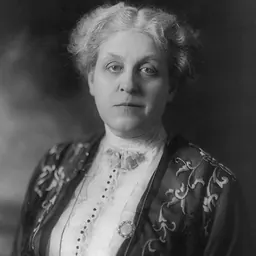
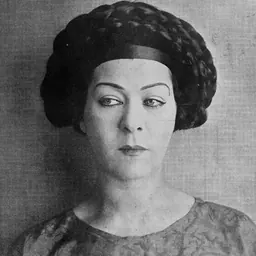
In a spread mocking "Cubist fashion" published in the Chicago Daily Tribune on April 6, 1913, Powell was illustrated alongside suffragists Carrie Chapman Catt and Rosalie Jones, opera singers Geraldine Farrar and Mary Garden, actresses Billie Burke, Alla Nazimova, and Sarah Bernhardt, novelist Edith Wharton, and dancer Gaby Deslys. According to Elizabeth Carlson, the "individuality and sexual freedom expressed in the bold new cubist fashions led the press to simultaneously link the new style to radical suffragists and young, fashionable celebrities ... Published in the Chicago Tribune while the cubist canvases [of the Armory Show] were on display at the Art Institute, well-known suffragists and celebrities were shown together wearing the recognizable colorful, geometric, and angular gowns."
The newspaper spread's text described each woman's "costume" in the voice of a fashion show report. The description of Powell emphasized her advocacy for dress reform: "The artist seems to have caught that wistful desire for artlessness and sincerity which Mrs. Powell thinks should be the foundation of every woman's clothes."
Don’t just read it —
keep it.
Full-length biographies made to live with: read them, listen on the way to work, watch them tonight.
- E-book
- Audio
- Video
Instant download · yours to keep · every purchase keeps this site free
Important facts
People in Alma Webster Powell's life
Named in this biography and alive at the same time




Related people
Same field, nearest in time



Contemporaries
People whose lives overlapped Alma Webster Powell's




Frequently asked questions
Who was Alma Webster Powell?
American soprano
When was Alma Webster Powell born?
Alma Webster Powell was born on 20 November 1869 in Chicago, Elgin.
When did Alma Webster Powell die?
Alma Webster Powell died on 11 March 1930 in Mahwah, New Jersey.
What was Alma Webster Powell's occupation?
Alma Webster Powell was a screenwriter, opera singer, suffragist and women's suffrage.
What nationality was Alma Webster Powell?
Alma Webster Powell was American.
Sources & further reading
· Wikipedia: Alma Webster Powell
· DBpedia: Alma Webster Hall Powell
Cite this page
APA: Biography.guide. (2026). Alma Webster Powell. https://biography.guide/alma-webster-powell/
MLA: "Alma Webster Powell." Biography.guide, https://biography.guide/alma-webster-powell/.
Chicago: "Alma Webster Powell." Biography.guide. https://biography.guide/alma-webster-powell/.
Data last updated: 2026-09-22 · Spot an error? Report a correction.
Page generated 2026-09-27 05:26 UTC