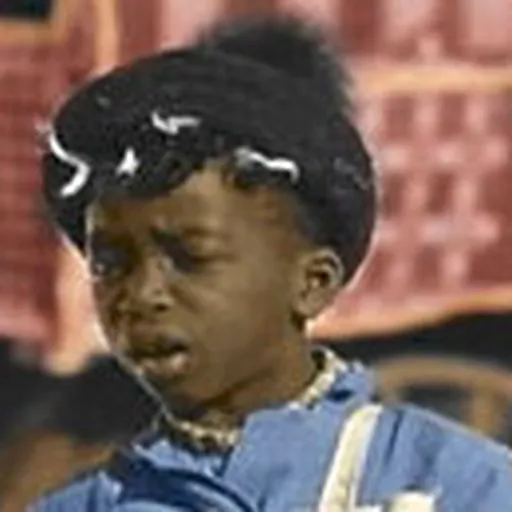
About Allen Hoskins
Lived 1920 – 1980 (aged 59). Allen Hoskins was an American actor and film actor.
Allen Clayton Hoskins (August 9, 1920 – July 26, 1980) was an American child actor, who portrayed the character of Farina in 105 Our Gang short films from 1922 to 1931.
Acting career 1920–1936
Our Gang
Stardom
"Our Gang" baby photos in 1926 ad from Picture-Play magazine. Allen Hoskins is the fifth photo down, both right and left Born in Boston in 1920, Allen Clayton Hoskins was just one year old when his tenure with "Our Gang" began. His character stayed in the series through the silent years and the transition to talking pictures, and he left the series in 1931 at the age of eleven. With his pigtailed hair and patchy outfits, Farina resembled a pickaninny in the tradition of the character Topsy from Uncle Tom's Cabin, but as the character became more popular, and as Allen Hoskins got older, Farina developed his own personality separate from that of Topsy. The name "Farina", derived from a type of cereal, was chosen because its gender was ambiguous: As a toddler, Farina was portrayed as both a boy and a girl, sometimes both genders in the same film.
He was born in Boston in 1920, but soon afterward his parents, Clayton H. Hoskins and Florence A. Fortier Hoskins, moved the family to Los Angeles and in 1922 his acting career began. His younger sister Jannie also appeared in the series as "Mango" (1926–1929) and Hoskins's aunt, Edith Fortier, was his guardian on set, his parents divorced in 1926. By that time he was 6 years old and an experienced child actor, and as "Farina" he made more money than most working adults.
The Our Gang comedies were created by Hal Roach Studios, located in Culver City, California. School was required for child actors. Hoskins and the other Roach studio children attended school on the lot at the "Little Red School House". The children were taught by Fern Carter. In 1959, a retrospective article about Fern Carter and her career as a teacher in Hollywood's "Little Red School House" was published. The article explained that she was teaching there when the series began in 1921 and taught over 300 students in a career that lasted 23 years. She often said that Farina was the brightest student she ever had.
The Studio was a family affair and often relatives, staff and other Roach Studio stars appeared in cameo roles or as extras in many of the films including Harold Lloyd, Oliver Hardy, Stan Laurel, Ernie Morrison's father, Ernie Morrison Sr. and Fern Carter's daughter, Wadell Carter. In 1929 Hoskins' aunt and guardian on set, Edith Fortier, also appeared as an extra in the films Noisy Noises and Small Talk.
In addition to acting in the Our Gang short films, the children also made personal appearances. In 1927, the Oakland Tribune published an article about such an appearance. "Countless millions of boys and girls have seen Our Gang comedies but this good luck doesn't befall orphans very often. East Bay orphans, however, are going to get their chance to see these popular screen stars in person..."
During his time in the Gang, Farina became both the series' anchor and its most popular character. While he was not the first black child actor (or even the first black Our Gang kid), Farina became arguably the first black child star. Hoskins' last contract with the Hal Roach Studio called for $350 a week, more than any other cast member was earning at that time. When he finally outgrew the series, he was replaced by Matthew Beard in 1931.
On the same date, a column, with no byline, was published in The Register of Sandusky, Ohio:
At the end of the studio's 1930–1931 season, Hoskins aged out. Other child actors were let go at the same time, including Norman "Chubby" Chaney and Mary Ann Jackson. While working as actors, all the children attended parties and special events at the studio, including Christmas, when they received any gift they asked for. In January 1931 Farina was a star, earning $350 a week, but by July 1931 he was unemployed. Exactly one year later (again on his birthday) the same newspaper carried a new story about how Farina learned to act (from his "brother", who did not exist).
Hoskins did not have a brother, but he did have a younger sister, Jannie. She rated her own story when she, too, began to appear in the comedies in 1926. The Oakland Tribune carried a "Movieland" column out of Hollywood, by Jack Wooldridge: "Janie [] the little sister of Farina had been added to the cast of Our Gang at the Hal Roach Studios...Janie is two years, 4 months old, black as midnight and all animation..."
Many stories about the Gang appeared from time to time and these were carried in various newspapers throughout the country. Most of them were related to release of a new film. The films, called "shorts", were usually two reels in length and local trade papers, such as "Motion Picture News" and "Motion Picture World", wrote about the Our Gang shorts every time a new one appeared. In 1923 alone, fourteen were released. The children were stars to their fans, both children and adults. The early comedies were silent, but when talkies emerged the studio quickly made this transition and so did Farina. Maltin wrote in his book about the excitement when the first talkie by Our Gang was released Simplistic as it may seem, early sound films were advertised as "The marvel of the age! Pictures that talk like living people! Electrifying! For "Small Talk" [#89, released May 1929], the trade blurbs read "A sensation wherever it is being shown! Until you See and Hear Our Gang in their first All-Talking Hit 'Small Talk' you can't know the profit power of the Roach talkies. Many theaters are billing them above the feature. When Our Gang made a personal appearance tour they broke every record wherever they played- big cities and small...
The fact that all of the children would eventually grow too old and their contracts would not be renewed was also considered newsworthy. An article that appeared in a 1937 Abilene, Texas, newspaper attempted to explain how this worked.
After Our Gang: Vaudeville and other work After Hoskins grew too old for his part, in 1931, he returned to Roach Studios for several cameo appearances but was not chosen for a long-term role. He was given a cameo role in an unusual short film called The Stolen Jools.
In one of her 1945 columns (published in various newspapers including the Lowell Sun) Louella Parsons wrote about Hoskins and other actors who served in World War II. "No one at Fort Roach knew the drama back of Sgt. Allen Hoskins appearance there on his last day in the Air Corps. As a boy, twenty years ago Sergeant Hoskins was Farina, in the Hal Roach Comedies. Hoskins saw action in five major Pacific battles and received a presidential citation. He expects to write and produce for the stage and has a musical he wrote in Australia."
Parsons went on to write: Want to say it again and again and keep on saying it, our boys who gave up studio jobs to go into the service and who have done so much for Hollywood and for their country must get their jobs back. That's one thing Hollywood must not have on its conscience. I mean the bitterness and heartache of these kids. Bob McGowan, who directed "Farina" as a child in Our Gang Comedies, wrote me: 'Thank you for the plug for "Farina", now Sgt. Allen Hoskins. He was a pretty blue little black boy when he failed to get his old job back...we can't have that and neither can any great industry in our country...' After serving in the South Pacific, it was back to Hal Roach Studios, auditioning for a featured part in Roach's Amos and Andy television series. He didn't get it."
House Un-American Activities Committee (HUAC) Hoskins had survived the war but could not find work back in Los Angeles as an actor. To make matters worse, he was then called for questioning by the House Un-American Activities Committee (HUAC). HUAC was a committee of the U.S. House of Representatives created in 1938 to investigate possible communist activities in the United States. Many industries were investigated, but it was Hollywood that received the most publicity. A retrospective Associated Press article appeared in an Odessa, Texas, newspaper in 1979:
Professional rehabilitation career, 1955–1980 Known to his friends as Al, he and his wife, Franzy, moved in the 1950s to Santa Rosa, where they raised their children and where he began his career in the field of rehabilitation. The exact date he began working at Sonoma State Hospital, located in Eldridge, California, is not known, but by 1963 he was the Sheltered Workshop Director. In addition to working full time, he became concerned about the problems of youth in the South Park area of Santa Rosa, where they lived. In his spare time he developed a proposal for "Weekend House an Evening and Weekend Training and Counseling Center" for youth. In the Introduction he wrote, "The beginnings of future problems if not met now, can and will develop into serious community problems that left to its own uncontrolled development, will lead to the type of area and social breakdown that have been experienced by other communities in the past..." Part of the problem, he stated, was that "...there are no parks or recreational facilities in the district...". In his proposal, Hoskins identified these issues and offered solutions. A copy of this document survives, but it is not known if he submitted it to the local government.
In 1965 he left Sonoma State Hospital for a better position, and the family moved to Hayward, California. He was now the Sheltered Workshop Director at the Walpert Center, part of the Association for Retarded Children of Southern Alameda County. His career was followed in the local papers, not because he had been a child star called "Farina", but because of his work as an advocate for disabled people. In 1966 he appeared in the local paper, The Argus, reporting on the Workshop's effort to seek funding to complete an expansion: "We're using every inch of available space...We think we have a worthwhile program and we'd like the chance to do an even better job and serve more people..."
In 1968 an article appeared in the Oakland Tribune regarding his efforts to strengthen Sheltered Workshops in his area:
In February 1969, Hoskins was chosen to be Director of the 10th Annual Conference on Rehabilitation Workshops. "The problems of administrating and operating Rehabilitation Workshops for the Handicapped is the subject of the California Association of Rehabilitation Workshops' 10th annual conference... Allen Hoskins, director of the Hayward Retarded Children's Center, 1101 Walpert St. is the program director for this year's convention."
Under his guidance, the Oakland Tribune reported that the workshop was now employing 1,000 clients, double what it had the previous year. "Handicapped workers represent a vast economic resource which has been barely tapped," according to Hoskins, who was also at that time President of the Bay Area Association of Rehabilitation Workshops, which represented 40 Workshops in the Bay Area.
Hoskins spoke at a press conference marking the observance of Workshop Week, which was proclaimed by Mayor John H. Reading of Oakland and other mayors throughout the state. "I have yet to find a business operation in which there is not some item of work which could not be best handled by one of our shops", Hoskins said..."they're a sleeping giant...You call us and we'll survey your company, tell you what we can do for you and make you an offer... What we're looking for is work not a handout."
While working full time, Hoskins also continued to develop creative projects and opened his own studio. In 1976 the Oakland Tribune reported that he was volunteering to help young actors learn their craft at a local nonprofit group, the Experimental Group Young People's Theatre Co., where he was an advisor to the group, "...volunteering his expertise..."
Black Filmmakers Hall of Fame, 1975
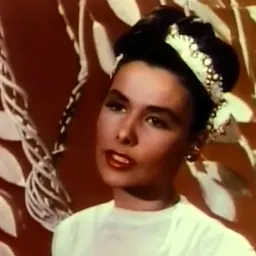
Hoskins was still active in his professional rehabilitation career in 1975 when he was chosen, for his work as an actor, to be inducted into the Black Filmmakers Hall of Fame at the second annual Oscar Micheaux Award ceremony held at the Paramount Theatre in Oakland. Also honored that year were Sidney Poitier, Lena Horne, Ruby Dee and Quincy Jones. He was interviewed about his career then and now:
In his acceptance speech, Hoskins asked the question, "What is success?", and part of his answer was, "I didn't get to do what I wanted so I did something I could live with. I think one thing that's been very important to me is that I try not to live in the past." He also thanked the audience: "...I want to thank each and every one of you. I'm sure glad you didn't forget me."
Retrospective 1979
One year before his death, a retrospective article about his life was published and was printed in various newspapers. "Allen Hoskins says he has fond memories of playing Farina in Our Gang about 50 years ago but he hasn't any residuals. 'I'm sick and tired of people thinking I get residuals or payment for replays of the still popular series,' Hoskins said in a 1979 interview. 'I haven't got no pot of money, I have never tried to trade off the name Farina, I haven't done that – I don't do that.' Instead the 58-year-old Hoskins said he struggled through years of house painting and dishwashing before landing his present job as Public Information Officer for the Alameda County Chapter of the Association for Retarded Children."
Death Hoskins died of cancer on July 26, 1980, in Oakland, California. Many newspapers, including the Farmington Daily Times, carried the story of his death "...he died Saturday after being admitted in a coma...His wife Franzy, was at his bedside along with his daughter Candy and his son Chris...at the time of his death she said he had been involved in starting a radio series and headed his own projects company known as ALFRAN..."
His wife, Franzy, continued to reside in the Bay Area until her death in 2010, and his sister, Jannie ("Mango"), also resided in Northern California until her death in 1996.
Hoskins was buried without a headstone in an unmarked grave in Evergreen Cemetery in Oakland. It was not until twenty years after his death that Hoskins received a proper headstone, through the efforts of Jan Turner and the Find a Grave website in 2000 (listed under Find A Grave Memorial #8483).
Selected filmography
Don’t just read it —
keep it.
Full-length biographies made to live with: read them, listen on the way to work, watch them tonight.
- E-book
- Audio
- Video
Instant download · yours to keep · every purchase keeps this site free
Important facts
People in Allen Hoskins's life
Named in this biography and alive at the same time




Related people
Same field, nearest in time


Contemporaries
People whose lives overlapped Allen Hoskins's





Frequently asked questions
Who was Allen Hoskins?
American actor (1920–1980)
When was Allen Hoskins born?
Allen Hoskins was born on 9 August 1920 in Boston.
When did Allen Hoskins die?
Allen Hoskins died on 26 July 1980 in California.
What was Allen Hoskins's occupation?
Allen Hoskins was an actor and film actor.
What nationality was Allen Hoskins?
Allen Hoskins was American.
Sources & further reading
Cite this page
APA: Biography.guide. (2026). Allen Hoskins. https://biography.guide/allen-hoskins/
MLA: "Allen Hoskins." Biography.guide, https://biography.guide/allen-hoskins/.
Chicago: "Allen Hoskins." Biography.guide. https://biography.guide/allen-hoskins/.
Data last updated: 2026-09-23 · Spot an error? Report a correction.
Portrait: Wikimedia Commons · author & licence
Page generated 2026-09-27 05:06 UTC