
About Allan McLeod Cormack
Lived 1924 – 1998 (aged 74). Allan McLeod Cormack was an American and South African physicist, biophysicist, researcher and physician, known for Computed tomography.
Allan MacLeod Cormack (February 23, 1924 – May 7, 1998) was a South African and American physicist, academic, and Nobel Laureate. He was Professor of Physics at Tufts University and won the 1979 Nobel Prize in Physiology or Medicine (along with Godfrey Hounsfield) for his work on X-ray computed tomography (CT), a significant and unusual achievement since Cormack did not hold a doctoral degree in any scientific field.
Early life and education Cormack was born on February 23, 1924, in Johannesburg, South Africa. He attended Rondebosch Boys' High School in Cape Town, where he was active in the debating and tennis teams. He received his B.Sc. in physics in 1944 from the University of Cape Town and his M.Sc. in crystallography in 1945 from the same institution. He was a doctoral student at Cambridge University from 1947 to 1949, and while at Cambridge he met his future wife, Barbara Seavey, an American physics student.
Career After marrying Seavey, he returned to the University of Cape Town in early 1950 to lecture. Following a sabbatical at Harvard in 1956–57, the couple agreed to move to the United States, and Cormack became a professor at Tufts University in the fall of 1957. Cormack became a naturalized citizen of the United States in 1966. Although he was mainly working on particle physics, Cormack's side interest in x-ray technology led him to develop the theoretical underpinnings of CT scanning. This work was initiated at the University of Cape Town and Groote Schuur Hospital in early 1956 and continued briefly in mid-1957 after returning from his sabbatical. His results were subsequently published in two papers in the Journal of Applied Physics in 1963 and 1964. These papers generated little interest until Hounsfield and colleagues built the first CT scanner in 1971 in the UK, taking Cormack's theoretical calculations into a real application. For their independent efforts, Cormack and Hounsfield shared the 1979 Nobel Prize in Physiology or Medicine. It is notable that the two built a very similar type of device without collaboration in different parts of the world.
Death Cormack died of cancer in Winchester, Massachusetts, at age 74. He was posthumously awarded the Order of Mapungubwe on December 10, 2002, for outstanding achievements as a scientist and for co-inventing the CT scanner.
Don’t just read it —
keep it.
Full-length biographies made to live with: read them, listen on the way to work, watch them tonight.
- E-book
- Audio
- Video
Instant download · yours to keep · every purchase keeps this site free
Important facts
People in Allan McLeod Cormack's life
Named in this biography and alive at the same time
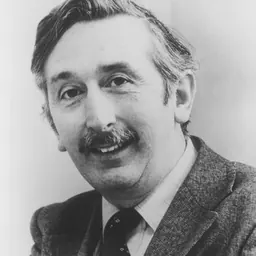


Related people
Same field, nearest in time



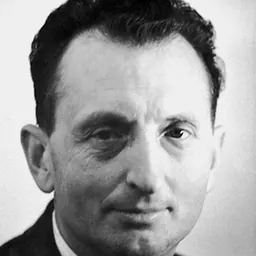

Contemporaries
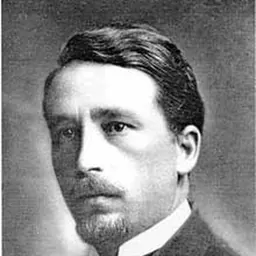
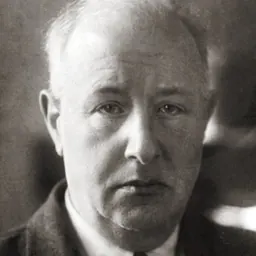
People whose lives overlapped Allan McLeod Cormack's



Frequently asked questions
Who was Allan McLeod Cormack?
American physicist (1924-1998)
When was Allan McLeod Cormack born?
Allan McLeod Cormack was born on 23 February 1924 in Johannesburg.
When did Allan McLeod Cormack die?
Allan McLeod Cormack died on 7 May 1998 in Winchester.
What was Allan McLeod Cormack's occupation?
Allan McLeod Cormack was a physicist, biophysicist, researcher and physician.
What was Allan McLeod Cormack known for?
Allan McLeod Cormack was known for Computed tomography.
What nationality was Allan McLeod Cormack?
Allan McLeod Cormack was American and South African.
Sources & further reading
· Wikipedia: Allan McLeod Cormack
· DBpedia: Allan MacLeod Cormack
Cite this page
APA: Biography.guide. (2026). Allan McLeod Cormack. https://biography.guide/allan-mcleod-cormack/
MLA: "Allan McLeod Cormack." Biography.guide, https://biography.guide/allan-mcleod-cormack/.
Chicago: "Allan McLeod Cormack." Biography.guide. https://biography.guide/allan-mcleod-cormack/.
Data last updated: 2026-09-21 · Spot an error? Report a correction.
Portrait: Wikimedia Commons · author & licence
Page generated 2026-09-27 04:59 UTC