
About Alice Rahon
Lived 1904 – 1987 (aged 82–83). Alice Rahon was a French painter, poet, writer, illustrator and artist.
Alice Phillipot (Alice Rahon) (8 June 1904 – September 1987) was a French-born Mexican poet and artist whose work contributed to the beginning of abstract expression in Mexico. She began as a surrealist poet in Europe but began painting in Mexico. She was a prolific artist from the late 1940s to the 1960s, exhibiting frequently in Mexico and the United States, with a wide circle of friends in these two countries. Her work remained tied to surrealism but was also innovative, including abstract elements and the use of techniques such as sgraffito and the use of sand for texture. She became isolated in her later life due to health issues.
Life Rahon was born Alice Marie Yvonne Philppot in Chenecey-Buillon, Quingey in the east of France. Her father Jean-Louis Philippot, was a valet and painter , while her mother Alphonsine Rahon worked as a cook.
Rahon's most vivid memories of childhood were of Brittany, the house of her paternal grandparents in Roscoff, where she passed long periods of time in the summer and during the Christmas holidays. She also remembered visiting the beaches of Morlaix.
When about three years old, she suffered a serious accident which put her in casts and affected the rest of her life. One of the injuries was a fracture in the right hip, which forced her to recuperate lying down for long periods of time. This left her isolated from other children, including her younger sister Geo, and she passed the time in the family garden reading, writing and drawing to occupy her mind. Her isolation and sense of fragility were reinforced when she fell again at age twelve, breaking a leg. For the rest of her life she always walked with a slight limp and pain.
By the time she was a teenager, she preferred solitude, creating worlds of her own imagination. Her father, an academic artist had taught her to draw
The Philippot family moved to Paris in 1920,and Rahon and her sister Georgette became enmeshed in Paris bohemian scene. Rahon supported herself by working as a model and through her writing. She was friends with Man Ray, Picasso and Joan Miró.
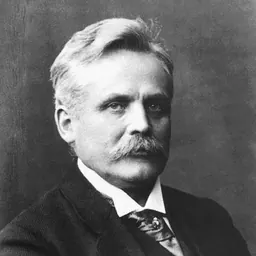
In 1931, while visiting Corsica she met artist Wolfgang Paalen
Her life with Paalen also introduced her to travel, which she did much of during her life. In 1933, the couple visited the cave paintings at Altamira and in 1936, she traveled to India accompanied by poet Valentine Penrose. Both of these travels had impact on her life and art, even naming two cats Vishnu and Subhashini in her late life. She traveled extensively during much of her life with later voyages to Alaska, Canada, the United States, Lebanon and in Mexico. They first traveled in Alaska, British Columbia and the U.S. west coast, where Paalen became fascinated by indigenous art. at first staying in a hotel in the San Ángel neighborhood. She became friends with Kahlo and Diego Rivera. With Kahlo she shared frustrations of a fragile body and the inability to have children as well as using art and writing to pass the time. The bond with Frida led to the later creation of a painting called La balada para Frida Kahlo.
In 1947, Alice and Paalen divorced. She named herself Rahon, and married the Canadian Edward Fitzgerald. However, this relationship ended several years later after the two worked on a film together. From then, Rahon's social life revolved around friends in various artistic, intellectual and foreign exile circles, which she had begun in Europe. By the 1950s, these friendships included Rufino Tamayo, Carlos Mérida, Octavio Paz, Henry Miller, Anaïs Nin, Henry Moore, Gordon Onslow Ford and his wife, along with Kahlo and Diego Rivera. She also maintained contacts with groups of artists in New York and California. After her death, a record she kept of these people's lives and deaths was found. She also continued to travel frequently, in part because of her art exhibits in the United States and Mexico but she also visited many cities in Mexico and spent long periods in Acapulco. One reason for this was that she was a strong swimmer despite her physical problems, moving more comfortably in the water than on land. but for the last years of her life, she lived practically in seclusion in her house in Tlaquepaque, visited by only a few friends such as Eva Sulzer and American professor Wayne Siewart, whom she had known since the 1950s. She lived surrounded by mementoes of her life, including books signed by the likes of Breton, Paul Éluard, poems by Picasso, letters from Henry Moore and Anaïs Nin, paintings dedicated by Yves Tanguy and Paalen, and old photographs and souvenirs.
By 1987, she could no longer take care of herself in her home and was placed in a nursing home. Refusing food, she died four months later in September 1987.
Career Rahon's first career was as a poet. In 1935, she became part of the Surrealist movement in Europe, meeting artists such as Paul Eluard and Max Ernst through her husband. In France, she published 'A meme la terre' with a print by Yves Tanguy, and in 1938 Sablier Couche, illustrated by Joan Miró. Both projects were supported by André Breton. She was the first female to be published in Editions Surréalistes in Paris in 1936. In Mexico, Rahon gradually left poetry, but she did publish one last collection of works called 'Noir Animal', in which appears a portrait of Alice painted by Paalen. She also contributed some poems and illustrations to Wolfgang Paalen's DYN (magazine), which published writing in English and French about Mexico for foreign audiences. However, her work with DYN was mostly as editor, working with writers such as Alfonso Caso, Miguel Covarrubias and Jorge Enciso . She utilized Poem-Painting in her illustrations in Dyn, that were inspired by pre-Columbian pieces of artwork and especially petrographs, which she used throughout her painting career. However, even as a painter, she remained connected to poetry, illustrating the writings of others such as Chateau de Grissou by Cesar Moro.
Her career as a painter and visual artist spanned almost forty years, starting shortly after she arrived to Mexico in 1939. She was supported in this endeavor by husband Wolfgang Paalen, who helped her get her first exhibits in 1944 and 1945 at the Galería de Arte Mexicano with Inés Amor, then in California and New York. She exhibited frequently, especially from the late 1940s into the 1960s in Mexico, the United States and even in Beirut, working frequently with artists and writers living outside their native Europe.
Other artistic endeavors included theater and film. In the late 1940s, she became interested in the genre, especially puppet theater. She created the script and costume design for a production called Orion, el gran hombre del cielo; however, it was never produced during her lifetime. However, it was revived in 2009 for a retrospective of Rahon's work at the Museo de Arte Moderno by a group called Laboratorio de la Máscara. They used her original notes and sketches to create sets and choreography inspired by dances from India. She withdrew from the art world, with only one major exhibit of her work, a retrospective at the Palacio de Bellas Artes in 1986, sponsored by Teresa del Conde who was head of INBA at the time. In 2022 the Gallery Wendi Norris in San Francisco held a solo exhibition of her work entitled Uncovering Alice Rahon. In 2023 her work was included in the exhibition Action, Gesture, Paint: Women Artists and Global Abstraction 1940-1970 at the Whitechapel Gallery in London. Her work is included in the collection of the Art Institute of Chicago and the Museum of Modern Art.
Artistry Rahon's early artistic work was in poetry, often writing about scenes and landscapes from her childhood, as well as about her immobility and nostalgia. The main influences in her work are surrealism, poetry, her travels and Mexico. Her surrealist influence was mostly from Paalen. She created paintings to honor Giorgio de Chirico, Frida Kahlo, Diego Rivera, Joan Miró and Pablo Neruda . Two dedicated to Frida Kahlo include La balada de Frida Kahlo (made shortly after Frida's death), as well as Frida aux yeux d’hirondelle in 1956, which was reworked a decade later.
While surrealist, her work also demonstrates the beginning of abstract art in Mexico in the 1940s, along with Carlos Mérida, Gunther Gerzso and Wolfgang Paalen. She was also a pioneer in the use of sand, sgraffito and other textures on her canvases.
Don’t just read it —
keep it.
Full-length biographies made to live with: read them, listen on the way to work, watch them tonight.
- E-book
- Audio
- Video
Instant download · yours to keep · every purchase keeps this site free
Important facts
Family & relationships
People in Alice Rahon's life
Named in this biography and alive at the same time





Related people
Same field, nearest in time

Contemporaries
People whose lives overlapped Alice Rahon's





Frequently asked questions
Who was Alice Rahon?
French painter and writer (1904–1987)
When was Alice Rahon born?
Alice Rahon was born on 8 June 1904 in Chenecey-Buillon.
When did Alice Rahon die?
Alice Rahon died in 1987 in Mexico City.
What was Alice Rahon's occupation?
Alice Rahon was a painter, poet, writer, illustrator and artist.
What nationality was Alice Rahon?
Alice Rahon was French.
Sources & further reading
Cite this page
APA: Biography.guide. (2026). Alice Rahon. https://biography.guide/alice-rahon/
MLA: "Alice Rahon." Biography.guide, https://biography.guide/alice-rahon/.
Chicago: "Alice Rahon." Biography.guide. https://biography.guide/alice-rahon/.
Data last updated: 2026-09-20 · Spot an error? Report a correction.
Page generated 2026-09-27 05:32 UTC