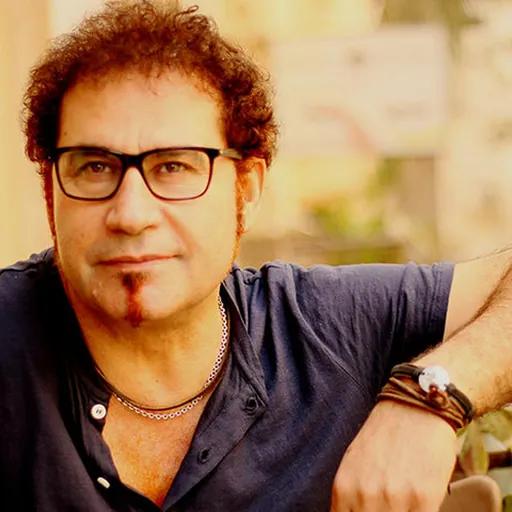
About Ali Bader
Born 1979. Ali Bader is an Iraqi novelist, poet, journalist and writer.
Ali Bader (Arabic علي بدر) is an Iraqi-Belgian novelist and script writer. He is the author of 18 novels and the editor-in-chief of Arabic publishing house Alca Books. His best-known works include Papa Sartre, The Tobacco Keeper, The Running after the Wolves, and The Sinful Woman. He lives in Brussels.
Biography Bader was born in Baghdad, Iraq, in 1979. He studied Western Philosophy and French Literature at Baghdad University. a parody of the trials and tribulations of the intellectuals of 1960s Baghdad, which portrays Iraq's wealthy and influential families in their decline. For this work, he was awarded the State Prize for Literature in Baghdad in 2002, as well as the Tunisian Abu Al-Qassem Al-Shabi Award.
His 2002 novel The Family's Winter (Arabic: شتاء العائلة) revisited the decline of Iraq's elite, this time focusing on the aristocracy in the 1950s. That same year, he received the Prize of Literary Creativity in the United Arab Emirates. His 2003 novel The Road to Mutran Hill dealt with Iraqi social problems and increasing social divisions, anticipating the further disintegration of Iraq's socioeconomic fabric.
In 2004, he followed up with The Naked Feast (Arabic: الوليمة العارية), exploring the emergence of the Iraqi intelligentsia at the beginning of the 20th century. Bader's novel Tumult, Women, and a Sunken Writer (2005) depicts the marginalized generation of Iraqi poets and novelists in the 1990s under Saddam Hussein's dictatorship and the international sanctions. One of his published essays, "Mid-night Maps", set during a journey to Iran, Turkey and Algeria, won the Ibn Battuta Prize for Contemporary Journeys. His 2006 novel Jerusalem Lantern is a fictional portrayal of Edward Said.
His 2007 novel Running after the Wolves highlights the Iraqi intellectuals who fled to Africa because of persecution under Saddam Hussein's regime. His novel The Tobacco Keeper examines cultural life after the tumultuous events of 2003. At the center of the novel is the life of an Iraqi Jewish musician killed in Baghdad in 2006, and his struggle to integrate into Iraqi society as an artist. The novel was nominated for the Arab Booker Prize.
In 2009, he published Kings of the Sand, about the conflict between the Iraqi army and the inhabitants of the desert. In 2010, he published Crime, Art, and Dictionary of Baghdad, a novel about the philosophical schools of the Abbathe Sid era.
Bader has also written non-fiction books, including Massignion in Baghdad (2005), Sleeping Prince and Waiting Campaign (2006), and Shahadat: Witnessing Iraq's Transformation after 2003 (2007). His novel MNSG: Navigation between Home and Exile (2008) won the Every Human Has Rights Media Award in 2008.
Bader is also a columnist in several Arabic newspapers, including Al-Hayat, Al Mada, Al-Dustour, and Al Riyadh. His journalism career has included assignments as a war correspondent.
Don’t just read it —
keep it.
Full-length biographies made to live with: read them, listen on the way to work, watch them tonight.
- E-book
- Audio
- Video
Instant download · yours to keep · every purchase keeps this site free
Important facts
People in Ali Bader's life
Named in this biography and alive at the same time
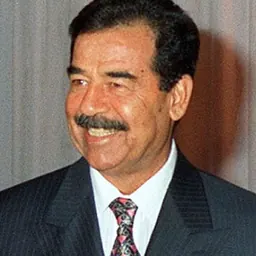


Related people
Same field, nearest in time




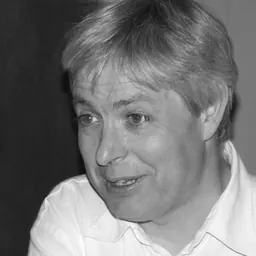
Contemporaries
People whose lives overlapped Ali Bader's



Frequently asked questions
Who is Ali Bader?
Iraqi-Belgian writer
When was Ali Bader born?
Ali Bader was born in 1979 in Baghdad.
What is Ali Bader's occupation?
Ali Bader is a novelist, poet, journalist and writer.
What nationality is Ali Bader?
Ali Bader is Iraqi.
Sources & further reading
Cite this page
APA: Biography.guide. (2026). Ali Bader. https://biography.guide/ali-bader/
MLA: "Ali Bader." Biography.guide, https://biography.guide/ali-bader/.
Chicago: "Ali Bader." Biography.guide. https://biography.guide/ali-bader/.
Data last updated: 2026-09-22 · Spot an error? Report a correction.
Portrait: Wikimedia Commons · author & licence
Page generated 2026-09-27 05:01 UTC