
About Algernon Sidney Crapsey
Lived 1847 – 1927 (aged 79–80). Algernon Sidney Crapsey was an American priest.
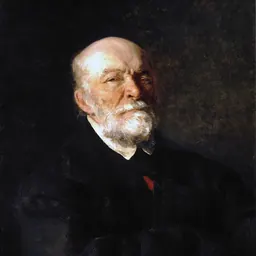
Algernon Sidney Crapsey (1847–1927) was an American Episcopal clergyman who in 1906 was defrocked after a celebrated heresy trial.
Family Algernon Sidney Crapsey was born in Fairmount, Ohio on June 28, 1847. His maternal grandfather Senator Thomas Morris left Virginia because he opposed slavery to help settle Ohio. Morris was an Abolitionist. He served one term in the United States Senate. Crapsey "identified deeply" with his grandfather Morris, who was to him "a seer, a prophet, a hero, and a martyr." He later looked back on the experience "as the hour of his conversion."
After ordination, Crapsey worked in St. Paul's Chapel of Trinity Church in New York City. In it, he made five statements affirming his orthodoxy: He reaffirmed the vows which he made at the time of his ordination. He professed his belief that the Holy Scriptures are the Word of God. He professed his belief, explicit and implicit, in the Apostles' and Nicene Creeds. He professed his use and veneration of the Sacraments as the means of union between the soul and God. He said that he was ready to follow the Bishops and others who are set over him in the Lord.
While at St. Andrew's, the Crapseys lost two daughters. Ruth died of undulant fever in 1898 at age eleven and daughter Emily died in 1901 at age 24 of appendicitis.
The twenty-fifth anniversary of the Crapsey's coming to St. Andrew's was on June 1, 1904. The congregation had a special service to celebrate the occasion and gave him gifts. A Rochester newspaper extolled Crapsey as "a power for good in the community for 25 years." It was based on a series of lectures in which Crapsey "advocated that the church become involved in social reform." Crapsey was "proud to acknowledge his heresy" because of his "rebellious, yet ethical heritage demanded it."
In December 1904, Crapsey began a series of Sunday evening lectures at St. Andrew's, which ended on February 18, 1905. As the lectures became "more unorthodox" they attracted greater notice in the press and by the diocese. He called the final lecture "Religion and Politics." In the lecture, Crapsey specifically questioned two articles of the Apostles' Creed. He said that "the Virgin Birth" and the "resurrection of Jesus" were legends, not facts. He implied that Jesus was "wrong about various teachings," and he "denied the deity of Christ and the validity of the supernatural." Because Crapsey believed in his "own merit," he did not need "the redemptive atonement of Christ," which orthodoxy held to be required. The lecture was reported in newspapers nationwide. Bishop Walker demanded a retraction, but Crapsey refused. suggested that Crapsey might keep quiet about his disagreements. The editorial pointed out that many a clergyman in Crapsey's situation "remains in the Church and keeps silent upon the uncertain doctrines." But Crapsey would not stop publicly promulgating his views because, for him, "silence constituted acquiescence" and he refused to "compromise." He preferred what he perceived as "martyrdom." and Stephen Todd Neese in his article "Algernon Sidney Crapsey and the Move for Presentment" in Anglican and Episcopal History Vol. 70, No. 3 (September 2001) and in his book Algernon Sidney Crapsey: The Last of the Heretics (Cambridge Scholars Publishing, 2009). Therefore, the following account will be based on these works.
Walker commanded Crapsey to appear before an ecclesiastical court held in St. James Church, Batavia, New York. The "presentment charge" was that Crapsey "did openly, advisedly, publicly and privately utter, avow, declare, and teach doctrines contrary to those held and received by the church."
Life after deposition William Rossiter Seward, who was neither a parishioner nor a friend of Crapsey, financed a new home for the Crapseys. Even though Rossiter did not know Crapsey personally, he supported Crapsey's work in Rochester. Seward later helped finance the education of the Crapseys' children. Crapsey reorganized what previously had been the brotherhood of Andrew's as the Brotherhood. The Brotherhood served as Crapsey's congregation. He taught Sunday School and "considered himself the pastor of the Brotherhood." Membership in the Brotherhood was open to people of any "race, nationality, class or creed." The Brotherhood's purpose was "to unify the race of mankind in God and in one another." He spoke at the Ethical Society in Philadelphia. While there, he met many prominent people. In 1907, he was a delegate to the International Peace Conference at the Hague. After he returned, Crapsey worked for six years as a parole officer. The Story of a Simple Life (Bible House, 1900). Political Crimes and Their Consequences (1901). A Constitutional Defense of the Negro. Delivered at a Mass Meeting of Citizens in the Metropolitan A.M.E. Church, Washington, D.C., December 15, 1901. The Greater Love (New York: Abbey Press, 1902, 2nd ed.). This work is a novel in which the heroine was "one of the working poor" and the hero was an Episcopal priest who was deposed for his "ethical principles." The novel was laced with the themes of "works righteousness and martyrdom" from Crapsey's own character. "Prison Methods." in Documents of the Senate of the State of New York, Volume 5 (New York State Legislature Senate, 1902), 83–90. Tractates (Jacobs, 1899-1902). Tracts included are "The Disappointment of Jesus Christ" (1899), "The Royal Priesthood" (1900), "The Pastoral Rod and Staff" (1900), "The Answer to Pilate" (1899), "The Judgement of Abraham" (1900), "The Law of Liberty" (1901), "God's Winnowing Fan" (1901), and "The Church: the School of the Saints" (1902). Algernon Sidney Crapsey, Religion and Politics (Thomas Whittaker, 1905). "Passive Resistance: Jesus' Method of Government." From chapter four Religion and Politics (Boston: American Peace Society, 1905.) "Honor Among Clergymen" in New Outlook, Volume 81 (Outlook Publishing Company, September 2, 1905), 25–29. The article is also available online at "Honor Among Clergymen" in New Outlook, Volume 81 (Outlook Publishing Company, September 2, 1905), 25-29. "Word of Farewell": Crapsey's last sermon at St. Andrew's, Christmas 1906. The Re-birth of Religion; Being an Account of the Passing of the Old and Coming of the New Dogmatic (New York: John Lane Co., 1907). Did Jesus Really Live? (Chicago, Original Research Society, 1908). A debate in which Crapsey takes the affirmative position against M. M. Mangasarian. The Rise of the Working-class (New York, The Century Co., 1914.) "Militarism and the Church". An article from the Annals of the American Academy of Political and Social Science, Vol. 66, July 1, 1916. International Republicanism: the Way to Permanent Peace (Society for Ethical Culture, 1918). The Ways of the Gods (New York, The International Press, 1921). The Last of the Heretics (Alfred A. Knopf, 1924).
Works about Crapsey Argument of Edward M. Shepard as Counsel for the Rev. Algernon S. Crapsey, S.T.D. Before the Court of Review of the Protestant Episcopal Church upon His Appeal from the Judgment of the Court of the Diocese of Western New York (October 19, 1906). Stephen T. Neese, Algernon Sidney Crapsey: the Last of the Heretics (Newcastle, UK: Cambridge Scholars Pub., 2007). Karen Alkalay-Gut, Alone in the Dawn: The Life of Adelaide Crapsey (University of Georgia Press, 2008) contains two chapters about the heresy trial of Adelaide Crapsey's father Algernon Sidney Crapsey: "The Heresy" and "The Verdict.".
Works about Crapsey's trial James Breck Perkins, Court of Review: In the Matter of the Presentment of the Reverend Algernon Sidney Crapsey, D. D., for Trial Upon Certain Charges The argument made for appeal of the decision of the Ecclesiastical Court of the Diocese of Western New York by Edward Morse Shepard in Argument of Edward M. Shepard as Counsel for Algernon S. Crapsey: before the Court of Review of the Protestant Episcopal Church Upon his Appeal from the Judgment of the Court of the Diocese of Western New York (October 19, 1906). The argument made against appeal of the decision of the Ecclesiastical Court of the Diocese of Western New York by John Lord O’Brian, the Church Advocate for the Diocese of Western New York.
Don’t just read it —
keep it.
Full-length biographies made to live with: read them, listen on the way to work, watch them tonight.
- E-book
- Audio
- Video
Instant download · yours to keep · every purchase keeps this site free
Important facts
People in Algernon Sidney Crapsey's life
Named in this biography and alive at the same time



Related people
Same field, nearest in time



Contemporaries
People whose lives overlapped Algernon Sidney Crapsey's



Frequently asked questions
Who was Algernon Sidney Crapsey?
American priest
When was Algernon Sidney Crapsey born?
Algernon Sidney Crapsey was born in 1847.
When did Algernon Sidney Crapsey die?
Algernon Sidney Crapsey died in 1927.
What was Algernon Sidney Crapsey's occupation?
Algernon Sidney Crapsey was a priest.
What nationality was Algernon Sidney Crapsey?
Algernon Sidney Crapsey was American.
Sources & further reading
· Wikipedia: Algernon Sidney Crapsey
· DBpedia: Algernon Sidney Crapsey
Cite this page
APA: Biography.guide. (2026). Algernon Sidney Crapsey. https://biography.guide/algernon-sidney-crapsey/
MLA: "Algernon Sidney Crapsey." Biography.guide, https://biography.guide/algernon-sidney-crapsey/.
Chicago: "Algernon Sidney Crapsey." Biography.guide. https://biography.guide/algernon-sidney-crapsey/.
Data last updated: 2026-09-20 · Spot an error? Report a correction.
Page generated 2026-09-27 05:05 UTC