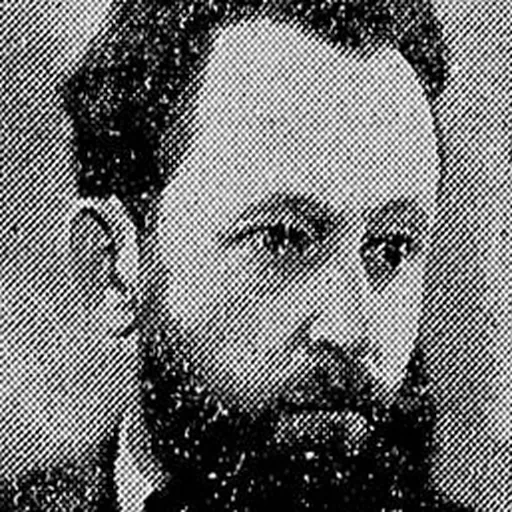
About Alfredo Ellis Junior
Lived 1896 – 1974 (aged 78). Alfredo Ellis Junior was a Brazilian historian, university teacher, writer and sociologist.
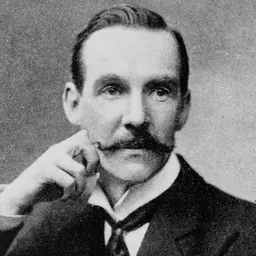
Alfredo Ellis Júnior (June 6, 1896 – June 13, 1974) was a Brazilian historian, sociologist, politician, and professor. He is best known for his studies on the bandeirante phenomenon, as well as for developing the concept of Paulistânia. He was a member of the Brazilian Historic and Geographic Institute.
Biography
Early years Born in São Carlos to a traditional family of early colonial settlers, Ellis Júnior was the son of , a medical doctor and Republican politician who studied at the University of Pensylvannia. He grew up on a coffee plantation, where he received his early education. He was enrolled at the Colégio de São Bento, a boarding school run by Benedictine friars, where he attended classes in geography and universal history taught by Afonso d'Escragnolle Taunay, who later became a friend. Taunay guided his intellectual development by stimulating him to study the state of São Paulo and introducing him to historiography.
After completing his secondary education, he traveled through Portugal, France, Germany, and England. During this travels, his father encouraged him to pursue intellectual activity. Following his return to Brazil, he enrolled at the Faculty of Law of São Paulo, where he read extensively across a variety of subjects, with a particular interest in philosophy, psychology, and the works of Charles Darwin, Thomas Henry Huxley, and Ernst Haeckel. He was also part of the literary milieu of the verde-amarelismo movement, which brought together figures such as Cassiano Ricardo, Plínio Salgado, Menotti del Picchia, and Cândido Mota Filho, and frontally opposed the strand of modernism advocated by Oswald de Andrade, as expressed in the Manifesto Pau-Brasil.
It was by virtue of this environment that Ellis Filho began his intellectual career with the book Raça de gigantes, a study of the so-called paulista democracy , developed as a historic analysis of the bandeiras and a racial interpretation of the people of São Paulo. His early works already revealed the influence of eugenics, as well as that of Brazilian thinkers such as Euclides da Cunha, on his thought. In 1928, he published O tesouro de Cavendish, a historical novel set in colonial Brazil.
Politics In late 1925, Ellis Júnior was elected as a federal deputy for the state of São Paulo. Ellis Júnior proposed the creation of a public body whose task would be regulating immigration influxes to São Paulo, suggesting Edgar Roquette-Pinto as its head.
The Revolution of 1930, led by Getúlio Vargas, ended Ellis Júnior's first term as a deputy. He was among the activists involved with the Liga de Defesa Paulista, a political organization that advocated greater autonomy for the state of São Paulo. Along with other intellectuals, he co-founded the newspaper O Separatista, which called for the political independence of the state. At the onset of the Constitutionalist Revolution, he enlisted as a soldier and fought in the Cunha front, where he was shot in the leg. Following the defeat of São Paulo, Ellis Júnior, reportedly disguised as an English tourist, took refuge on a friend's farm in order to avoid political persecution and reprisals.
Works
Raça de gigantes (1926) O tesouro de Cavendish: romance histórico brasileiro (1928) Populações paulistas (1934) Feijó e a primeira metade do século XX (1940) Capítulos da história social de São Paulo (1944) Meio século de bandeirismo (1946) O café e a Paulistânia (1950)
Don’t just read it —
keep it.
Full-length biographies made to live with: read them, listen on the way to work, watch them tonight.
- E-book
- Audio
- Video
Instant download · yours to keep · every purchase keeps this site free
Important facts
People in Alfredo Ellis Junior's life
Named in this biography and alive at the same time




Related people
Same field, nearest in time

Contemporaries
People whose lives overlapped Alfredo Ellis Junior's

Frequently asked questions
Who was Alfredo Ellis Junior?
Brazilian historian
When was Alfredo Ellis Junior born?
Alfredo Ellis Junior was born on 6 June 1896 in São Carlos.
When did Alfredo Ellis Junior die?
Alfredo Ellis Junior died on 13 June 1974 in São Paulo.
What was Alfredo Ellis Junior's occupation?
Alfredo Ellis Junior was a historian, university teacher, writer and sociologist.
What nationality was Alfredo Ellis Junior?
Alfredo Ellis Junior was Brazilian.
Sources & further reading
· Wikipedia: Alfredo Ellis Junior
· DBpedia: Alfredo Ellis Júnior
Cite this page
APA: Biography.guide. (2026). Alfredo Ellis Junior. https://biography.guide/alfredo-ellis-junior/
MLA: "Alfredo Ellis Junior." Biography.guide, https://biography.guide/alfredo-ellis-junior/.
Chicago: "Alfredo Ellis Junior." Biography.guide. https://biography.guide/alfredo-ellis-junior/.
Data last updated: 2026-09-21 · Spot an error? Report a correction.
Portrait: Wikimedia Commons · author & licence
Page generated 2026-09-27 04:59 UTC