
About Alfred Wolfsohn
Lived 1896 – 1962 (aged 65). Alfred Wolfsohn was a German music educator, musicologist and singing teacher.
Alfred Wolfsohn (23 September 1896 – 5 February 1962) was a German singing teacher who suffered persistent auditory hallucination of screaming soldiers, whom he had witnessed dying of wounds while serving as a stretcher bearer in the trenches of World War I. Wolfsohn was diagnosed with shell shock, but did not respond to treatment. He subsequently cured himself by vocalizing extreme sounds, bringing about what he described as a combination of catharsis and exorcism.
Inspired by the range and flexibility of his voice, which developed as a consequence of the exercises and experiments he pursued, Wolfsohn began teaching others to use his vocal techniques as a form of therapeutic expression, which were later incorporated into drama therapy and music therapy. Meanwhile, some pupils of Wolfsohn used the extraordinary vocal range they developed to create performing arts productions, which influenced avant-garde theatre and experimental music. Wolfsohn had no formal training in either field, but nonetheless became a critic of traditional vocal pedagogy and an advocate for the principles of analytical psychology developed by Carl Jung.
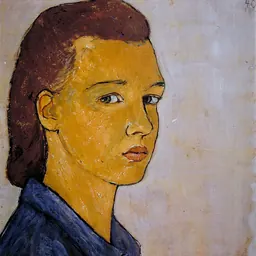
Wolfsohn began his teaching in Berlin, whilst working with the opera singer Paula Salomon-Lindberg where he developed a close mentoring relationship with the painter Charlotte Salomon. Wolfsohn and his theories inspired Charlotte Salomon to create her artwork Leben? Oder Theater? Ein Singespiel, assigning to him the name Amadeus Daberlohn.
After escaping Nazi Germany, Wolfsohn came to London and established the Alfred Wolfsohn Voice Research Centre in a large house in Golders Green, offering an approach to singing lessons and voice training based solely upon his self-devised techniques. The aim of his lessons was to help students extend the range and expressiveness of their voice to include every possible vocal sound, which he believed both represented and precipitated the realization of increased human potential in other areas of life.
Wolfsohn subscribed to the views of Carl Jung, who proposed that each human psyche comprises a composite of subpersonalities that appear most vividly in dreams. Wolfsohn sought to enable the expression of these subpersonalities through distinct vocal sounds.
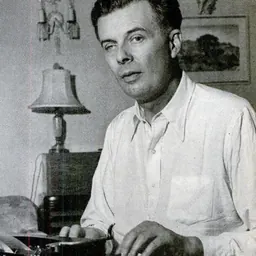
A number of notable authors, theatre directors, philosophers, and scientists took lessons with Wolfsohn, or observed demonstrations by his students, subsequently acknowledging his contribution to their work, including R. D. Laing, Irene Worth, Jean-Louis Barrault, Aldous Huxley, and Julian Huxley.
When Wolfsohn died in 1962, the group of long-standing students divided.
One group continued to train their voices under the leadership of Roy Hart, a South African actor and regular attendant of the Alfred Wolfsohn Voice Research Centre since 1947, who extended the vocal demonstrations for invited audiences, instigated by Wolfsohn, into full public performances, including Eight Songs for a Mad King, composed especially for Hart by Peter Maxwell Davies.
This group left the Alfred Wolfsohn Voice Research Centre in Golders Green in 1969, migrated to new premises in Hampstead, and formed a performing arts troupe, assuming the name the Roy Hart Theatre, which included some who like Hart had studied with Alfred Wolfsohn, and others who had never met the German teacher, but had been students in Hart's drama classes, which the South African actor began teaching at venues across London during the late 1950s.
In 1974 the Roy Hart Theatre moved to the south of France to establish a permanent rehearsal studio, school, and drama troupe. Roy Hart died in a car accident a year later, but the French-based group of remaining members continued producing experimental theatre and music productions and teaching the approach to vocal expression initially established by Wolfsohn. The other group, including vocalist Jenny Johnson and film maker, author, and archivist Leslie Shepard, dispersed and sought to continue the work of the Alfred Wolfsohn Voice Research Centre.
Alfred Wolfsohn was instrumental in precipitating and inspiring many types of extended vocal technique used by performing artists who incorporate into their performances sounds not usually used in speech or song. In addition, Wolfsohn was a major influence on the therapeutic and creative work of Paul Newham, Wolfsohn's official biographer who together with Leslie Shepard re-established the London base for the Alfred Wolfsohn Voice Research Centre in 1990.
Childhood Alfred Wolfsohn was born in Berlin into a German Jewish family.
In his unpublished manuscripts, Wolfsohn repeatedly describes himself as an exceptionally detached child, an outsider, and an observer, and he attributes this experience to being one of few Jewish children at school.
When Wolfsohn was 10 years old, his father, who had been a rifleman in the Franco-Prussian War, died of tuberculosis. Prior to his father's death, Wolfsohn had been disturbed by the sounds of his mother screaming during sexual intercourse, which he could hear from his bedroom.
After the war, Wolfsohn was admitted to a psychiatric hospital in Berlin, where he was diagnosed with shell shock, prescribed medication, and underwent hypnosis. Wolfsohn complained that his treatment failed to alleviate the auditory hallucinations of the vocal screams he had heard whilst serving in the trenches. Wolfsohn later recorded that, after being discharged from hospital, he felt as though he was dead for many years, but came back to life when he started singing.
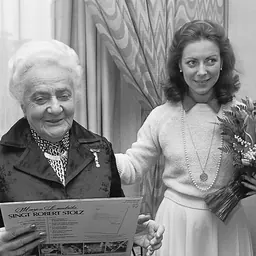
Kurt Singer put Wolfsohn in touch with the opera singer Paula Salomon-Lindberg, who offered him lodging and a job teaching singing to those she described as her less gifted pupils.
Wolfsohn also developed a close relationship with Paula Salomon-Lindberg's stepdaughter Charlotte Salomon, whom he mentored. Charlotte Salomon documented her relationship with Wolfsohn in a series of paintings, in which he appears as an elusive personal tutor called Amadeus Daberlohn.
In the same year, Wolfsohn was given permission by the British government to teach singing lessons, which he began at a house in North London that he named the Alfred Wolfsohn Voice Research Centre.
There followed a series of reports in national newspapers, all of which concentrated on the extended vocal range demonstrated by Wolfsohn's pupils, with scant reference to any psychotherapeutic benefits of his techniques.
The lack of formal recognition as a contributor to psychotherapy remained a frustration to Wolfson, culminating in his failure to secure a meeting with Carl Jung.
Scientific analysis and artistic application In August 1955 the voice of Jenny Johnson was examined by Professor Richard Luchsinger of the Zurich Otolaryngological Clinic, the results of which were presented in a lecture before the German Society for Speech and Voice Therapy in Hamburg and subsequently published in an article co-written with C.L. Dubois later that year. This was the first clinical examination of a voice trained in the extended vocal technique established by Wolfsohn and consisted of phonetic examination, laryngoscopy, stroboscopy, electro-acoustical analysis and a tomographical investigation. Luchsinger's examinations revealed that Johnson's larynx and pharynx showed no structural abnormality, but was small and symmetrical, corresponding to that of a coloratura soprano. The recordings verified what Luchsinger described as an extraordinarily large vocal range, from C (65 c.p.s.) to f4 sharp (2960 c.p.s.), or 5 octaves and 6 tones.
In 1956 Jenny Johnson performed in the Hoffnung Music Festival, receiving favourable reviews. During the same year Folkways Records released a vinyl long playing record of Wolfsohn's pupils demonstrating an extended vocal range, called Vox Humana. Also in 1956, the BBC broadcast a documentary about Wolfsohn's work.
However, the kind of recognition that Wolfsohn sought was not forthcoming until 1959, when Paul Moses, clinical professor in charge of the Speech and Voice Section, Division of Otolaryngology at the Stanford University School of Medicine, San Francisco, proposed that the research of the Alfred Wolfsohn Voice Research Centre had contributed substantially to an understanding of psychogenic pain generally, and the emotional and psychological causes of voice disorders specifically.
Death and new leader
On 26 January 1962, Wolfsohn ceased teaching due to ill health. He died ten days later on 5 February that year after contracting a chest infection while in hospital. Subsequently, Roy Hart, a student who had begun working with Wolfsohn in 1947, formed a performing arts company comprising some of Wolfsohn's long-standing students, and others who had taken acting lessons with Hart at various venues across London. Meanwhile, a number of other students and associates of Wolfsohn, including Jenny Johnson and author, film maker and archivist Leslie Shepard sought to continue the work of the Alfred Wolfsohn Voice Research Centre.
Nonetheless, it was Hart who succeeded in introducing the therapeutic benefits of Wolfsohn's techniques where his teacher had failed, presenting papers, primarily authored by Leslie Shepard and giving demonstrations in 1963 at the Jung Institute in London; in 1964 at the sixth International Congress of Psychotherapy in London; in 1967 at the seventh International Congress for Psychotherapy in Wiesbaden; in 1968 at the third International Congress of Psychodrama in Vienna; in 1970 at the sixth International Conference for Psychodrama in Zagreb; and in 1972 at the seventh International Congress of Psychodrama in Tokyo. In addition, in 1965 the Roy Hart Theatre began working with patients at Shenley Psychiatric Hospital, St. Albans in Hertfordshire.
Move to France
In the summer of 1974, the Roy Hart Theatre group, which comprised some members who had worked with Wolfsohn for 25 years, moved to the south of France where they began converting the buildings of an old château into studios for vocal and theatrical research. A year later, Roy Hart, his wife Dorothy Hart, and a third group member Vivienne Young – died in a car accident while en route between performances in Austria and a tour of Spain.
Legacy Wolfsohn subscribed to the views of Carl Jung, who proposed that each human psyche comprises a composite of subpersonalities that appear most vividly in dreams. Jung claimed to have witnessed what he variously called 'mini-personalities', 'splinter-psyches', and the 'little-people' expressed through vocal sound when he observed his cousin, a girl called Helly, manifest a range of distinct vocal timbres and dialects at séances, during which she claimed to be speaking on behalf of dead persons. This became the starting point for Jung's doctoral thesis, and precipitated his later work on what he described as the multiple nature of the psyche.
Wolfsohn believed that by extending the vocal range, it was possible to give this imagery a voice, including what Jung called mini-personalities, later referred to as subpersonalities thereby providing the vocalist with an opportunity to integrate disparate elements of their personality in accordance with the principle of individuation, which was a principal aim of Jung's approach to psychotherapy.
In addition, the work of Wolfsohn and Hart influenced a number of therapists, including Alexander Lowen. However, the influence and legacy of Alfred Wolfsohn's work is more apparent in performing arts that use extended vocal technique than in any clinical discipline.
Don’t just read it —
keep it.
Full-length biographies made to live with: read them, listen on the way to work, watch them tonight.
- E-book
- Audio
- Video
Instant download · yours to keep · every purchase keeps this site free
Important facts
People in Alfred Wolfsohn's life
Named in this biography and alive at the same time




Related people
Same field, nearest in time


Contemporaries
People whose lives overlapped Alfred Wolfsohn's



Frequently asked questions
Who was Alfred Wolfsohn?
German musician (1896-1962)
When was Alfred Wolfsohn born?
Alfred Wolfsohn was born on 23 September 1896 in Berlin.
When did Alfred Wolfsohn die?
Alfred Wolfsohn died on 5 February 1962 in United Kingdom.
What was Alfred Wolfsohn's occupation?
Alfred Wolfsohn was a music educator, musicologist and singing teacher.
What nationality was Alfred Wolfsohn?
Alfred Wolfsohn was German.
Sources & further reading
Cite this page
APA: Biography.guide. (2026). Alfred Wolfsohn. https://biography.guide/alfred-wolfsohn/
MLA: "Alfred Wolfsohn." Biography.guide, https://biography.guide/alfred-wolfsohn/.
Chicago: "Alfred Wolfsohn." Biography.guide. https://biography.guide/alfred-wolfsohn/.
Data last updated: 2026-09-22 · Spot an error? Report a correction.
Page generated 2026-09-27 05:23 UTC