
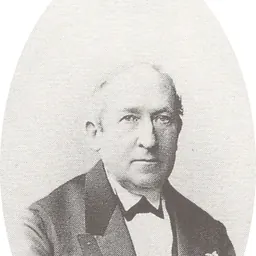
Alfred William Alcock
British military physician and carcinologist
About Alfred William Alcock
Lived 1859 – 1933 (aged 73). Alfred William Alcock was a British and Indian military physician, naturalist, ichthyologist, carcinologist, botanical collector and zoologist.
Alfred William Alcock (23 June 1859 – 24 March 1933) was a British physician, naturalist, and carcinologist.
Early life and education Alcock was the son of a sea-captain, John Alcock in Bombay, India who retired to live in Blackheath. His mother was a daughter of Christopher Puddicombe, the only son of a Devon squire.
Alcock studied at Mill Hill School, at Blackheath Proprietary School and at Westminster School. In 1876 his father faced financial losses and he was taken out of school and sent to India in the Wynaad district. Here he was taken care of by relatives engaged in coffee-planting. As a boy of 17 he spent time in the jungles of Malabar.
Career Coffee-planting in Wynaad declined and Alcock obtained a post at a commission agent's office in Calcutta. This office closed soon, and he worked from 1878 to 1880 in Purulia as an agent recruiting unskilled labourers for the Assam tea gardens. While here an acquaintance, Duncan Cameron, left him a Macmillan book by Michael Foster Physiology Primer. This book, he wrote in his autobiographical notes, "That little book was to me what the light from heaven was to St. Paul. It set my face towards natural science." He regretted that he never got to know Michael Foster, "but throughout the rest of my life I have thought of him with the gratitude of a disciple, for his Primer and for his Textbook of Physiology which I got as soon as I had mastered his Primer. Its philosophical spirit impressed me very deeply." and became Deputy Sanitary Commissioner for Eastern Bengal. In 1893 Wood-Mason went home and Alcock agreed to act for him during his absence. Wood-Mason died on his way to England and Alcock was appointed as the superintendent of the Indian Museum. In 1895–96 he was on the Pamis Boundary Commission and wrote the Natural History results of this expedition. At the Indian Museum, Alcock worked on improving the public galleries of Reptiles, Fishes and Invertebrates. Sir George King, who was the chairman of the trustees, supported him; however, after his retirement, Alcock was given little support. Lord Curzon decided to exhibit the collections of the Indian Museum as a memorial to Queen Victoria in 1903 and Alcock was ordered to "vacate the gallery of Fishes at a moment's notice." Alcock protested to the trustees that "it would be disgraceful to dismantle a gallery of Invertebrates which included an exhibit of the recent mosquito-malaria discoveries, at a moment when those discoveries seemed at last to have driven into the thickest British skull the great truth that the study of zoology was of some use to mankind." The gallery was spared but the library was to be cleared. These experiences caused Alcock to quit and he returned home in 1906 writing to the Government "telling him what an impossible post the Superintendentship of the Museum was and begging him to get it improved for the sake of the Science of Zoology and of my successors." In the letter Alcock wrote that Zoology was "a branch of pure science pregnant with human interest", important to the state "in matters of education, in matters agricultural and veterinary, and in the vital matter of public health." He suggested the establishment of "an Indian Zoological Survey" with a museum and laboratory administered by zoologists along the lines of the Geological and Botanical Surveys. should ever say that I had got it altered for my own benefit." and received the Barclay Medal from the Asiatic Society of Bengal in 1907.
In 1897 he married Margaret Forbes Cornwall, of Aberdeen.
In herpetology, Alcock described five new species of reptiles, some in collaboration with the English ornithologist Frank Finn.
Eponymous species Acromycter alcocki Gilbert & Cramer, 1897 Bathynemertes alcocki Laidlaw, 1906 Sabellaria alcocki Gravier, 1907 Pourtalesia alcocki Koehler, 1914 Aristeus alcocki Ramadan, 1938 Pasiphaea alcocki (Wood-Mason & Alcock, 1891) The Alcock’s deep-reef basslet, Plectranthias alcocki Bineesh, Gopalakrishnan & Jena, 2014 is a species of fish in the family Serranidae occurring in the Western Indian Ocean.
Don’t just read it —
keep it.
Full-length biographies made to live with: read them, listen on the way to work, watch them tonight.
- E-book
- Audio
- Video
Instant download · yours to keep · every purchase keeps this site free
Important facts
People in Alfred William Alcock's life
Named in this biography and alive at the same time
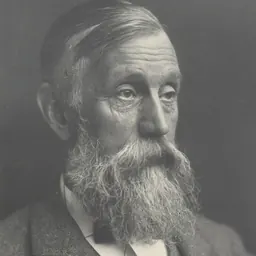


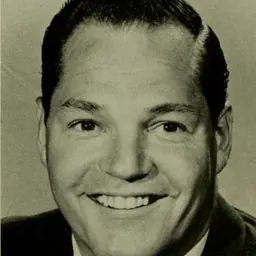



Related people
Same field, nearest in time

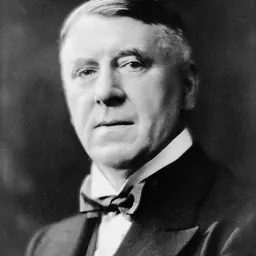
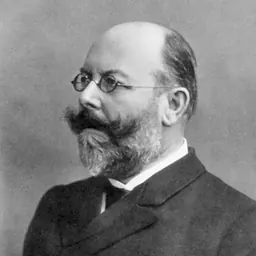

Contemporaries
People whose lives overlapped Alfred William Alcock's


Frequently asked questions
Who was Alfred William Alcock?
British military physician and carcinologist (1859–1933)
When was Alfred William Alcock born?
Alfred William Alcock was born on 23 June 1859 in Mumbai.
When did Alfred William Alcock die?
Alfred William Alcock died on 24 March 1933 in Belvedere.
What was Alfred William Alcock's occupation?
Alfred William Alcock was a military physician, naturalist, ichthyologist, carcinologist, botanical collector and zoologist.
What nationality was Alfred William Alcock?
Alfred William Alcock was British and Indian.
Sources & further reading
· Wikipedia: Alfred William Alcock
· DBpedia: Alfred William Alcock
Cite this page
APA: Biography.guide. (2026). Alfred William Alcock. https://biography.guide/alfred-william-alcock/
MLA: "Alfred William Alcock." Biography.guide, https://biography.guide/alfred-william-alcock/.
Chicago: "Alfred William Alcock." Biography.guide. https://biography.guide/alfred-william-alcock/.
Data last updated: 2026-09-20 · Spot an error? Report a correction.
Page generated 2026-09-27 05:24 UTC