
Alfred W. Crosby
Historian, author, and professor
About Alfred W. Crosby
Lived 1931 – 2018 (aged 87). Alfred W. Crosby was an American historian, university teacher, non-fiction writer and geographer, known for Ecological Imperialism: The Biological Expansion of Europe, 900-1900 and The Columbian Exchange.
Alfred Worcester Crosby Jr. (January 15, 1931 – March 14, 2018) was a professor of History, Geography, and American Studies at the University of Texas at Austin, and University of Helsinki. He was the author of books including The Columbian Exchange and Ecological Imperialism (1986). In these works, he provided biological and geographical explanations for the question why Europeans were able to succeed with relative ease in what he referred to as the "Neo-Europes" of Australasia, North America, and southern South America. America's Forgotten Pandemic (1976) is the first major critical history of the 1918 "Spanish" Flu.
Early life Alfred Worcester Crosby Jr. was born to Ruth (née Coleman) and Alfred Worcester Crosby Sr. in Boston, Massachusetts, on January 15, 1931, grew up in Wellesley, Massachusetts, and graduated from Wellesley High School.
Career In 1952, then entered the U.S. Army in 1952, during the Korean War, later spending about twenty months stationed in the Panama Canal Zone, in Latin America.
Crosby was an inter-disciplinary researcher who combined the fields of history, geography, biology and medicine.
In 1972 he created the term Columbian Exchange in his book of the same name. The term has become popular among historians and journalists. Other terms coined included 'Neo-Europes' and 'virgin soil epidemic'.
Crosby was also interested in the history of science and technology. He wrote several books on this subject, dealing with the history of quantification, of projectile technology, and the history of the use of energy. He said that the study of history also made him a researcher of the future. He was very much interested in how humankind could make the future a better one. then Yale University, the Alexander Turnbull Library in New Zealand, and twice at the University of Helsinki as a Fulbright Bicentennial Professor, most recently in 1997–98. He was appointed an academician by Finnish president Martti Ahtisaari. He retired from the chair of professor emeritus of History, Geography, and American Studies of the University of Texas at Austin, after teaching for 22 years, in 1999.
Personal life Crosby was interviewed by historian John Frederick Schwaller, who discussed Crosby's life and work.
Crosby's hobbies included birdwatching and jazz, on which topic he could lecture with great expertise. He traveled with thirty-six students to Delano, California to assist in building a health center for the United Farm Workers. Originally published as Epidemic and Peace, 1918. Available in Japanese translation. Ecological Imperialism: The Biological Expansion of Europe, 900–1900. Cambridge University Press 1986, 1993, 2004. Available in German, Swedish, Spanish, Portuguese, Italian, Polish, Greek, Turkish, Chinese, Japanese, and Korean translations. Germs, Seeds, and Animals: Studies in Ecological History. M. E. Sharpe 1994. The Measure of Reality: Quantification and Western Society, 1250–1600. Cambridge University Press 1997. Available in Spanish, Portuguese, French, Italian, Swedish, Japanese, Slovennian and Korean translations. Throwing Fire: Projectile Technology Through History. Cambridge University Press 2002. Also available in Turkish and Japanese language translations. Children of the Sun: A History of Humanity's Unappeasable Appetite for Energy. W.W. Norton 2006.
Don’t just read it —
keep it.
Full-length biographies made to live with: read them, listen on the way to work, watch them tonight.
- E-book
- Audio
- Video
Instant download · yours to keep · every purchase keeps this site free
Important facts
People in Alfred W. Crosby's life
Named in this biography and alive at the same time





Related people
Same field, nearest in time

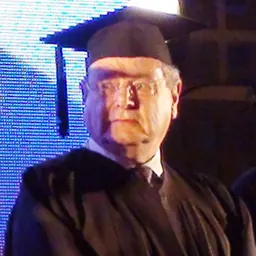
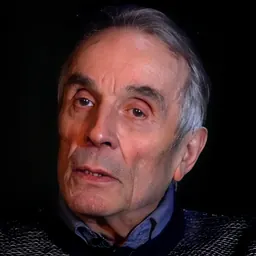
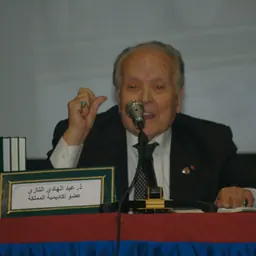
Contemporaries
People whose lives overlapped Alfred W. Crosby's
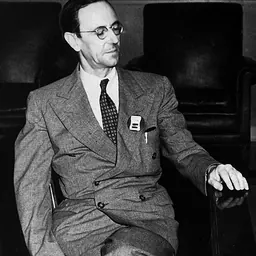
Frequently asked questions
Who was Alfred W. Crosby?
Historian, author, and professor (1931-2018)
When was Alfred W. Crosby born?
Alfred W. Crosby was born on 15 January 1931 in Boston.
When did Alfred W. Crosby die?
Alfred W. Crosby died on 14 March 2018 in Nantucket.
What was Alfred W. Crosby's occupation?
Alfred W. Crosby was a historian, university teacher, non-fiction writer and geographer.
What was Alfred W. Crosby known for?
Alfred W. Crosby was known for Ecological Imperialism: The Biological Expansion of Europe, 900-1900 and The Columbian Exchange.
What nationality was Alfred W. Crosby?
Alfred W. Crosby was American.
Sources & further reading
Cite this page
APA: Biography.guide. (2026). Alfred W. Crosby. https://biography.guide/alfred-w-crosby/
MLA: "Alfred W. Crosby." Biography.guide, https://biography.guide/alfred-w-crosby/.
Chicago: "Alfred W. Crosby." Biography.guide. https://biography.guide/alfred-w-crosby/.
Data last updated: 2026-09-20 · Spot an error? Report a correction.
Page generated 2026-09-27 05:26 UTC