
About Martti Ahtisaari
Lived 1937 – 2023 (aged 86). Martti Ahtisaari was a Finnish politician, diplomat and teacher.
Martti Oiva Kalevi Ahtisaari (23 June 1937 – 16 October 2023) was a Finnish politician and diplomat who was the president of Finland from 1994 to 2000. He was Finland's Ambassador to Tanzania from 1973 to 1977 and United Nations Commissioner for Namibia from 1977 to 1981. Noted for his international peace work, he received the Nobel Peace Prize in 2008.
Ahtisaari was a United Nations special envoy for Kosovo, charged with organizing the Kosovo status process negotiations. These negotiations aimed to resolve a long-running dispute in Kosovo, which later declared its independence from Serbia in 2008. In October 2008, he was awarded the Nobel Peace Prize "for his important efforts, on several continents and over more than three decades, to resolve international conflicts". The Nobel statement said that Ahtisaari had played a prominent role in resolving serious and long-lasting conflicts, including ones in Namibia, Aceh (Indonesia), Kosovo and Serbia, and Iraq.
Youth and early career
Martti Ahtisaari was born in Viipuri, Finland (now Vyborg, Russia) on 23 June 1937. His father, Oiva Ahtisaari, whose grandfather Julius Marenius Adolfsen had emigrated with his parents to Kotka, Finland in 1872 from Tistedalen in Southern Norway, took Finnish citizenship in 1929 and Finnicized his surname from Adolfsen in 1935. Oiva was working as a NCO in the supply troops in Viipuri when Martti was born. eventually attending Kuopion Lyseo high school. he began to study at Oulu teachers' college, attending the two-year course which enabled him to qualify as a primary-school teacher in 1959. In 1965, he joined the Ministry for Foreign Affairs Ahtisaari remained in that office until 1972, where he served from 1971 as assistant to the director, a position he combined with his presence on the Government's Advisory Committee for Trade and Industry Affairs of Developing Countries.
Diplomatic career
In the Namibian independence transition Ahtisaari began his diplomatic career in 1973 when he became Finland's Ambassador to Tanzania, Zambia, Somalia and Mozambique, an office he held until 1977. In July 1989, Glenys Kinnock and Tessa Blackstone of the British Council of Churches visited Namibia and reported: "There is a widespread feeling that too many concessions were made to South African personnel and preferences and that Martti Ahtisaari was not forceful enough in his dealings with the South Africans."
Perhaps because of his reluctance to authorise this SADF deployment, Ahtisaari was alleged to have been targeted by the South African Civil Cooperation Bureau (CCB). According to a hearing in September 2000 of the South African Truth and Reconciliation Commission, two CCB operatives (Kobus le Roux and Ferdinand Barnard) were tasked not to kill Ahtisaari, but to give him "a good hiding". To carry out the assault, Barnard had planned to use the grip handle of a metal saw as a knuckleduster. In the event, Ahtisaari did not attend the meeting at the Keetmanshoop Hotel, where Le Roux and Barnard lay in wait for him, and thus Ahtisaari escaped injury.
After the independence elections of 1989, Ahtisaari and his wife were made honorary Namibian citizens in 1992.
Ahtisaari served as UN undersecretary-general for administration and management from 1987 to 1991 causing mixed feelings inside the organisation during an internal investigation of massive fraud. When Ahtisaari revealed in 1990 that he had secretly lengthened the grace period allowing UN officials to return misappropriated taxpayer money from the original three months to three years, the investigators were furious. The 340 officials found guilty of fraud were able to return money even after their crime had been proven. The harshest punishment was the firing of twenty corrupt officials. He was sworn in on 1 March 1994.
Ahtisaari favoured pluralism and religious tolerance publicly. Privately, he and his wife practised their Christian faith. Contrary to some of his predecessors and his successor as the Finnish President, Ahtisaari ended all of his New Year's speeches by wishing the Finnish people God's blessing.
In January 1998 Ahtisaari was criticized by some NGOs, politicians and notable cultural figures because he awarded Commander of the Order of the Lion of Finland to the Forest Minister of Indonesia and to the main owner of the Indonesian RGM Company, a parent company of the April Company. The April Company was criticized by non-governmental organisations for destroying rain forests, and Indonesia itself was criticized heavily for human rights violations, especially in East Timor. Ahtisaari's party chairman Erkki Tuomioja said that giving medals was questionable since he feared the act may tarnish the public image of Finnish human rights policy. Students of the arts had demonstrations in Helsinki against the decision to give medals.
President Ahtisaari publicly supported Finland's entry into the European Union, and in a 1994 referendum, 57 percent of Finnish voters were in favour of EU membership. He later stated that if Finland had not voted to join the EU he would have resigned. The promotion of a European collective security system and Nordic cooperation, as well as a security policy without membership of NATO, were central to Ahtisaari's foreign policy. He also negotiated alongside Viktor Chernomyrdin with Slobodan Milošević to end the fighting in the Yugoslav province of Kosovo in 1999.
Ahtisaari's lack of restrained involvement in public affairs and his pronouncements on domestic and economic policy provoked reservations both in Parliament itself and in the Social Democratic Party of Finland, and led Ahtisaari not to stand for re-election in 2000, which was announced in April 1999, and also alleged that two members of the SDP also ran as candidates. Ahtisaari argued that Finland should be a full member of NATO and the EU in order "to shrug off once and for all the burden of Finlandization". He believed politicians should file an application and make Finland a member. He said that the way Finnish politicians avoided expressing their opinions was disturbing. He also noted that the so-called "NATO option" (acquiring membership if Finland were to be threatened) was an illusion, making an analogy to trying to obtain fire insurance when the fire has already started. Finland joined NATO on 4 April 2023, while Ahtisaari was still alive.
After leaving office, Ahtisaari held positions in various international organisations. In 2000, he became Chairman of the Brussels-based International Crisis Group, an NGO to which he committed $100,000 in government funding in 1994 one month after becoming elected President of Finland. He remained Chairman Emeritus.
Ahtisaari also founded the independent Crisis Management Initiative (CMI) with the goal of developing and sustaining peace in troubled areas. On 1 December 2000, Ahtisaari was awarded the J. William Fulbright Prize for International Understanding by the Fulbright Association in recognition of his work as a peacemaker in some of the world's most troubled areas. In May 2017 Ahtisaari suggested as new CMI leader Alexander Stubb, a former Prime Minister and future President of Finland, representing Finnish conservatives i.e. the National Coalition Party.
In 2000–01, Ahtisaari and Cyril Ramaphosa inspected IRA weapons dumps for the Independent International Commission on Decommissioning, as part of the Northern Ireland peace process.
In 2003 Ahtisaari defended George W. Bush's attack to Iraq, describing it as humanitarian intervention, which incited criticism from professor of history Juha Sihvola.
In November 2005, UN Secretary-General Kofi Annan appointed Ahtisaari as Special Envoy for the Kosovo status process which was to determine whether Kosovo, having been administered by the United Nations since 1999, should become independent or remain a province of Serbia. In early 2006, Ahtisaari opened the UN Office of the Special Envoy for Kosovo (UNOSEK) in Vienna, Austria, from where he conducted the Kosovo status negotiations. Those opposed to Ahtisaari's settlement proposal, which involved an internationally monitored independence for Kosovo, sought to discredit him. Allegations made by Balkan media sources of corruption and improper conduct by Ahtisaari were described by US State Department spokesman Tom Casey as "spurious", adding that Ahtisaari's plan is the "best solution possible" and has the "full endorsement of the United States". The New York Times suggested that this criticism of Ahtisaari on the part of the Serbs had led to the "bogging down" of the Kosovo status talks. In November 2008, Serbian media reported Pierre Mirel, director of the EU enlargement commission's western Balkans division as saying: "The EU has accepted that the deployment of EULEX has to be approved by the United Nations Security Council, and that the mission has to be neutral and will not be related to the Ahtisaari plan," Mirel said, following his meeting with Serbia's vice-president Bozidar Djelic.
In July 2007, however, when the EU, Russia and the United States agreed to find a new format for the talks, Ahtisaari announced that he regarded his mission as over. Since neither the UN nor the troika had asked him to continue mediations in the face of Russia's persistent refusal to support independence for Kosovo, he said he would nonetheless be willing to take on "a role as consultant", if requested. After a period of uncertainty and mounting tension, Kosovo unilaterally declared its independence from Serbia in February 2008.
In his work, he emphasised the importance of the United States in the peace process, stating that "There can be no peace without America."
Ahtisaari was chairman of the Interpeace Governing Council from 2000 to 2009. Beginning in 2009, Ahtisaari was Chairman Emeritus and a Special Advisor.
Ahtisaari was board director of the ImagineNations Group.
That same year he received the 2007 UNESCO Félix Houphouët-Boigny Peace Prize, for "his lifetime contribution to world peace".
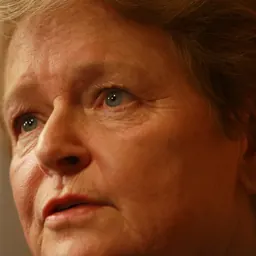
In September 2009 Ahtisaari joined The Elders, a group of independent global leaders who work together on peace and human rights issues. He travelled to the Korean Peninsula with fellow Elders Gro Harlem Brundtland, Jimmy Carter and Mary Robinson in April 2011, and to South Sudan with Robinson and Archbishop Desmond Tutu in July 2012.
He was also a member of the board of the European Council on Foreign Relations.
Nobel Peace Prize
On 10 October 2008, Ahtisaari was announced as that year's recipient of the Nobel Peace Prize. Ahtisaari received the prize on 10 December 2008 at Oslo City Hall in Norway. Ahtisaari twice worked to find a solution in Kosovo – first in 1999 and again between 2005 and 2007. The committee said he also worked with others this year to find a peaceful solution to the problems in Iraq. According to the committee, Ahtisaari and his group, Crisis Management Initiative (CMI), also contributed to resolving other conflicts in Northern Ireland, Central Asia, and the Horn of Africa. Ahtisaari invited Prime Minister Matti Vanhanen, Foreign Affairs Minister Alexander Stubb and others to his Nobel event, but not President Halonen.
According to the memoir of the former secretary of the Norwegian Nobel Committee, Geir Lundestad, former Foreign Minister and UN ambassador Keijo Korhonen, who was strongly against awarding the 2008 Nobel Peace Prize to Ahtisaari, wrote a letter to the committee which negatively portrayed Ahtisaari as a person and his merits in international conflict zones.
Syria conflict
In August 2012, Ahtisaari opined on the sectarian violence in Syria However, Ahtisaari then told the Finnish state broadcaster YLE that "he wished the mission would fall on someone else" which it ultimately did in the person of Lakhdar Brahimi, a former Algerian foreign minister and longtime U.N. diplomat.
In late 2015, Martti Ahtisaari reiterated charges he already had made in an interview with German broadcaster Deutsche Welle in early 2013 against members of the UN security council on the obstruction of a political solution to the escalating conflict in Syria. Ahtisaari said in an interview in September 2015 that he held talks about Syria with envoys from the five permanent members of the UN security council in February 2012. According to Ahtisaari, Vitaly Churkin, Russian ambassador to the United Nations, laid out three points during a meeting with him, which included not arming the Syrian opposition, commencing talks between Syrian president Assad and the opposition and finding "an elegant way for Assad to step aside". But the US, Britain and France subsequently ignored the proposal. Ahtisaari said in the interview: "Nothing happened because I think all these, and many others, were convinced that Assad would be thrown out of office in a few weeks so there was no need to do anything."
Personal life, health and death
In 1968, he married Eeva Irmeli Hyvärinen, who was studying history at the University of Helsinki and whom he met as a child at the Lyceum in Kuopio. They had one son, Marko Ahtisaari, who was born in 1969.
On 24 March 2020, amid the large-scale outbreak of COVID-19, it was announced that Ahtisaari had tested positive for the disease. His spouse, Eeva Ahtisaari, was diagnosed with the same virus on 21 March. Eeva Ahtisaari had attended the International Women's Day concert on 8 March at the Helsinki Music Centre while infected. On 14 April 2020 it was announced that Martti and Eeva Ahtisaari were recovering from the coronavirus infection.
On 2 September 2021, it was announced that Ahtisaari had Alzheimer's disease and had retired from public life.
Ahtisaari died from complications of Alzheimer's disease in Helsinki, on 16 October 2023, at age 86. His state funeral was held on 10 November 2023 in Helsinki Cathedral at 1 p.m., after which he was buried at the Hietaniemi Cemetery in Helsinki.
Honours
National honours
Foreign honours
70px Grand Cross with Collar of the Order of St. Olav (1994)
70px Supreme Companion of the Order of the Companions of O. R. Tambo (16 June 2004)
Awards 1995: Zamenhof Prize for International Understanding, of the World Esperanto Association 1998: Honorary doctorate from Helsinki University of Technology, and from National University of Kyiv-Mohyla Academy 2000: J. William Fulbright Prize for International Understanding 2000: Freedom medal 2000: : Hessian Peace Prize 2004: OR Tambo Award 2007: : Manfred Wörner Medal of the German Ministry of Defense 2008: Félix Houphouët-Boigny Peace Prize 2008: Nobel Peace Prize 2008: : Geuzenpenning 2011: Honorary degree, University of Calgary, Canada
Don’t just read it —
keep it.
Full-length biographies made to live with: read them, listen on the way to work, watch them tonight.
- E-book
- Audio
- Video
Instant download · yours to keep · every purchase keeps this site free
Important facts
Family & relationships
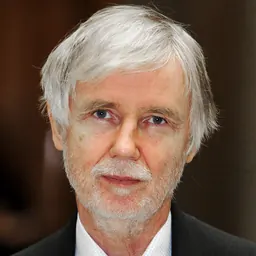
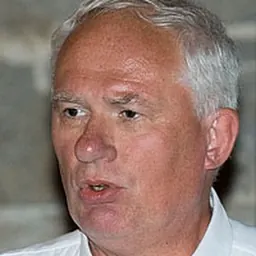
People in Martti Ahtisaari's life
Named in this biography and alive at the same time

Related people
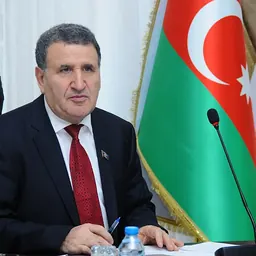
Same field, nearest in time





Contemporaries
People whose lives overlapped Martti Ahtisaari's



Frequently asked questions
Who was Martti Ahtisaari?
President of Finland from 1994 to 2000
When was Martti Ahtisaari born?
Martti Ahtisaari was born on 23 June 1937 in Vyborg.
When did Martti Ahtisaari die?
Martti Ahtisaari died on 16 October 2023 in Helsinki.
What was Martti Ahtisaari's occupation?
Martti Ahtisaari was a politician, diplomat and teacher.
What nationality was Martti Ahtisaari?
Martti Ahtisaari was Finnish.
Sources & further reading
Cite this page
APA: Biography.guide. (2026). Martti Ahtisaari. https://biography.guide/martti-ahtisaari/
MLA: "Martti Ahtisaari." Biography.guide, https://biography.guide/martti-ahtisaari/.
Chicago: "Martti Ahtisaari." Biography.guide. https://biography.guide/martti-ahtisaari/.
Data last updated: 2026-09-20 · Spot an error? Report a correction.
Page generated 2026-09-27 05:21 UTC