
About Alfred Reynolds
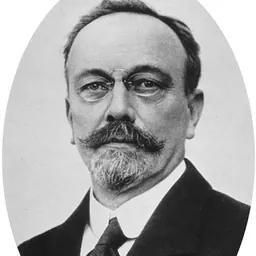
Lived 1907 – 1993 (aged 85–86). Alfred Reynolds was a Hungarian poet and writer.
Alfred Reynolds (born Reinhold Alfréd; 13 December 1907, Budapest – 23 December 1993, London In 1931 he founded the literary magazine Haladás (Progress), in which he published the poets Miklós Radnóti, István Vas and Mihály-András Rónai. The police forced him to close the magazine, but then he started a left-leaning monthly, Névtelen Jegyző (Anonymous Chronicler), which published his only collection of poetry, Első és utolsó lírai kötete (First and Last Book of Lyrics) before it too was closed down. Reynolds briefly joined the Communist Party of Hungary, leaving after the assassination of Sergey Kirov in 1934, allegedly ordered by Joseph Stalin. He was imprisoned, subsequently placed under police observation and lost his job. In 1936 he escaped from Hungary and went to London where he lived for the rest of his life. He was in the British Army during the Second World War and joined the Intelligence Corps in 1944, participating in the denazification programme, see below.
In post-war London Reynolds led a libertarian group called the Bridge Circle. Articles from its journal, the London Letter, are collected in Pilate's Question (1982), the title essay of which was the group's central focus of attention. Writers who early in their careers attended Bridge Circle meetings included Sidney E. Parker, Nicolas Walter, Bill Hopkins and Stuart Holroyd. Most notable was Colin Wilson, who has said he first wrote The Outsider as a riposte to Pilate's Question.
Reynolds' Jesus versus Christianity (1988) contrasts the teachings of Jesus with the doctrines of the Christian churches.
Reynolds had been known of in Hungarian literary circles because of his friendship with the youthful Radnóti but he had little contact with Hungarian writers after moving to England. In 1980 a copy of his early volume of poetry was rediscovered by the literary critic François Bréda in a bookshop in Cluj-Napoca, Romania, and he was traced in London. In 1993 he visited Cluj at the invitation of Bréda and the poet Géza Szőcs, where he was well received and donated to Szőcs some hitherto unreleased Radnóti manuscripts.
Reynolds' archive comprises: family photographs dating from the mid nineteenth century; literary & political works; letters; photographs, letters, art work and ephemera from his time during and after World War II working in the denazification programme with German prisoners of war at Kempton Park in England and Slemdal Camp in Norway.
The wartime archive has been donated to the UK's Imperial War Museum at Duxford, near Cambridge. (Catalogue Number: Documents.23619). Correspondence with Martin Buber has been donated to the National Museum of Israel in Jerusalem.
All other publications, papers, photographs and letters together with copies of the items at Duxford and Jerusalem have been donated to the Petőfi Literary Museum in Budapest. The archive was in the possession of the late Dr. Alan Detweiler who was delighted that his great friend's archive and published works had found a home in Hungary.
In December 2023 a book about Alfred Raynolds' life was published and written by his friend Richard Headicar who shared many of Alfred's beliefs. Richard had been working on the book for a number of years from his home in Hethersett, Norfolk.
Works Reinhold Alfréd, Első és utolsó lírai kötete, Névtelen Jegyző kiadása, Budapest, 1932. Alfred Reynolds, The Hidden Years. Introduction by Colin Wilson. Cambridge International Publishers, London, 1981. Alfred Reynolds, Pilate's Question. Twenty years of articles, essays and sketches (1950–1970). Cambridge International Publishers, London, 1982. Alfred Reynolds, Jesus Versus Christianity. Open Gate Press, 393 p., 1988, 1993.
Don’t just read it —
keep it.
Full-length biographies made to live with: read them, listen on the way to work, watch them tonight.
- E-book
- Audio
- Video
Instant download · yours to keep · every purchase keeps this site free
Important facts
People in Alfred Reynolds's life
Named in this biography and alive at the same time





Related people
Same field, nearest in time

Contemporaries
People whose lives overlapped Alfred Reynolds's

Frequently asked questions
Who was Alfred Reynolds?
Hungarian writer (1907–1993)
When was Alfred Reynolds born?
Alfred Reynolds was born on 13 December 1907 in Budapest.
When did Alfred Reynolds die?
Alfred Reynolds died in 1993 in London.
What was Alfred Reynolds's occupation?
Alfred Reynolds was a poet and writer.
What nationality was Alfred Reynolds?
Alfred Reynolds was Hungarian.
Sources & further reading
· DBpedia: Alfred Reynolds (writer)
Cite this page
APA: Biography.guide. (2026). Alfred Reynolds. https://biography.guide/alfred-reynolds-poet/
MLA: "Alfred Reynolds." Biography.guide, https://biography.guide/alfred-reynolds-poet/.
Chicago: "Alfred Reynolds." Biography.guide. https://biography.guide/alfred-reynolds-poet/.
Data last updated: 2026-09-20 · Spot an error? Report a correction.
Page generated 2026-09-27 05:34 UTC