
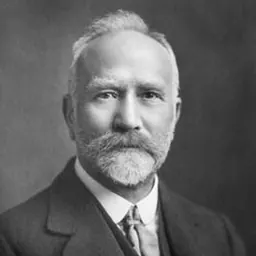
Alfred Reade Godwin-Austen
Former British Army officer
About Alfred Reade Godwin-Austen
Lived 1889 – 1963 (aged 73). Alfred Reade Godwin-Austen was a British military officer and south Wales Borderers.
General Sir Alfred Reade Godwin-Austen, (17 April 1889 – 20 March 1963) was a British Army officer who served during the First and the Second World Wars.
Early life and military career The second son of Lieutenant Colonel A. G. Godwin-Austen, late the 24th and 89th (The Princess Victoria's) Regiment of Foot, Reade Godwin-Austen was born in Frensham, Farnham in Surrey, on 17 April 1889. He was educated at St Lawrence College, Ramsgate, and later at the Royal Military College, Sandhurst, to pursue a military career, following both his father and great-grandfather.
Godwin-Austen was a great-grandson of Major General Sir Henry Godwin, who commanded the British and Indian forces in the Second Anglo-Burmese War. His uncle was Henry Haversham Godwin-Austen, who gave his name to the highest mountain in the Karakoram range; this mountain is now better known as K2.
Upon passing out from Sandhurst, Godwin-Austen was commissioned as a second lieutenant into the South Wales Borderers in 1909.
During his service in the First World War, he was awarded the Military Cross and twice mentioned in despatches while serving as a staff officer with the 13th (Western) Division, a Kitchener's Army formation, at Gallipoli, in Palestine, and in Mesopotamia. In November 1915 he succeeded Douglas Brownrigg as the 13th Division's deputy assistant adjutant and quartermaster general.
Between the wars Godwin-Austen attended the Staff College, Camberley, as a student from 1924 to 1925, alongside fellow students such as Ivor Thomas, Noel Beresford-Peirse, Vyvyan Pope, Douglas Graham, Michael O'Moore Creagh, Daril Watson, Archibald Nye, Humfrey Gale and Noel Irwin, all of whom rose to high command in the next war. Due to a lack of promotion in his own regiment, Godwin-Austen transferred as a lieutenant colonel to the Duke of Cornwall's Light Infantry and commanded the 2nd Battalion from 1936 to 1937, before being employed with the British military mission to the Egyptian Army from 1937 to 1938. His next appointment, during the Arab revolt in Palestine, was in successive command of the 13th and 14th Infantry Brigades, the latter post being held until August 1939, shortly before the Second World War began.
Second World War On the outbreak of war in September 1939, Godwin-Austen, mentioned in despatches for his services in Palestine, had just been promoted to the acting rank of major general to become General Officer Commanding (GOC) of the 8th Infantry Division. Bernard Montgomery had relinquished command and returned to England to command the 3rd Infantry Division. The understrength division was responsible for internal security in the British Mandate of Palestine. After the division was disbanded in February 1940, Godwin-Austen was nominated in July to command the 2nd (African) Division, which was forming in Kenya. He was again mentioned in despatches in July 1940.
In mid-August, before taking up his command, Godwin-Austen was sent to British Somaliland to take over the British forces during the Italian conquest of British Somaliland. His withdrawal at the decisive Battle of Tug Argan was fatal to his attempt to defend the territory but it allowed almost the entire Commonwealth contingent to withdraw to Berbera and evacuate by sea to Aden. Commonwealth losses in the short campaign are estimated to have been exceedingly light, about 260 (38 killed, 102 wounded and 120 missing). Wavell refused to accede to Churchill's demand and Godwin-Austen moved on to take command of his division in Kenya on 12 September. Churchill was to retain his grudge towards him.
During the East African Campaign, Godwin-Austen led the 2nd (African) Division (renamed 12th (African) Division) as part of East Africa Force, commanded by Lieutenant General Alan Cunningham, in its advance from Kenya into Italian East Africa. His division invaded Italian Somaliland on 11 February and by late February had scored an emphatic victory over Italian forces at Gelib. Once Mogadishu had been taken, Cunningham swung his force inland across the Ogaden desert and into Ethiopia, entering the capital, Addis Ababa, on 6 April.
When Rommel counter-attacked in January 1942, the Allies were forced to retreat in some confusion. Godwin-Austen, seeing that one of his divisions, the 4th Indian Infantry Division, was under threat, after consulting with Cunningham's successor, Lieutenant General Neil Ritchie, ordered them to withdraw. Ritchie changed his mind and issued a countermand directly to Major General Francis Tuker, the divisional commander. Feeling that Ritchie had by this action displayed a lack of confidence in him, Godwin-Austen tendered his resignation to Auchinleck, which was reluctantly accepted. Tuker was later to write: "His going was the latest of many misjudgements which had started to shake confidence in the leadership. We lost the wrong man."
In spite of support from General Sir Alan Brooke, Chief of the Imperial General Staff, and Sir James Grigg, the Secretary of State for War, Churchill was adamant that Godwin-Austen should not receive a new posting. Churchill relented in November after the intervention of South African Field Marshal Jan Smuts and Godwin-Austen was appointed Director of Tactical Investigation at the War Office. He subsequently became Vice Quartermaster-General at the War Office and as the war ended, the Quartermaster-General and then Principal Administrative Officer in India, reporting to the Commander-in-Chief, General Sir Claude Auchinleck. Serving as Chairman of the South-West Division of the National Coal Board, from 1946 to 1947, he was also Colonel of the South Wales Borderers from 1950 to 1954. Godwin-Austen, a bachelor, after suffering from a long illness, died in Maidenhead on 20 March 1963, just under a month from his 74th birthday.
Don’t just read it —
keep it.
Full-length biographies made to live with: read them, listen on the way to work, watch them tonight.
- E-book
- Audio
- Video
Instant download · yours to keep · every purchase keeps this site free
Important facts
People in Alfred Reade Godwin-Austen's life
Named in this biography and alive at the same time

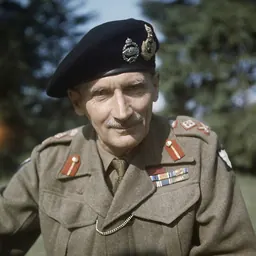
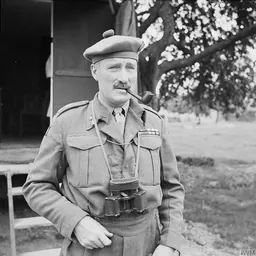

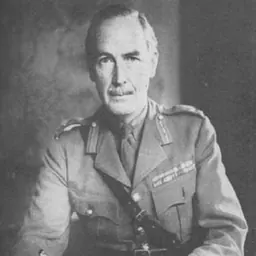

Related people
Same field, nearest in time

Contemporaries
People whose lives overlapped Alfred Reade Godwin-Austen's





Frequently asked questions
Who was Alfred Reade Godwin-Austen?
former British Army officer (1889–1963)
When was Alfred Reade Godwin-Austen born?
Alfred Reade Godwin-Austen was born on 17 April 1889 in British Empire, Frensham.
When did Alfred Reade Godwin-Austen die?
Alfred Reade Godwin-Austen died on 20 March 1963 in Maidenhead.
What was Alfred Reade Godwin-Austen's occupation?
Alfred Reade Godwin-Austen was a military officer and south Wales Borderers.
What nationality was Alfred Reade Godwin-Austen?
Alfred Reade Godwin-Austen was British.
Sources & further reading
· Wikipedia: Alfred Reade Godwin-Austen
· DBpedia: Reade Godwin-Austen
Cite this page
APA: Biography.guide. (2026). Alfred Reade Godwin-Austen. https://biography.guide/alfred-reade-godwin-austen/
MLA: "Alfred Reade Godwin-Austen." Biography.guide, https://biography.guide/alfred-reade-godwin-austen/.
Chicago: "Alfred Reade Godwin-Austen." Biography.guide. https://biography.guide/alfred-reade-godwin-austen/.
Data last updated: 2026-09-20 · Spot an error? Report a correction.
Page generated 2026-09-27 05:19 UTC