
Alfred Niger
Antebellum Black suffrage activist and barber from Providence, Rhode Island
About Alfred Niger
Lived 1797 – 1862 (aged 64–65). Alfred Niger was a suffragist.
Alfred Niger (c. 1797—August 25, 1862) was a free African-American activist who lived in Providence, Rhode Island and worked as a barber. Niger was a leading influential figure in the movement for Black suffrage in early 19th century Rhode Island, during the onset of the Dorr Rebellion.
In 1831, William Lloyd Garrison hired Niger to be an agent for The Liberator throughout Rhode Island. Niger was also an agent for Freedom's Journal in Providence. He lived and worked as a barber in Providence, Rhode Island from 1824 to his death in 1862. On November 4, 1827, in Providence, Niger married Julia Bowen. By 1850, Alfred and Julia had at least three children together, Elizabeth, Margaret, and Alexander Petion (after Alexander Petion).
Black national conventions Beginning in the 1830s, Niger became active in the Black national convention movement. At a Black national convention in Philadelphia in 1835, Niger, along with William Whipper and Augustus Price, was elected to draft and deliver an address to the American Moral Reform Society that explained the purpose of the organization to the general public.
The men declared that "'the depravity of our morals' provoked racial prejudice and claimed that moral reform offered the best means for improving the conditions of black Americans." The speech also called for "the elimination of 'national distinctions, complexional variations, geographical lines, and sectional bounds' in the reform society's conduct.
Rhode Island Anti-Slavery Society Beginning in the early 1830s, Niger served as a Providence delegate to the New England Anti-Slavery Society, led by William Lloyd Garrison. In 1836, Niger with other Rhode Islanders created the Rhode Island Anti-Slavery Society (RIASS). Niger was only one of two men in the organization. According to historian CJ Martin: "From then until the end of the suffrage movement, the RIASS was to be Black Providence leaders’ most powerful ally –- likely because of Niger's leadership within it." By 1837, Niger had become a member of the RIASS’s powerful Executive Committee. Martin writes: "He undoubtedly had a hand in writing the committee’s resolutions that year, two of which were dedicated to prioritizing, concurrently to ending slavery in the South, the idea that all distinctions of color, which were infringements on the Declaration of Independence’s ideas about equality in mankind, should be abolished."
It was in this environment that Niger both owned his own home and developed his own business as a barber in early 19th century Providence, Rhode Island. When the City of Providence sought to levy taxes on the increasing amounts of Black-owned property, the Black community reacted by arguing that it was taxation without representation. At a protest meeting at the African Union Meeting House, Niger was elected to be its secretary, and George C. Willis its chairman. Both Niger and Willis were known to be collaborators of William Lloyd Garrison, and thus were connected to the antislavery movement.
By 1841, the Suffrage Party began to organize a call for a convention to draft a new state constitution, led by Thomas Wilson Dorr; they became known as "Dorrites." As they began to organize, it became clear that they would have to confront the issue of Black suffrage. Property-owning Black men had been able to vote in Rhode Island until a law made it illegal in 1822. In August 1841, as the Dorrites began to form the People's Convention, Alfred Niger tried to exploit a loophole in the rules for electing delegates. According to historian Van Gosse, the rules did not specify that only whites could vote. Nevertheless, Niger was turned away. Gosse writes that the Legal Party "broadcast this exclusion to lambaste the Dorrites' 'democratic' bad faith".
At a meeting of the Suffrage Party in Providence on September 27, 1841, nominations were made for the office of treasurer. Alfred Niger was one of those nominated. Historian Irving Bartlett writes that: "Acting upon a suggestion from the floor that Mr. Niger was a Negro, the Suffragists voted not to receive the majority report and the meeting immediately fell into confusion. Mr. Field, the man who was instrumental in bringing in Niger's nomination, finally rose to explain his action. His opposition to Negro suffrage was well-know, he said, and he brought the subject to the floor only 'in order that it might be finally decided upon by the Association.' In other words, Field wanted to know how many pro-Negro men were in his party."
A motion to strike "white" was introduced at the convention, but was defeated, 46–18. After this, many Black men and white abolitionists who left the Suffrage Party joined the side of the Legal Party, and hundreds of Black men joined Providence's home guard in the summer of 1842. In November 1842, Rhode Island's new constitution, written by the General Assembly, was ratified, and extended the right to vote to "all native [male] citizens of the United States." This may make Rhode Island the first state to offer Black male suffrage in the United States.
Later life and death According to historian CJ Martin, "Niger’s sons followed in their father’s footsteps by becoming professionals in Providence’s Black community. Alexander became, according to one historical account of the Providence print industry, the first Black man to work in printing in the city. He probably also became the first Black member of a typographical union in Providence when he was one of its founding members in 1857."
Alfred Niger died on August 25, 1862, in Providence, Rhode Island. He is buried in the Locust Grove Cemetery in Elmwood, Providence, Rhode Island.
Don’t just read it —
keep it.
Full-length biographies made to live with: read them, listen on the way to work, watch them tonight.
- E-book
- Audio
- Video
Instant download · yours to keep · every purchase keeps this site free
Important facts
People in Alfred Niger's life
Named in this biography and alive at the same time

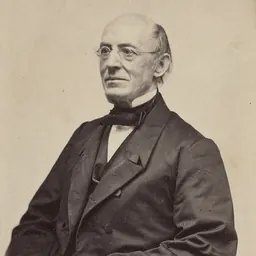

Related people
Same field, nearest in time




Contemporaries
People whose lives overlapped Alfred Niger's





Frequently asked questions
Who was Alfred Niger?
antebellum Black suffrage activist and barber from Providence, Rhode Island
When was Alfred Niger born?
Alfred Niger was born in 1797 in Old Saybrook, Connecticut.
When did Alfred Niger die?
Alfred Niger died on 25 August 1862 in Providence, Rhode Island.
What was Alfred Niger's occupation?
Alfred Niger was a suffragist.
Sources & further reading
Cite this page
APA: Biography.guide. (2026). Alfred Niger. https://biography.guide/alfred-niger/
MLA: "Alfred Niger." Biography.guide, https://biography.guide/alfred-niger/.
Chicago: "Alfred Niger." Biography.guide. https://biography.guide/alfred-niger/.
Data last updated: 2026-09-20 · Spot an error? Report a correction.
Page generated 2026-09-27 05:16 UTC