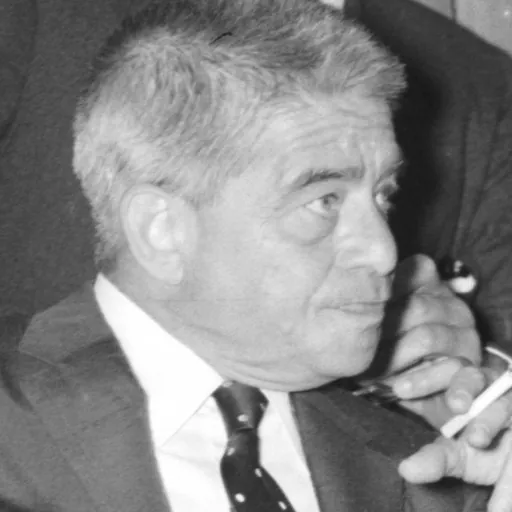
About Alfred Newman
Lived 1901 – 1970 (aged 68). Alfred Newman was an American conductor, composer, film score composer, actor, director and musician.
Alfred Newman (March 17, 1900 – February 17, 1970) was an American composer, arranger, and conductor of film music. From his start as a music prodigy, he came to be regarded as a respected figure in the history of film music. He won nine Academy Awards and was nominated 45 times, contributing to the extended Newman family being the most Academy Award-nominated family with a collective 92 nominations in various music categories.
In a career spanning more than four decades, Newman composed the scores for over 200 motion pictures. Some of his most famous scores include Wuthering Heights, The Hunchback of Notre Dame, The Mark of Zorro, How Green Was My Valley, The Song of Bernadette, Captain from Castile, All About Eve, Love Is a Many Splendored Thing, Anastasia, The Diary of Anne Frank, How the West Was Won, The Greatest Story Ever Told, and his final score, Airport, all of which were nominated for or won Academy Awards. He is perhaps best known for composing the fanfare which accompanies the studio logo at the beginning of 20th Century Fox's productions. Prior to commencing his employment with 20th Century Fox, Newman composed the fanfares which are most often associated with Samuel Goldwyn productions and David O. Selznick productions.
Newman was also highly regarded as a conductor, and arranged and conducted many scores by other composers, including George Gershwin, Charlie Chaplin, and Irving Berlin. He also conducted the music for many film adaptations of Broadway musicals (having worked on Broadway for ten years before coming to Hollywood), as well as many original Hollywood musicals.
He was among the first musicians to compose and conduct original music during Hollywood's Golden Age of movies, later becoming a respected and powerful music director in the history of Hollywood. Newman and two of his fellow composers, Max Steiner and Dimitri Tiomkin, were considered the "three godfathers of film music".
Early life Newman was born on March 17, 1900, in New Haven, Connecticut, the eldest of ten children to Russian-Jewish parents who emigrated shortly before his birth. His father, Michael Newman (born Nemorofsky), was a produce dealer and his mother, Luba (née Koskoff), took care of the family. Her father had been a cantor in Russia, which contributed to her love of music.
By the age of eight, Newman had become known locally as a piano prodigy. To save Newman commuting cost, Stojowski convinced a ticket inspector to let young Newman sometimes travel free. Stojowski offered him a scholarship, after which Newman won a silver medal and a gold medal in a competition.
Early jobs as pianist
By the time Newman was 12, however, his parents' meager income was not enough to support his large family, which led to him searching for ways to earn an income from music to help his family. During the shows, he typically accompanied singers as pianist. Grace La Rue, star of one of the shows, was taken by Newman's talent and signed him on as her regular accompanist. She said he "possessed most unusual moral qualities and characteristics": He is a beautiful looking boy, modest, gentle, unassuming, and wholly unspoiled. I am not interested in him merely because he renders the great masters marvelously and even composes wonderfully, but rather because he has such a rare and interesting nature. His father is a poor Russian fruit dealer and Alfred is the oldest of eight children. The mother is a very beautiful woman, and both parents show good blood and breeding despite their humble position and lack of means. The family has made every possible sacrifice in order to educate this boy in music, and he has a most deep-seated sense of noblesse oblige. His whole desire for success seems based upon his anxiety to make his parents happy and to repay them for what they have done for him. Newman said he was always happiest as a conductor: "I studied music composition and counterpoint because I wanted to be a good conductor."
Film scoring career 1930s
Soon after Newman arrived in Hollywood in 1930 and finished directing the score for Reaching for the Moon, producer Samuel Goldwyn offered him a contract to continue on as a movie composer. His first complete film score was for Goldwyn's Street Scene in 1931. The score mirrored the busy and frantic sounds of everyday life in New York's Lower East Side in the 1930s. He later used that music theme in other films, such as How to Marry a Millionaire in 1953, which opens with him conducting an orchestra. The theme is also used in Gentleman's Agreement, I Wake Up Screaming, The Dark Corner, Cry of the City, Kiss of Death, and Where the Sidewalk Ends.
In 1931, Charlie Chaplin hired him to orchestrate his film City Lights, and used Newman again for Modern Times in 1936. Hollywood reporter Sidney Skolsky observed them working together as Newman conducted the 65-piece orchestra.
Newman became Goldwyn's favorite composer, while his style evolved with each new film he scored. In 1937, Newman organized a private recording of Schoenberg’s four string quartets by the Kolisch Quartet at the United Artists.
He received his first Academy Award for Alexander's Ragtime Band in 1938. In 1939, he wrote the music for Goldwyn's Wuthering Heights, starring Laurence Olivier and Merle Oberon. His score was unique in the way it included different musical themes and created different motifs for the key actors, which helped frame the action. The theme for Cathy, for instance, consisted of a glowing pastoral with strings, while Heathcliff's theme, in contrast, produced a darker, more serious image.
Among Newman's specialties were films with a religious theme, although he himself was not known to be religious. and in subsequent years, The Song of Bernadette (1943), The Robe (1953), and The Greatest Story Ever Told (1965).
In 1933, while he was still under contract at United Artists, Newman was commissioned by Darryl F. Zanuck of Twentieth Century Pictures to compose a fanfare to accompany the production logo appearing at the start of the studio's films. Twentieth Century Pictures subsequently merged with Fox Film Corporation in 1935 to form 20th Century-Fox; the fanfare and logo were retained, and have continued in use to the present day as one of the most widely recognised film studio logos.
1940s In 1940, Newman began a 20-year career as music director with 20th Century-Fox Studios, composing over 200 film scores, nine of which won Academy Awards. He wore many hats at the studio depending on the need, acting as composer, arranger, music director and conductor for various films.
He was noted for developing what came to be known as the Newman System, a means of synchronizing the performance and recording of a musical score with the film, a system which is still in use today. Newman's scores were developed around the overall mood of each film. He also tailored specific themes to accompany different characters as they appeared on screen, thereby enhancing each actor's role. The effects of this style of music created a forceful but less jarring score which connected the entire story, thereby keeping the film's theme more easily understood by viewers. while the theme representing Bernadette used strings to support her character's warmth and tenderness.
Newman's score for Wilson (1944), a biopic about president Woodrow Wilson, required he devote an unusual amount of time to research. The film was intended to be a tribute to Wilson by producer Darryl F. Zanuck. Newman spent considerable time learning personal details about Wilson and his family, such as the songs they sang and played on their piano at home, the music they liked to dance and listen to, the songs they played during political rallies or political functions during his career. As a result, the film contained some forty realistic American-themed numbers intertwined throughout the film which gave it a strong sense of timeliness.
In the 1940s, Newman scored a number of films related to World War II. Among those were A Yank in the R.A.F. (1941), To the Shores of Tripoli (1942) and Twelve O'Clock High (1949), which one historian says is Newman's best dramatic opening theme for a movie. Newman also composed or music directed the score to some of Frank Capra's Why We Fight series of films, including Prelude to War (1942) and War Comes to America (1945). He created the music for The All-Star Bond Rally (1945), a documentary short film featuring Hollywood stars promoting the sales of War Bonds. The previous year he scored another documentary, The Fighting Lady (1944).
He often studied period music and assimilated it into his scores. For films such as How Green Was My Valley (1941), for example, he incorporated Welsh hymns. For How The West Was Won (1962), he took folk tunes and transformed them into orchestral/choral works of tremendous power. And for The Grapes of Wrath (1940), he brought in the folk tune favorite "Red River Valley" throughout the score. Generally, however, he would create his own original melody and turn it into something haunting and memorable, as he did for The Robe (1953). The march was adapted by the University of Southern California (USC) as the official theme song for their sports teams, the USC Trojans. Newman also orchestrated and conducted the music for a biopic about the life of American composer John Philip Sousa, Stars and Stripes Forever (1952), a film which includes numerous marches for which Sousa is best known.
The dramatic score for The Snake Pit, a 1948 film set in a lunatic asylum, was accentuated by Newman's careful use of effects to intensify the discomfort and fear portrayed by the actors, primarily its star Olivia de Havilland.
1950s Alfred Newman (center-left) and associate producer George Stevens Jr. discuss The Diary of Anne Frank at a press conference in Amsterdam (July 1958)
In 1952, With a Song in My Heart gave Newman his fifth Academy Award. It was presented to him by Walt Disney. The Robe (1953), a New Testament epic, was another of Newman's scores with a religious theme, with orchestration creating spaciousness, grandeur and simplicity. The first film in Cinemascope, it featured 4 channel stereo sound, which allowed Newman to experiment in developing the various moods. The score was one of fellow composer Franz Waxman's favorites, and he incorporated some of its themes into his own score for the film's sequel, Demetrius and the Gladiators. In 1959 Newman composed the score for The Diary of Anne Frank. Although based on the true-life tragic story of a young girl during World War II, Newman's score focuses on her optimistic personality, which as her diary attests, she continued to believe that people were good at heart. In contrast to Newman's use of uplifting violins and a hopeful old European sound for the girl, the score for the Nazis was an "oppressive march in half time" to create a fearsome effect.
Death Newman died on February 17, 1970, at the age of 69, a month shy of his 70th birthday, at his home in Pacific Palisades, Los Angeles, from complications of emphysema.
Legacy
In 1999, the United States Postal Service issued a stamp in his honor.
Partial filmography Between 1930 and 1970, Alfred Newman wrote music for over 200 films of every imaginable type, including a score for the newsreel made from the World War II footage of the Battle of Midway. In addition to his own film scores, Newman acted as musical director on numerous other films. Among his major film scores (and adaptations of other composers' scores) are:
1930 – Whoopee! 1931 – City Lights (musical director) (music by Charlie Chaplin) 1931 – Indiscreet (musical director) 1931 – Street Scene 1933 – The Masquerader 1936 – Dodsworth 1936 – Born to Dance (musical director; Cole Porter wrote the songs) 1937 – You Only Live Once 1937 – The Hurricane (Academy Award nomination for Best Musical Score) 1937 – The Prisoner of Zenda (Academy Award nomination for Best Musical Score) 1938 – Alexander's Ragtime Band (Academy Award) (adaptation, the songs were by Irving Berlin) 1939 – The Rains Came 1939 – Gunga Din 1939 – Wuthering Heights (Academy Award nomination for best musical score) 1939 – The Hunchback of Notre Dame (Academy Award nomination for Best Musical Score) 1940 – Vigil in the Night 1940 – Foreign Correspondent 1940 – Broadway Melody of 1940 (musical director; again, Cole Porter wrote the songs) 1940 – The Mark of Zorro (Academy Award nomination for Best Musical Score) 1940 – Tin Pan Alley (Academy Award) (adaptation; the film used old popular songs such as The Sheik of Araby) 1941 – How Green Was My Valley (Academy Award nomination for Best Musical Score) 1942 – Roxie Hart 1942 – The Black Swan 1942 – The Pied Piper 1943 – The Song of Bernadette (Academy Award) 1943 – My Friend Flicka 1943 - The Moon Is Down 1944 – The Keys of the Kingdom (Academy Award nomination for Best Musical Score) 1945 – State Fair (adaptation only; this was the musical version by Rodgers and Hammerstein) (Academy Award nomination for Best Adaptation of a Musical Score) 1947 – Captain from Castile (Academy Award nomination for Best Musical Score) 1947 – Mother Wore Tights (adaptation) (Academy Award) 1947 – Gentleman's Agreement 1947 – The Shocking Miss Pilgrim 1947 – Miracle on 34th Street 1948 – Cry of the City 1948 – The Snake Pit 1948 – That Lady in Ermine 1948 – The Iron Curtain 1949 – Twelve O'Clock High 1949 – Chicken Every Sunday 1949 – Pinky 1950 – All About Eve (Academy Award nomination for Best Musical Score) 1950 – Panic in the Streets 1950 – The Big Lift 1951 – David and Bathsheba (Academy Award nomination for Best Musical Score) 1952 – The Prisoner of Zenda 1952 – With a Song in My Heart (adaptation only; this musical contained songs by several composers, but Newman was not one of them) (Academy Award) 1952 – Stars and Stripes Forever (conductor; the soundtrack album Stars and Stripes Forever rose to No. 1 on Billboards album chart) 1953 – How to Marry a Millionaire (Alfred Newman appears conducting an orchestra in the prologue. The music is from Street Scene.) 1953 – The Robe 1953 – Call Me Madam (adaptation; the songs were by Irving Berlin) (Academy Award) 1955 – A Man Called Peter 1955 – Love Is a Many-Splendored Thing (Academy Award) 1955 – The Seven Year Itch 1956 – Anastasia 1956 – Carousel (adaptation, the songs were by Rodgers and Hammerstein) 1956 – The King and I (adaptation; the songs were by Rodgers and Hammerstein) (Academy Award) 1957 – April Love (adaptation) 1958 – South Pacific (Conductor; the songs were by Rodgers and Hammerstein) 1958 – A Certain Smile 1959 – The Diary of Anne Frank (Academy Award nomination for Best Musical Score) 1961 – Flower Drum Song (adaptation; the songs were again by Rodgers and Hammerstein) 1962 – The Counterfeit Traitor 1962 – State Fair (remake of musical version) (adaptation only; the songs were again by Rodgers and Hammerstein, with additional songs by Richard Rodgers only) 1962 – How the West Was Won (Academy Award nomination for Best Musical Score) 1965 – The Greatest Story Ever Told (Academy Award nomination for Best Musical Score) 1966 – Nevada Smith 1967 – Camelot (adaptation; the songs were by Alan Jay Lerner and Frederick Loewe) (Academy Award)''' 1968 – Firecreek 1970 – AirportAwards Newman won nine Academy Awards, the third highest number of Oscars ever won by an individual (Walt Disney won twenty-six, Cedric Gibbons won eleven) and was nominated for forty-five, making him the most nominated composer in Oscar history until 2011, when John Williams broke the record. Forty-three of Newman's nominations were for Best Original Score (making him the second most nominated in that category after John Williams) and two were for Original Song.
The American Film Institute ranked his score for How the West Was Won as 25 on their list of the 25 greatest film scores. Ten of Newman's other scores were also nominated: Wuthering Heights (1939) The Hunchback of Notre Dame (1939) How Green Was My Valley (1941) The Song of Bernadette (1943) Captain from Castile (1947) All About Eve (1950) The Robe (1953) Love Is a Many-Splendored Thing (1955) The Greatest Story Ever Told (1965) Airport (1970)
Newman has a star on the Hollywood Walk of Fame at 1700 Vine Street. being the most Academy Award-nominated family, with a collective 92 nominations in various music categories.
His brother Lionel Newman scored three dozen films and several TV series, adapting and conducting scores for hundreds of other films; he succeeded Alfred as Fox's music director. His brother Emil Newman was music director for over eighty films. His son David Newman has scored nearly one hundred films, including The War of the Roses, Hoffa, The Nutty Professor, Anastasia, Galaxy Quest, Ice Age, and Serenity, and has received an Academy Award nomination. His son Thomas Newman has scored over seventy-five films, including Little Women, The Shawshank Redemption, Unstrung Heroes, American Beauty, The Green Mile, Road to Perdition, Finding Nemo, Lemony Snicket's A Series of Unfortunate Events, The Good German, WALL-E, The Help, Skyfall, Saving Mr. Banks, Finding Dory, and 1917, and has received fifteen Academy Award nominations. His daughter Maria Newman is an eminent musician and composer. His nephew Randy Newman is a two-time Academy Award winner, noted not only for his film work but also for a series of popular albums as a singer/songwriter. His grandnephew Joey Newman has scored many TV series, films, and video games. His granddaughter Jaclyn Newman is a music editor, and won a Golden Reel Award for 30 Days of Night: Dark Days, and has received additional nominations for Burlesque and Nashville''. His wife, Martha Montgomery Newman, two years after being widowed, married film composer Robert O. Ragland, to whom she remained married for 33 years until her death.
Don’t just read it —
keep it.
Full-length biographies made to live with: read them, listen on the way to work, watch them tonight.
- E-book
- Audio
- Video
Instant download · yours to keep · every purchase keeps this site free
Important facts
Family & relationships
People in Alfred Newman's life
Named in this biography and alive at the same time



Related people
Same field, nearest in time



Contemporaries
People whose lives overlapped Alfred Newman's



Frequently asked questions
Who was Alfred Newman?
American composer (1900-1970)
When was Alfred Newman born?
Alfred Newman was born on 17 March 1901 in New Haven.
When did Alfred Newman die?
Alfred Newman died on 17 February 1970 in Hollywood.
What was Alfred Newman's occupation?
Alfred Newman was a conductor, composer, film score composer, actor, director and musician.
What nationality was Alfred Newman?
Alfred Newman was American.
Sources & further reading
Cite this page
APA: Biography.guide. (2026). Alfred Newman. https://biography.guide/alfred-newman-conductor/
MLA: "Alfred Newman." Biography.guide, https://biography.guide/alfred-newman-conductor/.
Chicago: "Alfred Newman." Biography.guide. https://biography.guide/alfred-newman-conductor/.
Data last updated: 2026-09-20 · Spot an error? Report a correction.
Portrait: Wikimedia Commons · author & licence
Page generated 2026-09-27 04:57 UTC