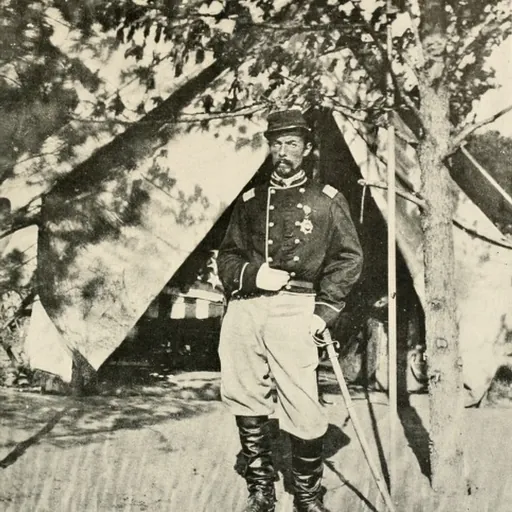
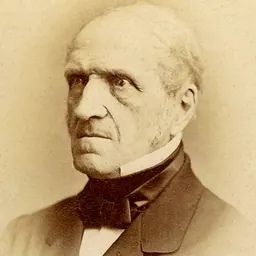
Alfred N. Duffié
French officer then American officer and American diplomat
About Alfred N. Duffié
Lived 1833 – 1880 (aged 47). Alfred N. Duffié was a French military officer and diplomat.
"Alfred" Napoléon Duffié (May 1, 1833 – November 8, 1880) was a French-American soldier and diplomat who served in the Crimean War and the American Civil War.
Early life and career Duffié was born in Paris. Several claims about his early life seem to be untrue: that he graduated from the École Spéciale Militaire de Saint-Cyr, that he fought in the Austro-Italian War of 1859, that he was awarded the Legion d'Honneur though he wore it in several photographs, or that his father was a count. It is known that Duffié joined France's Imperial Cavalry in 1852, being assigned to the 6th Dragoon Regiment. As a member of this unit, he served during the Crimean War, seeing action at the Battle of Balaclava and the Battle of Chernaya River. and was soon promoted to the rank of captain. The somewhat quarrelsome Duffié was placed under arrest several times for confrontations with other officers; in one incident, he challenged General Fitz John Porter to a duel. Meanwhile, the Union right wing had opened the Battle of Brandy Station. Arriving on the field, Duffié was ordered toward the town of Stevensburg; there his division was halted by a smaller Confederate force. As a result, he was demoted back to regimental command. On June 17, 1863, he led the 1st Rhode Island on a reconnaissance mission toward Middleburg, Virginia. There he came close to capturing Confederate cavalry commander J.E.B. Stuart; after his narrow escape, Stuart returned to Middleburg and inflicted a decisive defeat on Duffié's regiment; only 61 members of the 1st Rhode Island got back to the Union lines.
Relinquishing his command, Duffié returned to Washington, D.C. Though he received a promotion to the rank of brigadier general on June 23, 1863, he would not see active duty again until that fall when he was assigned to raise and train cavalry units in West Virginia. His division of West Virginia volunteers saw action around Lewisburg in December 1863 and as part of General David Hunter's 1864 campaign in the Shenandoah Valley. He also took part in operations against Confederate guerrilla leader John S. Mosby, promising to capture the so-called "Gray Ghost" and bring him back to Washington. Due to this incident General Phillip Sheridan requested that he be dismissed from the army calling him "a trifling man and a poor soldier. He was captured by his own stupidity." He was sent to prison camp, then paroled on February 22, 1865. Duffié was then ordered to Texas for a campaign against Confederate General Edmund Kirby Smith, but that campaign ended before he could arrive.
Postwar career
On August 24, 1865 Duffié was mustered out of service and returned to his Staten Island home. He was naturalized as a U.S. citizen in 1867. In 1869 he was appointed U.S. consul to Cadiz, Spain. It was there, on November 8, 1880, that he died from tuberculosis.
Duffie was buried at Fountain Cemetery, in West New Brighton, Staten Island. After his death, some of Duffié' officers from the 1st Rhode Island Cavalry established a subscription toward a cenotaph to their former leader, which was erected in Providence's Furthermore, his first name "Alfred" was invented by himself at the time of his desertion from the French army in 1859 in order to hide his real identity, as he was wanted by the army authorities in Paris as soon as his disappearance was noticed.
Don’t just read it —
keep it.
Full-length biographies made to live with: read them, listen on the way to work, watch them tonight.
- E-book
- Audio
- Video
Instant download · yours to keep · every purchase keeps this site free
Important facts
People in Alfred N. Duffié's life
Named in this biography and alive at the same time


Related people
Same field, nearest in time

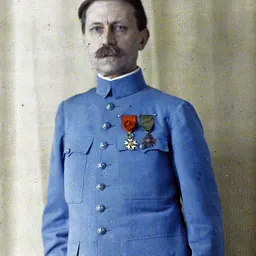
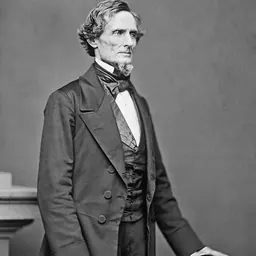

Contemporaries
People whose lives overlapped Alfred N. Duffié's
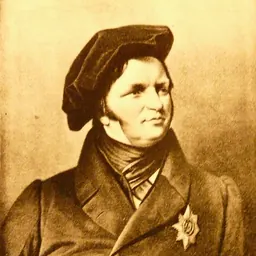



Frequently asked questions
Who was Alfred N. Duffié?
French officer then American officer and American diplomat
When was Alfred N. Duffié born?
Alfred N. Duffié was born on 1 May 1833 in Paris.
When did Alfred N. Duffié die?
Alfred N. Duffié died on 8 November 1880 in Cádiz.
What was Alfred N. Duffié's occupation?
Alfred N. Duffié was a military officer and diplomat.
What nationality was Alfred N. Duffié?
Alfred N. Duffié was French.
Sources & further reading
Cite this page
APA: Biography.guide. (2026). Alfred N. Duffié. https://biography.guide/alfred-n-duffie/
MLA: "Alfred N. Duffié." Biography.guide, https://biography.guide/alfred-n-duffie/.
Chicago: "Alfred N. Duffié." Biography.guide. https://biography.guide/alfred-n-duffie/.
Data last updated: 2026-09-24 · Spot an error? Report a correction.
Portrait: Wikimedia Commons · author & licence
Page generated 2026-09-27 05:08 UTC