
About Alfred Maria Willner
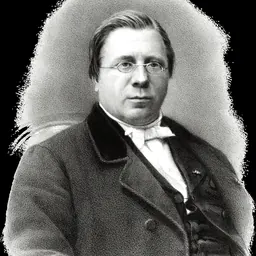
Lived 1859 – 1929 (aged 70). Alfred Maria Willner was an Austrian journalist, composer, musicologist, philosopher, librettist and writer.
Alfred Maria Willner (11 July 1859 – 27 October 1929) was an Austrian writer, philosopher, musicologist, composer and librettist.
Biography Alfred Maria Willner was born and died in Vienna. He began composing mostly music for the piano and eventually made a career writing librettos for ballets, operas and operettas. One of his early operettas was Johann Strauss II’s Die Göttin der Vernunft, a commission that Strauss regretted. Strauss was forced to complete the commission only by the threat of a lawsuit and declined to attend a performance. Later the libretto and score were legally separated, and Willner revised the libretto for Franz Lehár as Der Graf von Luxemburg.
Willner's first big success was his libretto for Leo Fall’s Die Dollarprinzessin, after which he became a much sought-after operetta librettist. He wrote several successful librettos for Lehár operettas, particularly in collaboration with . The two also collaborated on highly successful adaptations of music by Schubert (such as Das Dreimäderlhaus) and by Johann Strauss father and son (such as Walzer aus Wien). In addition, Willner and Reichert were the contracted librettists for Puccini's opera La rondine which was later adapted by Giuseppe Adami.
Willner and composer Sigmund Romberg were the producers for the 1921 Broadway production of Love Birds.
Alfred Maria Willner was cremated at Feuerhalle Simmering in Vienna, where also his ashes are buried.
Librettos Das Heimchen am Herd (opera), music by Karl Goldmark, 1896 Die Schneeflocke (opera), music by Heinrich Berté, 1896 Der Schmetterling (operetta, with Bernhard Buchbinder), music by , 1896 Die Göttin der Vernunft (operetta, with Buchbinder), music by Johann Strauss II, 1897 Fräulein Hexe (operetta, with Buchbinder), music by Josef Bayer, 1898 Die Debutantin (operetta, with Heinrich von Waldberg), music by Alfred Zamara, 1901 Das Baby (operetta, with Waldberg), music by Richard Heuberger, 1902 Die Millionenbraut (operetta, with E. Limé), music by Berté, 1904 Der schöne Gardist (operetta, with A. Landesberg), music by Berté, 1907 Der kleine Chevalier, (operetta), music by Berté, 1907 Die Dollarprinzessin (operetta, with Fritz Grünbaum), music by Leo Fall, 1907 Ein Wintermärchen (Opera), music by Goldmark, 1908 Baron Trenck (operetta, with Robert Bodanzky), music by Felix Albini, 1908 Ein Mädchen für Alles (operetta, with Waldberg), music by Heinrich Reinhardt, 1908 Die Paradiesvögel (operetta, with ), music by Philipp Silber, 1908 Die Glücksnarr (operetta, with Landesberg), music by Berté, 1908 Die Sprudelfee (operetta, with Wilhelm), music by Reinhardt, 1909 Der Graf von Luxemburg (operetta, with Bodanzky), music by Franz Lehár, 1909 Zigeunerliebe (operetta, with Bodanzky), music by Lehár, 1910 Schneeglöckchen (operetta, with Wilhelm), music by G. Kerker, 1910 Das Puppenmädel (operetta, with Leo Stein), music by Leo Fall, 1910 Die schöne Risette (operetta, with Bodanzky), music by Leo Fall, 1910 Die Sirene (operetta, with Leo Stein), music by Leo Fall, 1911 Der Eisenhammer (Opera), music by Blagoje Bersa, 1911 (as Oganj) Der flotte Bob (operetta, with ), music by K. Stigler, 1911 Die kleine Freundin (operetta, with Leo Stein), music by Oscar Straus, 1911 Eva [Das Fabriksmädel] (operetta, with Bodanzky), music by Lehár, 1911 Casimirs Himmelfahrt (burleske Operette, with Bodanzky), music by Bruno Granichstaedten, 1911 Prinzess Gretl (operetta, with Bodanzky), music by Reinhardt, 1913 Endlich allein (operetta, with Bodanzky), music by Lehár, 1914 Der Schuster von Delft (Opera, with Wilhelm), music by Bersa, 1914 (as Postolar iz Delfta) Der Märchenprinz (operetta, with Sterk), music by Berté, 1914 Der Durchgang der Venus (operetta, with Rudolf Österreicher), music by Edmund Eysler, 1914 Der künstliche Mensch (operetta, with Österreicher), music by Leo Fall, 1915 Die erste Frau (operetta, with Österreicher), music by Reinhardt, 1915 Wenn zwei sich lieben (operetta, with Bodanzky), music by Eysler, 1915 Das Dreimäderlhaus (Singspiel, with , after R. H. Bartsch: Schwammerl), music by Berté, 1916 Die Faschingsfee (operetta, with Österreicher), music by Kálmán, 1917 (based on Zsuzsi kisasszony) Die schöne Saskia (operetta, with Reichert), music by Oskar Nedbal, 1917 La rondine (opera), music by Giacomo Puccini, 1917 Hannerl [Dreimäderlhaus, part 2] (Singspiel, with Reichert), music by K. Lafite, 1918 Wo die Lerche singt (operetta, with Reichert), music by Lehár, 1918 Johann Nestroy (Singspiel, with Österreicher), music by E. Reiterer, 1918 Nimm mich mit (operetta, with Waldberg), music by H. Dostal, 1919 Der heilige Ambrosius (comedy, with A. Rebner), music by Leo Fall, 1921 Nixchen (operetta, with Österreicher), music by Oscar Straus, 1921 Das Milliardensouper (operetta, with H. Kottow), music by Ernst Steffan, 1921 Frasquita (operetta, with Reichert), music by Lehár, 1922 Libellentanz (Revue-Operette), music by Lehár, 1923 Agri (operetta, with Sterk), music by Ernst Steffan, 1924 Ein Ballroman [Der Kavalier von zehn bis vier] (operetta, with Österreicher and F. Rotter), music by Robert Stolz, 1924 Der Mitternachtswalzer (operetta, with Österreicher), music by Robert Stolz, 1926 Ade, du liebes Elternhaus [Die Lori] (Singspiel, with Reichert), music by O. Jascha, 1928 Rosen aus Florida (operetta, with Reichert), music by Korngold, after Leo Fall, 1929 Walzer aus Wien (Singspiel, with Reichert and Ernst Marischka), music by J. Bittner and Korngold, after J. Strauss II and I, 1930
Filmography The House of Three Girls, directed by Richard Oswald (Germany, 1918) Das Milliardensouper , directed by Victor Janson (Germany, 1923) The Count of Luxembourg, directed by Arthur Gregor (1926) Der Mitternachtswalzer, directed by Heinz Paul (Austria, 1929) The Rogue Song, directed by Lionel Barrymore (1930, based on Gypsy Love) , directed by Hans Steinhoff (Germany, 1931) Waltzes from Vienna, directed by Alfred Hitchcock (UK, 1934) Blossom Time, directed by Paul L. Stein (UK, 1934) Frasquita, directed by Karel Lamač (Austria, 1934) Eva, directed by Johannes Riemann (Austria, 1935) Three Girls for Schubert, directed by E. W. Emo (Germany, 1936) Where the Lark Sings, directed by Karel Lamač (Germany, 1936) , directed by Hans Wolff (Austria, 1956) The Count of Luxembourg, directed by Werner Jacobs (West Germany, 1957) The House of Three Girls, directed by Ernst Marischka (Austria, 1958) The Count of Luxembourg, directed by Wolfgang Glück (West Germany, 1972)
Don’t just read it —
keep it.
Full-length biographies made to live with: read them, listen on the way to work, watch them tonight.
- E-book
- Audio
- Video
Instant download · yours to keep · every purchase keeps this site free
Important facts
People in Alfred Maria Willner's life
Named in this biography and alive at the same time





Related people
Same field, nearest in time
Contemporaries
People whose lives overlapped Alfred Maria Willner's



Frequently asked questions
Who was Alfred Maria Willner?
Austrian composer and librettist (1859-1929)
When was Alfred Maria Willner born?
Alfred Maria Willner was born on 11 July 1859 in Vienna.
When did Alfred Maria Willner die?
Alfred Maria Willner died on 27 October 1929 in Vienna.
What was Alfred Maria Willner's occupation?
Alfred Maria Willner was a journalist, composer, musicologist, philosopher, librettist and writer.
What nationality was Alfred Maria Willner?
Alfred Maria Willner was Austrian.
Sources & further reading
· Wikipedia: Alfred Maria Willner
· DBpedia: Alfred Maria Willner
Cite this page
APA: Biography.guide. (2026). Alfred Maria Willner. https://biography.guide/alfred-maria-willner/
MLA: "Alfred Maria Willner." Biography.guide, https://biography.guide/alfred-maria-willner/.
Chicago: "Alfred Maria Willner." Biography.guide. https://biography.guide/alfred-maria-willner/.
Data last updated: 2026-09-20 · Spot an error? Report a correction.
Page generated 2026-09-27 05:28 UTC