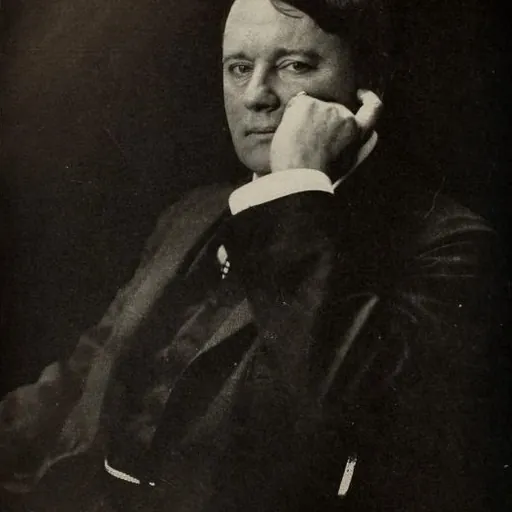
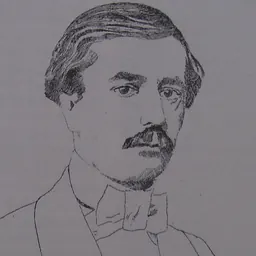
Alfred Harmsworth, 1st Viscount Northcliffe
British noble
About Alfred Harmsworth, 1st Viscount Northcliffe
Lived 1865 – 1922 (aged 57). Alfred Harmsworth, 1st Viscount Northcliffe was a British politician, publisher, journalist, businessperson, newspaper proprietor and alfred Harmsworth.
Alfred Charles William Harmsworth, 1st Viscount Northcliffe (15 July 1865 – 14 August 1922), was a British newspaper and publishing magnate. As owner of the Daily Mail and the Daily Mirror, he was an early developer of popular journalism, and he exercised vast influence over British popular opinion during the Edwardian era. About the beginning of the 20th century there were increasing attempts to develop popular journalism intended for the working class and tending to emphasize sensational topics. Harmsworth was the main innovator.
Lord Northcliffe had a powerful role during the First World War, especially by criticizing the government regarding the Shell Crisis of 1915. He directed a mission to the new ally, the United States, during 1917, and was director of enemy propaganda during 1918.
His Amalgamated Press employed writers such as Arthur Mee and John Hammerton, and its subsidiary, the Educational Book Company, published The Harmsworth Self-Educator, The Children's Encyclopædia, Harmsworth Popular Science, and Harmsworth's Universal Encyclopaedia. Challenging the dominance in popularity of the "penny dreadfuls" among British children, from the 1890s Harmsworth half-penny periodicals, such as Illustrated Chips, would enjoy a virtual monopoly of comics in the UK until the emergence of DC Thomson comics in the 1930s.
Biography
Early life and success Born in Chapelizod, County Dublin, the son of Alfred and Geraldine Harmsworth, he was educated at Stamford School in Lincolnshire, England, from 1876 and at Henley House School in Kilburn, London, from 1878. A master at Henley House who was to prove important to his future was J. V. Milne, the father of A. A. Milne, who according to H. G. Wells was at school with him at the time and encouraged Harmsworth to start the school magazine. In 1880 he first visited the Sylvan Debating Club, founded by his father, and of which he later served as Treasurer.
Beginning as a freelance journalist, he initiated his first newspaper, Answers (original title: Answers to Correspondents), and was later assisted by his brother Harold, who was adept in business matters. His half-penny periodicals published in the 1890s played a role in the decline of the Victorian penny dreadfuls.
Harmsworth was an early developer of popular journalism. He bought several failing newspapers and made them into an enormously profitable news group, primarily by appealing to the general public. He began with The Evening News
On 4 May 1896, he began publishing the Daily Mail in London, Harmsworth then transformed a Sunday newspaper, the Weekly Dispatch, into the Sunday Dispatch, then the greatest circulation Sunday newspaper in Britain. He also initiated the Harmsworth Magazine (later London Magazine 1898–1915), utilizing one of Britain's best editors, Beckles Willson, who had been editor of many successful publications, including The Graphic.
During 1899, Harmsworth was responsible for the unprecedented success of a charitable appeal for the dependents of soldiers fighting in the South African War by inviting Rudyard Kipling and Arthur Sullivan to write the song "The Absent-Minded Beggar".
Harmsworth also initiated The Daily Mirror during 1903, and rescued the financially desperate The Observer and The Times during 1905 and 1908, respectively. During 1908, he also acquired The Sunday Times. The Amalgamated Press subsidiary the Educational Book Company published the Harmsworth Self-Educator, The Children's Encyclopædia, and Harmsworth's Universal Encyclopaedia. In 1906, Harmsworth was raised to the peerage as Baron Northcliffe, of the Isle of Thanet in the County of Kent. The peerage was requested by King Edward VII, and was alleged to have been purchased. It remains a matter of speculation. He is reported to have joked that when he wanted a peerage he would buy one, "like an honest man."
Marriage Alfred Harmsworth married Mary Elizabeth Milner on 11 April 1888. She was appointed Dame Grand Cross of the Order of the British Empire (GBE) and Dame of Grace, Order of St John (D.St.J) during 1918. They did not have any children together.
Children Lord Northcliffe had four acknowledged children by two different women. The first, Alfred Benjamin Smith, was born when Harmsworth was seventeen years old; the mother was a sixteen-year-old maidservant in his parents' home. Smith died in 1930, allegedly in a mental hospital. By 1900, Harmsworth had acquired a new mistress, an Irishwoman named Kathleen Wrohan, about whom little is known but her name; they had two further sons and a daughter, and she died in 1923.
Northcliffe's ownership of The Times, the Daily Mail and other newspapers meant that his editorials influenced both "the classes and the masses". That meant that in an era before radio, television or internet, Northcliffe dominated the British press "as it never has been before or since by one man".
Northcliffe's editorship of the Daily Mail in the years just before the First World War in which the newspaper displayed "a virulent anti-German sentiment" His newspapers, especially The Times, reported the Shell Crisis of 1915 with such zeal that it helped to end the Liberal government of Prime Minister H. H. Asquith, which forced Asquith to form a coalition government (the other causal event was the resignation of Admiral Fisher as First Sea Lord). Northcliffe's newspapers propagandized for creating a Minister of Munitions, which was held first by David Lloyd George, and helped to bring about Lloyd George's appointment as prime minister in 1916. Lloyd George offered Northcliffe a job in his cabinet, but Northcliffe refused and was instead appointed director for propaganda. His former residence still bears a shell hole out of respect for his gardener's wife, who was killed in the attack. On 6 April 1919, Lloyd George made an excoriating attack on Harmsworth, terming his arrogance "diseased vanity". By then, Harmsworth's influence was decreasing.
Northcliffe's enemies accused him of power without responsibility, but his papers were a factor in settling the Anglo-Irish Treaty in 1921, and his mission to the United States, from June through to October 1917, has been judged successful by historians.
Northcliffe's personality shaped his career. He was monolingual and not well-educated and knew little history or science. He had a lust for power and for money, while leaving the accounting paperwork to his brother Harold. He imagined himself Napoleon reborn and resembled the emperor physically and in terms of his enormous energy and ambition. Above all, he had a boyish enthusiasm for everything. Norman Fyfe, an intimate friend, described him: Boyish in his power of concentration upon the matter of the moment, boyish in his readiness to turn swiftly to a different matter and concentrate on that.... Boyish the limited range of his intellect, which seldom concerns itself with anything but the immediate, the obvious, the popular. Boyish his irresponsibility, his disinclination to take himself or his publications seriously; his conviction that whatever benefits them is justifiable, and that it is not his business to consider the effect of their contents on the public mind.
Sport In 1903 Harmsworth initiated the Harmsworth Cup, the first international award for motorboat racing.
Motoring Harmsworth was a friend of Claude Johnson, chief executive of Rolls-Royce Limited, and during the years preceding the First World war became an enthusiast of the Rolls-Royce Silver Ghost car.
Death Lord Northcliffe circa 1921 driving a Fordson tractor at Henry Ford's farm near Dearborn, Michigan, U.S. Northcliffe was on a world tour at the time, trying to recover his health, but he died in 1922. He had been closely involved in the purchase of Fordson tractors by the British government during the First World War.
Lord Northcliffe's health declined during 1921 due mainly to a streptococcal infection. His mental health collapsed; he acted like a madman but historians say it was a physical malady. He went on a world tour to revive himself, but it failed to do so. He died of endocarditis He left three months' pay to each of his six thousand employees. The viscountcy, barony, and baronetcy of Northcliffe became extinct.
A monument to Northcliffe at St Dunstan-in-the-West, Fleet Street, London, was unveiled in 1930. The obelisk was designed by Edwin Lutyens and the bronze bust is by Kathleen Scott. His body was buried at East Finchley Cemetery in North London.
Legacy Historian Ian Christopher Fletcher states:
A. J. P. Taylor, however, says, "Northcliffe could destroy when he used the news properly. He could not step into the vacant place. He aspired to power instead of influence, and as a result forfeited both."
P. P. Catterall and Colin Seymour-Ure conclude that:
According to Piers Brendon: Northcliffe's methods made the Mail the most successful newspaper hitherto seen in the history of journalism. But by confusing gewgaws with pearls, by selecting the paltry at the expense of the significant, by confirming atavistic prejudices, by oversimplifying the complex, by dramatizing the humdrum, by presenting stories as entertainment and by blurring the difference between news and views, Northcliffe titillated, if he did not debouch, the public mind; he polluted, if he did not poison, the wells of knowledge.
The A. Harmsworth Glacier in North Greenland was named by Robert Peary in his honour. (Northcliffe had provided a ship for the expedition.)
The roads Harmsworth Way and Northcliffe Drive in Totteridge, north London, were named after Northcliffe.
Northcliffe lived for a time at 31 Pandora Road, West Hampstead; this site is now marked with an English Heritage blue plaque.
Cultural depictions Northcliffe was the subject of a number of fictionalized portrayals. One of the earliest was the character of Mr. Whelpdale in George Gissing's 1891 novel New Grub Street. Whelpdale publishes a magazine called Chit-Chat (similar to Northcliffe's Answers), which is aimed at "the quarter-educated; that is to say the great new generation that is being turned out by the Board Schools, the young men and women who can just read, but are incapable of sustained attention".
Arnold Bennett's 1909 West End play What the Public Wants centers on Sir Charles Worgan, a profit-hungry media baron based on Northcliffe. J. B. Fagan's 1910 play The Earth features a satirical version of Northcliffe, Sir Felix Janion, who uses sexual blackmail to prevent the passing of a bill which would provide a minimum wage for his employees.
Promotion of Group Settlement Scheme Throughout his newspaper career Northcliffe promoted the ideas which resulted in the Group Settlement Scheme. The scheme promised land in Western Australia to British settlers prepared to emigrate and develop the land. A town founded specifically to assist the new settlements was named Northcliffe, in recognition of Lord Northcliffe's promotion of the scheme.
Works Motors and motor-driving (1906) The World's Greatest Books, 20 vols. (edited by him) At the War (1917) Lord Northcliffe's war book, with chapters on America at war (1917)
Don’t just read it —
keep it.
Full-length biographies made to live with: read them, listen on the way to work, watch them tonight.
- E-book
- Audio
- Video
Instant download · yours to keep · every purchase keeps this site free
Important facts
Family & relationships
People in Alfred Harmsworth, 1st Viscount Northcliffe's life
Named in this biography and alive at the same time

Related people
Same field, nearest in time



Contemporaries
People whose lives overlapped Alfred Harmsworth, 1st Viscount Northcliffe's
Frequently asked questions
Who was Alfred Harmsworth, 1st Viscount Northcliffe?
British noble (1865–1922)
When was Alfred Harmsworth, 1st Viscount Northcliffe born?
Alfred Harmsworth, 1st Viscount Northcliffe was born on 15 July 1865 in Dublin.
When did Alfred Harmsworth, 1st Viscount Northcliffe die?
Alfred Harmsworth, 1st Viscount Northcliffe died on 14 August 1922 in London.
What was Alfred Harmsworth, 1st Viscount Northcliffe's occupation?
Alfred Harmsworth, 1st Viscount Northcliffe was a politician, publisher, journalist, businessperson, newspaper proprietor and alfred Harmsworth.
What nationality was Alfred Harmsworth, 1st Viscount Northcliffe?
Alfred Harmsworth, 1st Viscount Northcliffe was British.
Sources & further reading
· Wikipedia: Alfred Harmsworth, 1st Viscount Northcliffe
· DBpedia: Alfred Harmsworth, 1st Viscount Northcliffe
Cite this page
APA: Biography.guide. (2026). Alfred Harmsworth, 1st Viscount Northcliffe. https://biography.guide/alfred-harmsworth-1st-viscount-northcliffe/
MLA: "Alfred Harmsworth, 1st Viscount Northcliffe." Biography.guide, https://biography.guide/alfred-harmsworth-1st-viscount-northcliffe/.
Chicago: "Alfred Harmsworth, 1st Viscount Northcliffe." Biography.guide. https://biography.guide/alfred-harmsworth-1st-viscount-northcliffe/.
Data last updated: 2026-09-25 · Spot an error? Report a correction.
Portrait: Wikimedia Commons · author & licence
Page generated 2026-10-04 09:25 UTC