
About Alfred Gibbs
Lived 1823 – 1868 (aged 45). Alfred Gibbs was an American military officer.
Alfred Gibbs (April 22, 1823 – December 26, 1868) was a career officer in the United States Army (Regular Army) who served as an officer during the Mexican-American War and Apache Wars. He served as a brigadier general in the Union Army during the American Civil War.
Career summary Gibbs graduated from the United States Military Academy in the class of 1846, served and was twice wounded in the Mexican–American War and was wounded again by Apaches during frontier service in 1857. His pre-Civil War career was in cavalry service. During the Civil War, Gibbs commanded the only Union army volunteer regiment which was converted from an infantry regiment entirely to a cavalry regiment: The 130th New York Infantry converted to the 1st Regiment New York Dragoons.
After the conversion of Gibbs's regiment to cavalry service in August 1863, he was frequently assigned to command a cavalry brigade and briefly to command a cavalry division. He only was appointed to brigadier general of volunteers to rank from the date of the Battle of Cedar Creek on October 19, 1864, and given permanent brigade command in December 1864. He received three brevet general awards for meritorious service in three key battles, Trevilian Station, Opequon or Third Winchester and Five Forks.
As commander of an infantry regiment, Gibbs participated in the successful defense of Suffolk, Virginia and Norfolk, Virginia, in April and early May, 1863 when Confederate forces under Lt. Gen. James Longstreet tried to retake those key locations. He led his brigade or his regiment in major battles of the Overland Campaign and Maj. Gen. Sheridan's raid which led to the Battle of Yellow Tavern. His brigade and division were detached from the Army of the Potomac soon after the beginning of the Siege of Petersburg to serve with Sheridan in all the battles of the Shenandoah Valley Campaigns of 1864. He and his brigade returned to Petersburg with Sheridan on March 26, 1865, and played a large part in the key battles of Dinwiddie Court House and Five Forks, which led to the breaking of the Confederate lines and the flight of the Confederate Army of Northern Virginia under the command of General Robert E. Lee from Petersburg and Richmond, Virginia.
His brigade and division, under the command of Brig. Gen. Thomas C. Devin and the overall command of Maj. Gen. Sheridan joined in the pursuit of the Army of Northern Virginia in the ensuing Appomattox Campaign, and were engaged especially at the key Battle of Sayler's Creek (sometimes shown as "Sailor's Creek"). Gibbs was present at the surrender of the Army of Northern Virginia at Appomattox Court House on April 9, 1865.
Gibbs remained in the Regular Army as a major in the 7th U.S. Cavalry after the war. He served as Post Commander of Fort Harker, Kansas, on four different occasions from January 1867 to December 1868. He died of congestion of the brain (typically what is now called a stroke) on December 26, 1868, aged 45.
Early life Gibbs was born on his father's estate, now within Astoria, Long Island, New York. He was the son of mineralogist Colonel George Gibbs and grandson of Oliver Wolcott Jr., Secretary of the Treasury in the administrations of Presidents George Washington and John Adams
Gibbs attended school in White Plains, New York and Dartmouth College before he was appointed to the United States Military Academy at West Point, New York. A Gibbs genealogy privately published in 1933 shows Gibbs was married and had two sons. He married Peggy Forshee Blair of Richmond, Virginia December 27, 1855. They had two sons: Alfred Wolcott Gibbs (1856–1922), a railway mechanical engineer and Dr. John Blair Gibbs (1858–1898), an assistant surgeon, U.S. Navy.
Mexican–American War, Apache Wars, & frontier service After Gibbs graduated from the U. S. Military Academy in 1846, he was assigned to the Regiment of Mounted Rifles and served in the Mexican–American War in which he was wounded. Gibbs was taken prisoner after leading ten men (all that remained of his I Company R.M.R.)driving a herd of one hundred cattle from Fort Craig. Stopped to water the herd at San Agustin Springs, New Mexico He and his soldiers were included with the Union forces surrendered by Major Isaac Lynde (7th U.S. Infantry) to Confederate forces from Texas under the command of Lieutenant Colonel John R. Baylor during the retreat of United States Army forces loyal to the Union from Fort Fillmore, New Mexico. Soon after his exchange, on September 6, 1862, Gibbs was commissioned as colonel of the 130th New York Volunteer Infantry Regiment.
Suffolk, Peninsula, Bristoe, Mine Run Gibbs's regiment was sent from Portage to Suffolk, Virginia and arrived on September 13, 1862. Their position at Suffolk was located 18 miles southwest of Norfolk, Virginia, recently recaptured by Union forces, at the junction of two railroads. The location covered the land access to Norfolk and access to the seaboard by water. The department was commanded by Maj. Gen. John A. Dix from Fort Monroe and the forces in the Suffolk area were commanded by Maj. Gen. John J. Peck.
After building fortifications, training and marching out from Suffolk on several expeditions, the regiment engaged in the Battle of Deserted House or Battle of Kelly's Store on January 30, 1863. General Michael Corcoran was in command of the force of about 8,000 men and three artillery batteries totaling 14 guns, with Colonel Gibbs in command of nine infantry regiments and Colonel Samuel P. Spear in command of the 11th Pennsylvania Cavalry. During a three-hour artillery duel, the 130th New York Infantry lost 7 men killed, 20 wounded and 2 missing. General Corcoran quarreled with Colonel Gibbs over the disposition of troops and placed him under arrest. The battle ended with the Confederates under Brig. Gen. Roger Pryor driven from the field.
The Confederates under Lt. Gen. James Longstreet attempted to recapture Suffolk and Norfolk but after besieging the fortified Union forces from April 11, 1863, to May 3, 1863, the Confederates retired. Brig. Gen. Henry Dwight Terry now commanded the brigade and on April 17, 1863, he sent 6 companies of the 130th New York Infantry out to determine why the Confederates had ceased firing. When the Confederates resumed fire, the regiment lost one killed and five wounded. The Confederates broke off the siege on May 3, 1863. The brigade took part in Maj. Gen. Erasmus Keyes's abortive Peninsular Campaign toward Richmond between June 13, 1863, and July 12, 1863, while the Army of Northern Virginia was engaged in the Gettysburg campaign. this regiment was reorganized as a mounted troop named the 1st New York Dragoons, also known as and quite often referred to in reports and sources as the 19th New York Volunteer Cavalry Regiment. show an order of battle for August 31, 1863, in which the 19th New York Volunteer Cavalry Regiment was assigned to the Headquarters of the Cavalry Corps of the Army of the Potomac, Maj. Gen. Alfred Pleasonton, commanding. Later the regiment was part of the Cavalry Reserve Brigade, Army of the Potomac ("Reserve Brigade") commanded by Brig. Gen. Wesley Merritt when it was not under Gibbs's command. The 19th New York Volunteer Cavalry Regiment, the 6th Pennsylvania Cavalry Regiment and the 1st, 2nd, 5th and 6th U.S. Cavalry Regiments comprised the brigade, which was occasionally called the "Regular Brigade."
On and after August 12, 1863, Gibbs was intermittently assigned to temporary brigade, and briefly to division, command in the cavalry corps of the Army of the Potomac and the Army of the Shenandoah through the rest of the war. Gibbs assumed command of the Reserve Brigade, guarding trains between August 12, 1863, and September 12, 1863, and, after Merritt was in command during the Bristoe Campaign, Gibbs resumed command of the brigade between November 21, 1863, and April 10, 1864. The regiment suffered 3 killed, 3 wounded, 1 captured and several injuries from falling horses.
Overland Campaign; Trevilian Station As preparations began for the Overland Campaign, the Reserve Brigade became part of the 1st Division of the Cavalry Corps of the Army of the Potomac under the new corps commander, Maj. Gen. Philip Sheridan, who was appointed April 4, 1864. Command of the Reserve Brigade was transferred to Brig. Gen. Wesley Merritt from April 10, 1864, through the Battle of the Wilderness, May 5–6, 1864 and Gibbs resumed command of the 19th New York Cavalry (1st New York Dragoons). Then, on May 7, 1864, Merritt had to take command of the 1st Division of the Cavalry Corps to which the Reserve Brigade was assigned because its commander, Brig. Gen. Alfred T. A. Torbert needed an emergency operation to remove a painful abscess from his spine. Gibbs again assumed command of the Reserve Brigade, which saw much hard duty at the Battle of Todd's Tavern. Todd's Tavern and the Brock Road, which had been abandoned on May 6, had to be retaken by Union forces on May 7. In the afternoon, Sheridan committed the Reserve Brigade, then under Gibbs, to the battle.
After the Confederate infantry beat the Union infantry in a race to Spotsylvania Court House, Sheridan was permitted to conduct a raid in the direction of Richmond in order to draw off the Confederate cavalry and to proceed against them. Confederate Cavalry Corps commander, Maj. Gen. J.E.B. Stuart learned of Sheridan's departure within hours and pursued his more than 10,000 Union cavalrymen with fewer than 5,000 troopers so as to leave General Robert E. Lee with cavalry support. On May 11, 1864, Stuart caught up to Sheridan at the Yellow Tavern, six miles north of Richmond and brought on a general engagement. Colonel Thomas C. Devin's brigade, assisted by Gibbs's brigade, held the Brook Turnpike while other units, including George Armstrong Custer's brigade fought with Stuart's forces.
On May 24, 1864, Sheridan's force returned to the Army of the Potomac and just before the Battle of Cold Harbor, May 26–June 3, 1864, Torbert returned to command of the division, Merritt to command of the Reserve Brigade and Gibbs to command of the 19th New York Volunteer Cavalry Regiment. They engaged in bloody preliminary battles at the Battle of Haw's Shop and the Battle of Old Church or the Battle of Matadequin Creek. Then, they took Confederate positions at Cold Harbor, held them against a counterattack and turned them over to the infantry on June 1, 1964.
Gibbs and his regiment fought with distinction under Maj. Gen. Sheridan at the Battle of Trevilian Station, June 11–12, 1864, Torbert and Merritt remained in command of the 1st Division and the Reserve Brigade, respectively, during Sheridan's Trevilian Raid. The Battle of Trevilian Station was the largest all-cavalry battle of the Civil War and it resulted in a victory by Confederate cavalry under the command of Maj. Gen. Wade Hampton. Confederate forces counterattacked the Reserve Brigade early on June 11, 1864, after elements of that brigade attacked advance Confederate pickets. Gibbs quickly mounted his men who left their breakfast unfinished and sent them into battle. The Confederates killed and wounded several Union troopers and took several others prisoner, including Lieutenant Colonel Thorp of the 19th New York Cavalry (1st New York Dragoons). Although the Reserve Brigade cut through to Custer, Custer lost 22 per cent of his men on that day, most of them missing or captured. After eight hours of fighting on a hot day without food or drink, Gibbs was overcome by sunstroke and had to leave the field. The Union forces sustained heavy losses again on June 12, 1864, and were turned back without achieving their objectives of doing significant damage to the Virginia Central Railroad and linking up with Union Maj. Gen. David Hunter and returning with his force to the Army of the Potomac.
After a period of rest, the brigade took part in the Battle of Darbytown Road on July 27–28, 1864 when it was attacked while dismounted by three brigades of Confederate infantry. Then they marched to the Petersburg lines in time to witness the Battle of the Crater. Cullum (1891) states that Gibbs took a short leave of absence after his promotion to brigadier general, which appears to account for his time between January 19, 1865, and February 5, 1865.
On August 11, 1864, the 19th New York Cavalry met an entire division of Confederate Lt. Gen. Jubal Early's force under Maj. Gen. John B. Gordon at the Battle of Newtown. The depleted regiment, armed with 7-shot Spencer repeating rifles, held off the Confederates until they could be reinforced by the rest of the brigade. They suffered 29 killed and seriously wounded and several felled by sunstroke. At the Battle of Shepherdstown, near Leetown and Kearneysville, on August 24, 1864, Custer came to the rescue of the surprised and nearly surrounded 19th New York Cavalry (1st New York Dragoons) much as he had been aided by their brigade at Trevilian Station.
On September 9, 1864, the 19th New York Cavalry was transfer to the second brigade of Brig. Gen. Thomas C. Devin. On September 19, 1864, Sheridan's forces attacked Early's forces at the Battle of Opequon or Third Battle of Winchester. The 19th New York Cavalry struck the Confederate outposts on the Opequon Creek at Sewer's Ford, about seven miles northeast of Winchester, Virginia. Captain Alexander K. Thorp, brother of the regiment's Lt. Col. Thomas Thorp, who had been taken prisoner at Trevilian Station, was killed near the beginning of this battle. Devin wrote that Gibbs led his regiment in gallant style.
After his promotion to brigadier general in December 1864, Gibbs took command of the Reserve Brigade, which became the Third Brigade of the 1st Division of the Cavalry Corps of the Army of the Shenandoah, under Brig. Gen. Wesley Merritt until Merritt's promotion to Sheridan's chief of staff in February 1865. The division then was under the command of Brig. Gen. Thomas Devin. The brigade included the First, Fifth and Sixth United States Cavalry Regiments, the Second Massachusetts Volunteer Cavalry Regiment and the 6th Pennsylvania Volunteer Cavalry Regiment (6 companies).
On March 31, 1865, Lt. Gen. Grant placed General Sheridan in command of Gouverneur Warren's V Corps of Army of the Potomac infantry and of all cavalry. The two divisions of cavalry from the Army of the Shenandoah in the cavalry corps were under the command of Brig. Gen. Wesley Merritt. Gibbs headed the 3rd Brigade of the 1st Division under the command of Brig. Gen. Thomas Devin. They then rallied with Custer's brigade about three-quarters of a mile from Dinwiddie. Devin's cavalry, including Gibbs's brigade, hit the front of Pickett's defense on April 1, 1864, while Brig. Gen. Romeyn B. Ayres infantry division of V Corps hit the left flank and Brig. Gen. Custer's cavalry brigade attacked the right flank. The attack led to the collapse of Pickett's position and required the Confederates to abandon Petersburg and Richmond. Gibbs's brigade fought at the Battle of Sayler's Creek, Virginia, on April 6, 1865, three days before the surrender of the Army of Northern Virginia by General Robert E. Lee at Appomattox Court House, Virginia, on April 9, 1865, where Gibbs was present. The 5th U.S. Cavalry Regiment marched as Maj. Gen. Merritt's headquarters escort. Gibb's old regiment, the 19th New York Cavalry (1st New York Dragoons) marched with the next brigade under their final brigade commander, Col. C. L. Fitzhugh. On July 17, 1866, President Johnson nominated Gibbs for the award of the honorary rank of brevet major general, United States Army (Regular Army), to rank from March 13, 1865, and the U.S. Senate confirmed the award on July 23, 1866. Gibbs received his brevet awards for service at the Battle of Trevilian Station, the Third Battle of Winchester and the Battle of Five Forks. He was buried near to his father. Another son, Alfred W. Gibbs was a noted mechanical engineer.
Don’t just read it —
keep it.
Full-length biographies made to live with: read them, listen on the way to work, watch them tonight.
- E-book
- Audio
- Video
Instant download · yours to keep · every purchase keeps this site free
Important facts
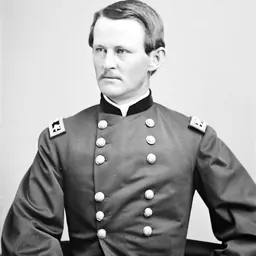
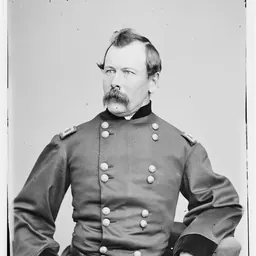
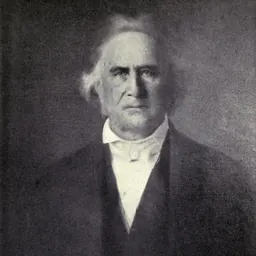
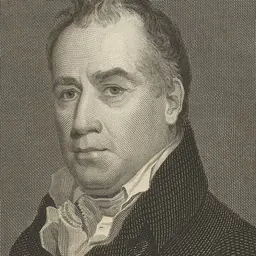
People in Alfred Gibbs's life
Named in this biography and alive at the same time

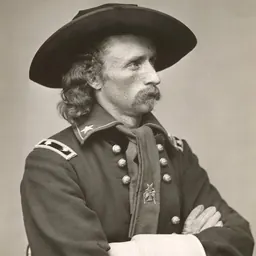

Related people
Same field, nearest in time
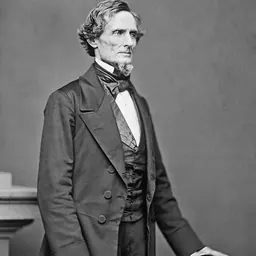

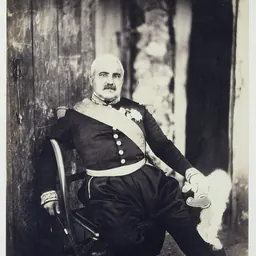
Contemporaries
People whose lives overlapped Alfred Gibbs's





Frequently asked questions
Who was Alfred Gibbs?
Union Army general
When was Alfred Gibbs born?
Alfred Gibbs was born on 22 April 1823 in Astoria.
When did Alfred Gibbs die?
Alfred Gibbs died on 26 December 1868 in Fort Leavenworth.
What was Alfred Gibbs's occupation?
Alfred Gibbs was a military officer.
What nationality was Alfred Gibbs?
Alfred Gibbs was American.
Sources & further reading
Cite this page
APA: Biography.guide. (2026). Alfred Gibbs. https://biography.guide/alfred-gibbs/
MLA: "Alfred Gibbs." Biography.guide, https://biography.guide/alfred-gibbs/.
Chicago: "Alfred Gibbs." Biography.guide. https://biography.guide/alfred-gibbs/.
Data last updated: 2026-09-25 · Spot an error? Report a correction.
Page generated 2026-09-27 05:11 UTC