
About Alfred Ehrhardt
Lived 1901 – 1984 (aged 83). Alfred Ehrhardt was a German painter, photographer, film director, documentarian, documentary filmmaker and cinematographer.
Alfred Franz Adolf Ehrhardt (5 March 1901 – 29 May 1984) was a German photographer, educator, writer and documentary filmmaker.
Early life and education Alfred Ehrhardt was born to Alma Klara (née Müller) and Karl Alfred Ehrhardt in Triptis, in Thuringia, Germany, and attended the Realschule (a type of secondary school) in Gera, and is recorded as a student at the humanist Klosterschule (monastery school) at Roßleben, where he was confirmed on Ascension Day (25 May) during the 1911/12 school year. He then studied music at the teacher training college in Weißenfels, specialising in the organ, on which he especially enjoyed playing the works of Johann Sebastian Bach. In the 1920s, he performed as an organist in northern Germany.
After studying music, art history, painting (he painted from 1926 to 1933), and printmaking in Hamburg, Ehrhardt, on leave from his teaching position, attended the Bauhaus in 1927–1928 at the Dessau campus, taking the preliminary course taught by the German artist Josef Albers and the painting classes of Paul Klee and Lyonel Feininger, and was an intern in Oskar Schlemmer's stagecraft workshop. He developed a friendship with Wassily Kandinsky.
Upon returning to the Gandersheim boarding school, Ehrhardt applied the concept of the Bauhaus preliminary course to his art classes with children and teenagers from first grade through high school graduation. Based on this experimental pedagogy, in October 1930, Max Sauerlandt appointed him, with architects Karl Schneider, Fritz Schleifer, and Carl Lang to lecture in material studies at the Hamburg State Art School, which Sauerlandt was reforming in the spirit of the Bauhaus.
Avant-garde artist At the new exhibition hall for contemporary art (1926-1930), initiated by the Kunstverein (Art Association), Ehrhardt and sculptor Friedrich Wield showed together. In 1931, the Hamburg Art Association held a solo exhibition of his paintings, drawings, and prints. Hempel notes of this period an increased degree of continuity and interconnections between the arts that yielded fruitful innovations. The Hamburg avant-garde of the 1920s, from the Hamburg Secession, was notable for the excitement that surrounded its artists, some still known today: Friedrich Ahlers-Hestermann, the married couple Emil and Dorothea Maetzel(-Johannsen), Anita Rée, Willem Grimm, Eduard Bargheer, Rolf Nesch, and Karl Ballmer. A lively meeting place for these artists was at Sievekingsallee 85, the house of dermatologist and urologist Dr. Siegfried Julius and his wife Li, which was full of art treasures; the collector's openness to modernism and commissioning of works drew younger members of the Secession who emphasised fundamental elements of visual art—line, surface, colour, and composition—to independent effect. Avant-garde artists outside the Secession also joined the Julius' salon, including Ehrhardt, and Richard Haizmann, Naum Slutzky, and Ervin Bossanyi. Ehrhardt was applying the musical concept of "polyphony" to his painting, to some extent following Kandinsky and Klee, which formally follows the exercises of the Bauhaus, but draws on conservative ideological concepts of the Deutscher Werkbund and is described by critics as "latently proto-National Socialist." Webster notes that Ehrhardt "published a number of smaller guides to landscape and water photography, all of them clearly in the style of the 'New Vision' and interpreted in a rather idyllic way of seeing the world that thus fitted the modern view as well as conforming to the ideology of National Socialism."
In 1933, Ehrhardt, along with other colleagues, was dismissed because his affiliation with the Bauhaus was classified by the National Socialists as cultural Bolshevik. Using a Zeiss Icon camera for 6 x 9 cm negatives, Ehrhardt photographed in detail and with fascination the tidal flats and sand dunes on excursions to the Wadden Sea between Scharhörn and Neuwerk, and in 1934 also to the Curonian Spit on the Baltic Sea. In the winter semester of 1934/35, he received a professorship at the Askov Adult Education Centre in Southern Jutland, Denmark, taking a leave of absence for this period.
With his book See Sand Sonne (Sea Sand Sun), Arvid Gutschow had established a distinct tradition of avant-garde, North German photobooks inspired by the regional landscape; from the 1920s to the 1940s, photographed seascapes appeared in 43 illustrated books and photo books dedicated primarily to the North Sea and its landscapes.
From Ehrhardt's two photographic series, the Hamburg Arts and Crafts Association first presented an exhibition of over 100 works in Das Watt (The Wadden Sea) in May 1936, then a show titled Wind and Sand in 1937 in Berlin and other German cities and later also in London, Paris, Stockholm, and Copenhagen. The State of Hamburg purchased some of the works, and Das Watt with 96 of his images was published in 1937 with the Hamburg publisher Heinrich Ellermann, the first of Ehrhardt's thirteen photo books produced by the end of the war. The series is considered Ehrhardt's most successful and established his reputation as an avant-garde photographer, amongst Albert Renger-Patzsch, Hugo Schmölz, Adolf Lazi, Walter Peterhans, Wilhelm Castelli, Werner Mannsfeldt, Andreas Feininger, and Arvid Gutschow.
The book "Das Watt" presented Ehrhardt's photographs as single-page copperplate engravings, with two images per double page. In contrast to Gutschow's book, which relied entirely on the power of photography, the publisher contextualized Ehrhardt's images with captions. Ehrhardt took many photographs from a standing position, holding the camera horizontally. Explanatory titles such as "Taken in Gusty Winds," "Incoming Tidal Water," or "Riverbank with Clear Current Patterns" attempt to ground the viewer's abstract perception in reality; the intention is not to surrender solely to transcendent aesthetics, but also to rationally comprehend what is depicted. Compared to the layout of Gutschow's See Sand Sonne, Ehrhardt took a more conservative approach, less interested in the more daring perspectives of the New Objectivity movement than in the transformations of the subject itself.
Ehrhardt's close association with Karl Blossfeldt is evident in his close-up and micro-photographs published as Die Kristalle (The Crystals) in 1939, and Die Muscheln und die Schnecken (Shells and Snails), in 1941. while for Hempel the influence of New Objectivity was apparent in his placing great emphasis on precise representation, employing strong cropping and graphic abstraction, which for Ehrhardt aided his effort to represent "the animate essence of matter, for the higher power hidden behind simple things, which is why he was called the 'natural philosopher with a camera.'"
Du Pont, in the catalogue of the 1986 San Francisco Museum of Modern Art exhibition Photography, a facet of modernism considers Ehrhardt's 1936 Düne, Kurische Nehrung, Ostdeutschland his "most daring" in its tilting of the horizon at a forty-five-degree angle. Acknowledging that the pictorial device was widely used after the mid-twenties by avant-garde artists working in Germany, she sees it "given a fresh interpretation. Ehrhardt's radical perspective creates a feeling of cosmic space, implying that nature's mysteries are scaleless. His intent was to suggest that in the arrangement of grains of sand the answer to some of life's riddles could, perhaps, be found."
Elsewhere Van Deren Coke relates Ehrhardt to Arvid Gustschow's photobook See Sand Sonne (Sea Sand Sun) in his radical break with convention in depiction of landscape: To our eyes, conditioned to viewing paintings that are involved with imagery parallel to the picture's plane or that have forms that seem to shift toward deep, almost infinite space, the photographs that Ehrhardt made of sandy shallows by the Baltic Sea are especially exciting. The spiritual stimuli of nature was deeply rooted in German philosophy. Ehrhardt was seeking to evoke the essence of nature when he reduced his subjects, such as the sand flats and shells, to their rudimentary shapes in order to convey the idea that the multiplicity of forms they assumed grew out of similar patterns of growth and time. The concepts he was dealing with were old, but his photographs were a departure from tradition-considering the high level of artistic achievement: His use of middle-gray tones, simplified forms, and ambiguous effects of space are unique in the photography of the 1930s. Hempel notes that "even more so than Gutschow, Ehrhardt focused on forms, structures, and patterns; an interest that stemmed from his material experiments as an art teacher." and trading centre. Consequently, from February to March 1952, Ehrhardt photographed factories and facilities in Hamburg of such companies as Shell, Montblanc, Sanella, Steinway & Sons, Carl Kühne, the Allgemeine Telefonfabrik, the Bergedorfer and the Ottenser Eisenwerk.
Filmmaker In 1937, and during the Third Reich period Ehrhardt began making documentary films including Urkräfte am Werk, 1939 about the Wadden Sea and Nordische Urwelt, 1941 in Iceland. Gwóźdź considers them unique among such films (and not limited to their era), in applying aesthetics of the Bauhaus and of the New Photography movement, but eluding mainstream Nazi propaganda. As a freelance director and writer, Ehrhardt later filmed in Flanders, Bohemia, and Moravia, on commission by government agencies. News of the impending destruction of his Hamburg memorial on the Kleine Alster and the nationwide acts of violence against his art hastened sculptor Ernst Barlach's death in October 1938. Ten years later Ehrhardi remembered him and his struggle in two films. and by 1973 he had made around sixty more documentaries, which won awards, including the German Film Prize in the cultural film category for Ernst Barlach I.: The Fighter (1951) Game of Spirals (1952) Portugal - Unknown Land by the Sea (1953).
Legacy Ehrhardt's rediscovery, along with other forgotten and lost photographers from the 1920s, was due largely to Ann and Jürgen Wilde's contact with him in 1972, and their Galerie Wilde (so named since 1974) which presented exhibitions and in twelve portfolios between 1974 and 1981, with a focus being New Objectivity photography in Germany, exemplified in works by Ehrhardt, Karl Blossfeldt, August Sander, Albert Renger-Patzsch, and Aenne Biermann from the 1920s and 30s. In the case of Ehrhardt, the Wildes focused on his series on the Wadden Sea and the Curonian Spit.
The Alfred Ehrhardt Foundation in Berlin, which moved from Cologne in December 2009, is dedicated to the scholarly study of the work of Alfred Ehrhardt and has maintained his estate since his death in 1984.
Selected publications
Filmography List of films by Ehrhardt as director, screenwriter, director of photography, editor, sound engineer, producer, and/or unit production manager. 2025, 4 July–12 October: On View - Encounters with the Photographic. Munich, Germany 2026/27: 13 November– 28 February: Neu. Sachlich. Fotografie der 1920er- und 1930er-Jahre. Ehrhardt with Ellen Auerbach, Aenne Biermann, Karl Blossfeldt, Trude Fleischmann and others. Leopold Museum, Vienna. Collections
Art Institute of Chicago Ann and Jürgen Wilde Foundation Centre Pompidou Irish Museum of Modern Art Metropolitan Museum of Art (Dept. of Photographs) Museum für Kunst und Gewerbe Museum of Fine Arts, Houston New Orleans Museum of Art San Francisco Museum of Modern Art Städel Museum Yokohama Museum of Art
Don’t just read it —
keep it.
Full-length biographies made to live with: read them, listen on the way to work, watch them tonight.
- E-book
- Audio
- Video
Instant download · yours to keep · every purchase keeps this site free
Important facts
People in Alfred Ehrhardt's life
Named in this biography and alive at the same time


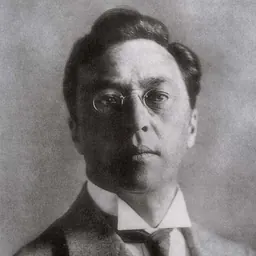
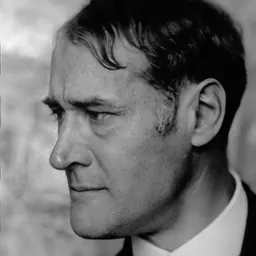
Related people
Same field, nearest in time
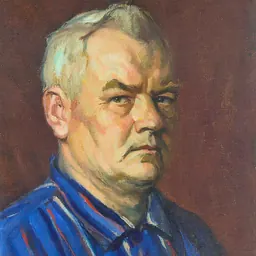


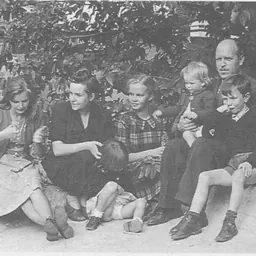
Contemporaries
People whose lives overlapped Alfred Ehrhardt's


Frequently asked questions
Who was Alfred Ehrhardt?
German photographer (1901-1984)
When was Alfred Ehrhardt born?
Alfred Ehrhardt was born on 5 March 1901 in Triptis.
When did Alfred Ehrhardt die?
Alfred Ehrhardt died on 28 May 1984 in Hamburg.
What was Alfred Ehrhardt's occupation?
Alfred Ehrhardt was a painter, photographer, film director, documentarian, documentary filmmaker and cinematographer.
What nationality was Alfred Ehrhardt?
Alfred Ehrhardt was German.
Sources & further reading
Cite this page
APA: Biography.guide. (2026). Alfred Ehrhardt. https://biography.guide/alfred-ehrhardt/
MLA: "Alfred Ehrhardt." Biography.guide, https://biography.guide/alfred-ehrhardt/.
Chicago: "Alfred Ehrhardt." Biography.guide. https://biography.guide/alfred-ehrhardt/.
Data last updated: 2026-09-20 · Spot an error? Report a correction.
Page generated 2026-09-27 05:03 UTC