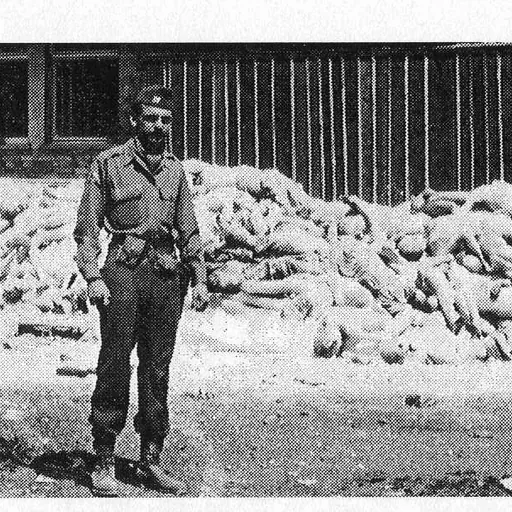
About Alfred de Grazia
Lived 1919 – 2014 (aged 94). Alfred de Grazia was an American political scientist and philosopher.
Alfred de Grazia (December 29, 1919 – July 13, 2014), born in Chicago, Illinois, was a political scientist and author. He developed techniques of computer-based social network analysis in the 1950s, developed new ideas about personal digital archives in the 1970s, and defended the catastrophism thesis of Immanuel Velikovsky.
Origins His father, Joseph Alfred de Grazia, was born in Licodia, province of Catania, in Sicily and was politically active in a troubled period in the history of the island. He emigrated to the United States at the age of twenty, after having hit the mayor of Licodia with his clarinet during a political scuffle. He became a bandmaster, music teacher, in and out of the WPA and a musical union leader in Chicago. In 1916, he married Chicago-born Katherine Lupo Cardinale whose parents had emigrated from Sicily. Her brother was the boxer Charles Kid Lucca, Canadian champion welter-weight champion from 1910 to 1914. They had three more sons, Sebastian de Grazia, winner of the Pulitzer Prize, Edward de Grazia, a prominent first amendment lawyer and co-founder of Cardozo School of Law at Yeshiva University, and Victor deGrazia who was Deputy-Governor of the State of Illinois from 1973 to 1977.
Education De Grazia attended the University of Chicago, receiving an A.B. there in 1939, attended law school at Columbia University from 1940 to 1941, and in 1948 earned a Ph.D. in political science from the University of Chicago. and August Heckscher in the New York Herald Tribune said it was "A sober scholarly volume, authoritative in its field." Charles E. Merriam, founder of the behavioristic approach in political science, wrote: "All scholars in the field of political science and particularly those in the area of representation are under lasting obligation to the writer of this volume for a learned and helpful treatment of one of the major problems of our times. The book will enrich the literature on this very important subject."
Military activity
In World War II, de Grazia served in the United States Army, rising from private to captain. He specialized in mechanized warfare, intelligence and psychological warfare. He received training in this then new field in Washington D.C. and the newly established Camp Ritchie in Maryland. He served with the 3rd, 5th and 7th Armies and as a liaison officer with the British 8th Army. He took part in six campaigns, from North Africa to Italy (Battle of Monte Cassino) to France and Germany.
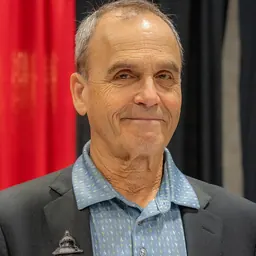
De Grazia co-authored a report on psychological warfare for the Supreme Headquarters of the Allied Expeditionary Force. By the end of the war, he was Commanding Officer of the Psychological Warfare Propaganda Team attached to the headquarters of the 7th Army. Scott Turow cites the letters as being among the sources for his 2005 novel Ordinary Heroes
De Grazia wrote manuals of psychological warfare for the CIA for the Korean War and organized and investigated psychological operations for the United States Department of Defense during the Vietnam War. His reports on psychological operations, now largely declassified, include Target Analysis and Media in Propaganda to Audiences Abroad (1952), Elites Analysis (1955), as well as Psychological Operations in Vietnam (1968). On October 31, 2014, he was posthumously designated a Distinguished Member of the Regiment of Psychological Operations of the Special Operations Command at Fort Bragg, North Carolina. He is also a posthumous recipient of the Robert A. McClure Medal for Exemplary Service in Psychological Operations.
Academic career De Grazia was an assistant professor of political science at the University of Minnesota from 1948 to 1950 before joining the political science faculty of Brown University as an associate professor. One reviewer of it wrote: "Mr. De Grazia has undertaken to dissect the whole body of political science... He achieves his purpose with unfailing clarity, and his readers will learn from him the range, the goals, and the techniques of the study of politics..."
In 1955, he failed to receive academic tenure at Stanford after conducting a study of "the origins and present restrictions on the political activities of workers" for a foundation. He left the institution in 1957. From 1959 to 1983, he was a tenured professor of government and social theory at New York University.
In 1957 de Grazia founded PROD: Political Research: Organization and Design, which was described as "probably...the authentic spokesman for the newest currents among the avant-garde of political behavior". It was later renamed The American Behavioral Scientist, an academic journal devoted to the Chicago school of behaviorist sociology. In 1965, he began the Universal Reference System, the first computerized reference system in the social sciences.
De Grazia was a staunch supporter of the power of Congress against the encroachments of the presidency, which he called the "Executive Force" According to Raymond Tatalovich and Steven Schier:
The American Enterprise Institute published several of his books on the subject, including Congress and the Presidency: their Role in Modern Times, a debate with Arthur M. Schlesinger Jr., who defended the case for a strong presidency.
Support for Velikovsky
De Grazia became interested in Immanuel Velikovsky's catastrophist theories. Following considerable criticism of Velikovsky's claims by the scientific community, de Grazia dedicated the entire September 1963 issue of American Behavioral Scientist to the issue. He also self-published two books on it, The Velikovsky Affair: The Warfare of Science and Scientism and Cosmic Heretics: A Personal History of Attempts to Establish and Resist Theories of Quantavolution and Catastrophe in the Natural and Human Sciences.
Michael Polanyi stated:
A number of sociologists actually supported the popular view against the scientists. They came out first in The American Behavioral Scientist (September, 1963) and then again in a book (de Grazia 1966), which angrily attacked the whole community of natural scientists for paying no attention to Velikovsky. For my part I believe that the scientists were quite right in refusing to pay serious attention to Velikovsky's writings, and that the sociologists' attack on them was totally unfounded.
In both books de Grazia subscribes to the thesis that, in the words of Henry Bauer, "the affair revealed something seriously rotten in the state of science". The review however suggests that the rejection came about ...
The review further suggests that "de Grazia does not understand how the content of science is generated" and that his "understanding of science as a social activity is ambiguous."
In 2002, de Grazia was appointed visiting professor in the Department of Mathematics, Statistics, Computing and Applications of the University of Bergamo in Italy. He had previously been a visiting lecturer at the University of Rome, the University of Bombay, the University of Istanbul, and the University of Gothenburg in Sweden.
He had seven children with Jill Oppenheim. One of them, Carl, a musician, died in 2000. One of his daughters, Victoria de Grazia, a Professor of Contemporary History at Columbia University, is a member of the American Academy.
The entire WWII correspondence between Alfred de Grazia and Jill Oppenheim, comprising about a thousand letters dated from February 1942 to September 1945, survived and was published and placed online, edited by Ami Hueber de Grazia.
Works Michels, Robert, First lectures in political sociology. Translated, with an introduction, by Alfred de Grazia. Minneapolis: University of Minnesota Press. And Harper & Row, 1965. Public and republic: political representation in America. New York: Knopf, 1951. The elements of political science Vol 1: Political Behavior and Vol. 2: Political organization. Series: Borzoi Books in Political Science. New York: Knopf, 1952. And second revised edition: Politics and government: the elements of political science. . New York: Collier, 1962– ; new revised edition, New York: Free Press London: Collier Macmillan, 1965. The Western Public: 1952 and beyond. [A study of political behaviour in the western United States.]. Stanford: Stanford University Press, [1954.] The American way of government. National edition. New York : Wiley. There is also a "National, State and Local edition". Foundation for Voluntary Welfare. Grass roots private welfare : winning essays of the 1956 national awards competition of the Foundation for Voluntary Welfare. Alfred de Grazia, editor. New York: New York University Press, 1957. American welfare. New York: New York University Press, 1961 (with Ted Gurr). World politics: a study in international relations. Series: College Outline Series. New York: Barnes & Noble, 1962. Apportionment and representative government. Series: Books that matter. New York : Praeger, c.1963 Essay on apportionment and representative government. Washington : American Enterprise Institute, 1963 Revolution in teaching: new theory, technology, and curricula. With an introduction by Jerome Bruner. New York: Bantam Books, (editor, with David A. Sohn). Universal Reference System. Political science, government, and public policy: an annotated and intensively indexed compilation of significant books, pamphlets, and articles, selected and processed by the Universal Reference System. Prepared under the direction of Alfred De Grazia, general editor, Carl E. Martinson, managing editor, and John B. Simeone, consultant. Princeton, N.J.: Princeton Research Pub. Co., 1965–69. Plus nine more volumes on the subjects of: International Affairs; Economic Regulation; Public Policy and the Management of Science; Administrative Management; Comparative Government and Cultures; Legislative Process; Bibliography of Bibliographies in Political Science, Government and Public Policy; Current Events and Problems of Modern Society; Public Opinion, Mass Behavior and Political Psychology; Law, Jurisprudence and Judicial Process. Republic in crisis: Congress against the executive force. New York: Federal Legal Publications, Political behavior. Series: Elements of political science; 1. New, revised edition. New York: Free press paperback, 1966. Congress, The First Branch of Government, editor, Doubleday – Anchor Books, 1967 Congress and the Presidency: Their Roles in Modern Times, with Arthur M. Schlesinger, American Enterprise Institute for Public Policy Research, Washington, 1967. Passage of the Year, Poetry, Quiddity Press, Metron publications, Princeton, N.J., 1967. The Behavioral Sciences: Essays in honor of George A. Lundberg, editor, Behavioral Research Council, Great Barrington, Mass;, 1968. Kalos: What is to be Done with Our World?,, New York University Press, 1968. Old Government, New People: Readings for the New politics, et al., Scott, Foresman, Glenview, Ill., 1971. Politics for Better or Worse, Scott, Foresman, Glenview, Ill., 1973. Eight Branches of Government: American Government Today, w. Eric Weise, Collegiate Pub., 1975. Eight Bads – Eight Goods: The American Contradictions, Doubleday – Anchor Books, 1975. Supporting Art and Culture: 1001 Questions on Policy, Lieber-Atherton, New York, 1979. Kalotics: A Revolution of Scientists and Technologists for World Development, Kalos Foundation, Bombay, 1979. A Cloud Over Bhopal: Causes, Consequences, and Constructive Solutions, Kalos Foundation for the India-America Committee for the Bhopal Victims: Popular Prakashan, Bombay, 1985. The Babe, Child of Boom and Bust in Old Chicago, umbilicus mundi, Quiddity Press, Metron Publications, Princeton, N.J., 1992. The Student: at Chicago in Hutchin's Hey-day, Quiddity Press, Metron Publications, Princeton N.J., 1991. The Taste of War: Soldiering in World War II, Quiddity Press, Metron Publications, Princeton, N.J., 1992. The American State of Canaan – the peaceful, prosperous juncture of Israel and Palestine as the 51st State of the United States of America, Metron Publications, Princeton, NJ, 2009 LCCN 2008945276.
Don’t just read it —
keep it.
Full-length biographies made to live with: read them, listen on the way to work, watch them tonight.
- E-book
- Audio
- Video
Instant download · yours to keep · every purchase keeps this site free
Important facts
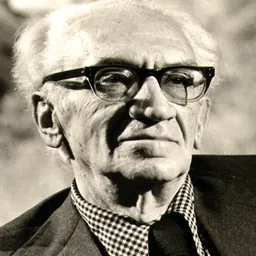
People in Alfred de Grazia's life
Named in this biography and alive at the same time






Related people
Same field, nearest in time

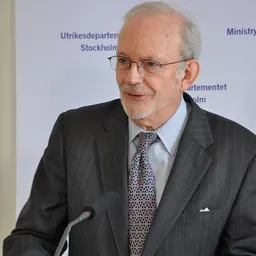



Contemporaries
People whose lives overlapped Alfred de Grazia's


Frequently asked questions
Who was Alfred de Grazia?
American political scientist (1919-2014)
When was Alfred de Grazia born?
Alfred de Grazia was born on 29 December 1919 in Chicago.
When did Alfred de Grazia die?
Alfred de Grazia died on 13 July 2014 in La Ferté-Bernard.
What was Alfred de Grazia's occupation?
Alfred de Grazia was a political scientist and philosopher.
What nationality was Alfred de Grazia?
Alfred de Grazia was American.
Sources & further reading
Cite this page
APA: Biography.guide. (2026). Alfred de Grazia. https://biography.guide/alfred-de-grazia/
MLA: "Alfred de Grazia." Biography.guide, https://biography.guide/alfred-de-grazia/.
Chicago: "Alfred de Grazia." Biography.guide. https://biography.guide/alfred-de-grazia/.
Data last updated: 2026-09-21 · Spot an error? Report a correction.
Portrait: Wikimedia Commons · author & licence
Page generated 2026-09-27 05:00 UTC