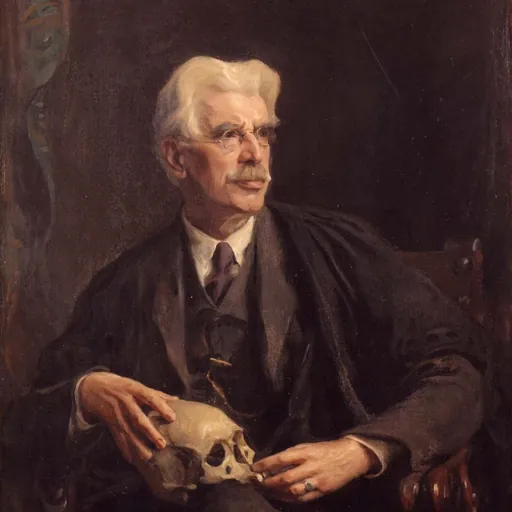
About Alfred Cort Haddon
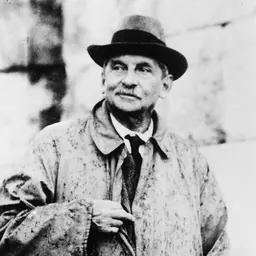
Lived 1855 – 1940 (aged 84). Alfred Cort Haddon was a British anthropologist, zoologist, university teacher and ethnologist.
Alfred Cort Haddon (24 May 1855 – 20 April 1940) was an influential British anthropologist and ethnologist. Initially a biologist, who achieved his most notable fieldwork with Rivers, Charles Gabriel Seligman and Sidney Ray on the Torres Strait Islands. He returned to Christ's College, Cambridge, where he had been an undergraduate, and effectively founded the School of Anthropology. Haddon was a major influence on the work of the American ethnologist Caroline Furness Jayne.
In 2011, Haddon's 1898 The Recordings of the Cambridge Anthropological Expedition to Torres Straits were added to the National Film and Sound Archive of Australia's Sounds of Australia registry. The original recordings are housed at the British Library and many have been made available online.
Early life Alfred Cort Haddon was born on 24 May 1855, near London, the elder son of John Haddon, the head of John Haddon & Co, a firm of printers and typefounders established in 1814. He attended lectures at King's College London and taught zoology and geology at a girls' school in Dover, before entering Christ's College, Cambridge in 1875.
At Cambridge, he studied zoology and became the friend of John Holland Rose (afterwards Harmsworth Professor of Naval History), whose sister he married in 1881. Shortly after achieving his Master of Arts degree, he was appointed as Demonstrator in Zoology at Cambridge in 1879. For a time he studied marine biology in Naples.
Career Dublin In 1880, he was appointed Professor of Zoology at the College of Science in Dublin. While there he founded the Dublin Field Club in 1885. His first publications were an Introduction to the Study of Embryology in 1887, and various papers on marine biology, which led to his expedition to the Torres Strait Islands to study coral reefs and marine zoology, and while thus engaged he first became attracted to anthropology.
Torres Strait Expedition
On his return home, he published many papers dealing with the indigenous people, urging the importance of securing all possible information about these and kindred peoples before they were overwhelmed by civilisation. He advocated this in Cambridge, encouraged thereto by Thomas Henry Huxley, where he came to give lectures at the Anatomy School from 1894 to 1898.
In April 1898, the expedition arrived at its field of work and spent over a year in the Torres Strait Islands, and Borneo, and brought home a large collection of ethnographical specimens, some of which are now in the British Museum, but the bulk of them form one of the glories of the Museum of Archaeology and Anthropology, University of Cambridge. The University of Cambridge later passed the wax cylinder recordings to the British Library. The main results of the expedition are published in The Reports of the Cambridge Expedition to Torres Straits.
Similar anthropological work, the recording of myths and legends from the Torres Strait Islands was coordinated by Margaret Lawrie during 1960–72. Her collection complements Haddon's work and can be found at the State Library of Queensland
In 1897, Haddon had obtained his Sc.D. degree in recognition of the work he had already done, some of which he had incorporated in his Decorative art of New Guinea, a large monograph published as one of the Cunningham Memoirs in 1894, and on his return home from his second expedition he was elected a fellow of his college (junior fellow in 1901, senior fellow in 1904). the Haddons travelled along the Papuan coast from Daru to Aroma. While less discussed then his earlier work in the Torres Straits, this trip was influential in helping shape Haddon's later work on the distribution of material culture across New Guinea.
The war effort had largely destroyed the study of anthropology at the university, however, and Haddon went to France to work for the Y.M.C.A. After the war, he renewed his constant struggle to establish a sound School of Anthropology in Cambridge. Diamond Jenness (1911–12), R.R. Marrett's student at the University of Oxford, as well as John Layard on Malakula, Vanuatu (1914–15), and to have Bronisław Malinowski stationed in Mailu and later the Trobriand Islands during World War 1. Haddon actively gave advice to missionaries, government officers, traders and anthropologists; in return, collecting information about New Guinea and elsewhere.
Haddon's photographic archive and artefact collections can be found in the Museum of Anthropology and Archaeology in Cambridge University, while his papers are in the Cambridge University's Library's Special Collections.
Family Haddon's wife, Fanny Elizabeth Haddon , died in 1937, leaving a son and two daughters.
Reports of the Cambridge Anthropological Expedition to the Torres Straits (6 volumes published from 1901 to 1935)
Don’t just read it —
keep it.
Full-length biographies made to live with: read them, listen on the way to work, watch them tonight.
- E-book
- Audio
- Video
Instant download · yours to keep · every purchase keeps this site free
Important facts
People in Alfred Cort Haddon's life
Named in this biography and alive at the same time





Related people
Same field, nearest in time




Contemporaries
People whose lives overlapped Alfred Cort Haddon's




Frequently asked questions
Who was Alfred Cort Haddon?
British anthropologist (1855–1940)
When was Alfred Cort Haddon born?
Alfred Cort Haddon was born on 24 May 1855 in London.
When did Alfred Cort Haddon die?
Alfred Cort Haddon died on 20 April 1940 in Cambridge.
What was Alfred Cort Haddon's occupation?
Alfred Cort Haddon was an anthropologist, zoologist, university teacher and ethnologist.
What nationality was Alfred Cort Haddon?
Alfred Cort Haddon was British.
Sources & further reading
· Wikipedia: Alfred Cort Haddon
Cite this page
APA: Biography.guide. (2026). Alfred Cort Haddon. https://biography.guide/alfred-cort-haddon/
MLA: "Alfred Cort Haddon." Biography.guide, https://biography.guide/alfred-cort-haddon/.
Chicago: "Alfred Cort Haddon." Biography.guide. https://biography.guide/alfred-cort-haddon/.
Data last updated: 2026-09-20 · Spot an error? Report a correction.
Portrait: Wikimedia Commons · author & licence
Page generated 2026-09-27 04:58 UTC