
Alfred Clapham
British historian
About Alfred Clapham
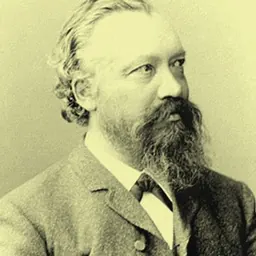
Lived 1883 – 1950 (aged 67). Alfred Clapham was a British architectural historian.
Sir Alfred William Clapham, (1883 – 1950) was a British scholar of Romanesque architecture. He was Secretary of the Royal Commission on Historical Monuments (England) and President of the Society of Antiquaries.
Early life Alfred Clapham was born in Dalston, East London on 27 May 1883 to the Rev. James Clapham and Lucy Elizabeth Clapham 9 (née Hutchinson). He was educated at Dulwich College and then took up a position with the ecclesiastical architect James Weir. He soon transferred to the Victoria History of the Counties of England (architectural editor Sir Charles Peers).
Career In 1912 Clapham joined the Royal Commission on Historical Monuments (England) where he was successively Editor, Secretary, and Commissioner. In 1921 he published a major survey in the Antiquaries Journal on the Holy Sepulchre in Jerusalem – the result of his military service in Egypt and Palestine with the Royal Sussex Regiment during the First World War. His principal work was with the Royal Commission, being a significant contributor to the reports on Essex, Buckinghamshire, Huntingdonshire, Middlesex, London, Hertfordshire, Westmorland, and Oxford. His major achievement was a two-volume work on Romanesque Architecture in England in 1930 and 1934, and subsequently on Romanesque Architecture in Western Europe in 1936.
He was a faithful adherent of the Society of Antiquaries, being first Secretary and then its president and later the gold medallist. Although he had never been to university, in 1935 he was elected a Fellow of the British Academy.
Clapham wrote three guide books for the Ministry of Works, all of which were published posthumously. These were on the Augustinian Abbey at Thornton in Lincolnshire (1951); the Benedictine Abbey at Whitby (1952); St Augustine's Abbey at Canterbury (1955).
Don’t just read it —
keep it.
Full-length biographies made to live with: read them, listen on the way to work, watch them tonight.
- E-book
- Audio
- Video
Instant download · yours to keep · every purchase keeps this site free
Important facts
People in Alfred Clapham's life
Named in this biography and alive at the same time


Related people
Same field, nearest in time

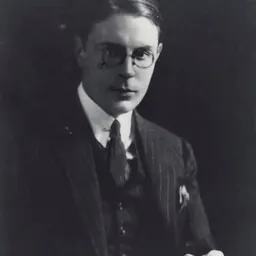
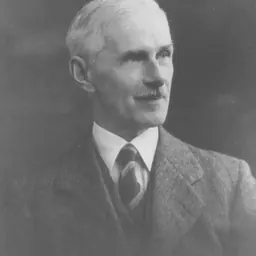



Contemporaries
People whose lives overlapped Alfred Clapham's

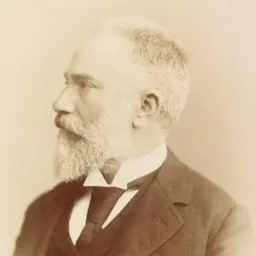
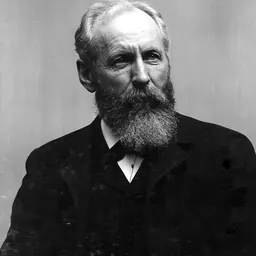

Frequently asked questions
Who was Alfred Clapham?
British historian (1883-1950)
When was Alfred Clapham born?
Alfred Clapham was born on 27 May 1883.
When did Alfred Clapham die?
Alfred Clapham died on 26 October 1950.
What was Alfred Clapham's occupation?
Alfred Clapham was an architectural historian.
What nationality was Alfred Clapham?
Alfred Clapham was British.
Sources & further reading
Cite this page
APA: Biography.guide. (2026). Alfred Clapham. https://biography.guide/alfred-clapham/
MLA: "Alfred Clapham." Biography.guide, https://biography.guide/alfred-clapham/.
Chicago: "Alfred Clapham." Biography.guide. https://biography.guide/alfred-clapham/.
Data last updated: 2026-09-20 · Spot an error? Report a correction.
Page generated 2026-09-27 05:15 UTC