
About Alfred Charles Glyn Egerton
Lived 1886 – 1959 (aged 73). Alfred Charles Glyn Egerton was a British chemist, known for Methane.
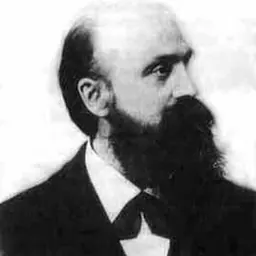
Sir Alfred Charles Glyn Egerton, FRS (11 October 1886 – 7 September 1959) was a British chemist. After enlisting in the Coldstream Guards, he was seconded to the Department of Explosives Supply and did research into munitions. After the war he studied the vapour pressure of metals before his interest turned to combustion. He pioneered the use of liquid methane as a fuel.
Early life Egerton was born in Glyn Cywarch, near Talsarnau, Gwynedd, Wales, on 11 October 1886, the fourth son of Colonel Sir Alfred Mordaunt Egerton, an officer of the Rifle Brigade and the Royal Horse Guards, and Comptroller to the Duke of Connaught and Strathearn, and his wife, The Honourable Mary Georgina Ormsby-Gore, the oldest daughter of William Ormsby-Gore, 2nd Baron Harlech. He grew up at Glyn Cywarch and Brogyntyn, houses that belonged to his maternal grandfather. He was educated at Eton College, which he entered in 1900. Contemporaries included Robert Strutt, Thomas Ralph Merton and Julian Huxley. He was commissioned as a second lieutenant on 1 July 1909 in University of London contingent of the Officers' Training Corps.
Career In 1913 he went to Berlin to work in the laboratory of Walther Nernst. Frederick Lindemann was also there at this time, and the two became friends. During the July Crisis in 1914, Nernst helped Egerton and his wife leave Germany. They arrived back in England on 3 August 1914, the day before Britain declared war on Germany, joining the Great War. an honour which King George VI conferred on him in a ceremony at Buckingham Palace on 9 February 1943. After the war he was awarded the Rumford medal in 1946. He was the Chairman of the Scientific Advisory Council of the Ministry of Fuel and Power from 1948 to 1953, and was director of the Salters' Institute of Industrial Chemistry from 1949 to 1959.
Don’t just read it —
keep it.
Full-length biographies made to live with: read them, listen on the way to work, watch them tonight.
- E-book
- Audio
- Video
Instant download · yours to keep · every purchase keeps this site free
Important facts
People in Alfred Charles Glyn Egerton's life
Named in this biography and alive at the same time



Related people
Same field, nearest in time



Contemporaries
People whose lives overlapped Alfred Charles Glyn Egerton's



Frequently asked questions
Who was Alfred Charles Glyn Egerton?
British chemist
When was Alfred Charles Glyn Egerton born?
Alfred Charles Glyn Egerton was born on 17 January 1886 in Glyn Cywarch, Gwynedd, Talsarnau.
When did Alfred Charles Glyn Egerton die?
Alfred Charles Glyn Egerton died on 17 January 1959 in Mouans-Sartoux.
What was Alfred Charles Glyn Egerton's occupation?
Alfred Charles Glyn Egerton was a chemist.
What was Alfred Charles Glyn Egerton known for?
Alfred Charles Glyn Egerton was known for Methane.
What nationality was Alfred Charles Glyn Egerton?
Alfred Charles Glyn Egerton was British.
Sources & further reading
· Wikipedia: Alfred Charles Glyn Egerton
· DBpedia: Alfred Charles Glyn Egerton
Cite this page
APA: Biography.guide. (2026). Alfred Charles Glyn Egerton. https://biography.guide/alfred-charles-glyn-egerton/
MLA: "Alfred Charles Glyn Egerton." Biography.guide, https://biography.guide/alfred-charles-glyn-egerton/.
Chicago: "Alfred Charles Glyn Egerton." Biography.guide. https://biography.guide/alfred-charles-glyn-egerton/.
Data last updated: 2026-09-20 · Spot an error? Report a correction.
Page generated 2026-09-27 05:18 UTC