
About Alfred Blalock
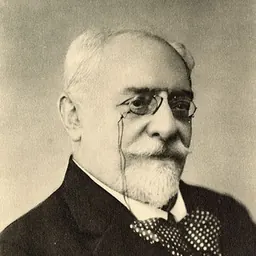
Lived 1899 – 1964 (aged 65). Alfred Blalock was an American surgeon, university teacher, scientist and physician.
Alfred Blalock (April 5, 1899 – September 15, 1964) was an American surgeon most noted for his work on the medical condition of shock as well as tetralogy of Fallot – commonly known as blue baby syndrome. He created, with assistance from his research and laboratory assistant Vivien Thomas and pediatric cardiologist Helen Taussig, the Blalock–Thomas–Taussig shunt, a surgical procedure to relieve the cyanosis from tetralogy of Fallot. He is known as a medical pioneer who won various awards, including Albert Lasker Clinical Medical Research Award. Blalock was also nominated several times for the Nobel Prize in Medicine.
Early life and education Blalock was born in Culloden, Georgia, the son of Martha "Mattie" (Davis) and George Zadock Blalock, a merchant. At the age of 14, he entered as a senior at Georgia Military College, a preparatory school for the University of Georgia.
Shortly after, Blalock attended the University of Georgia as a sophomore undergraduate, skipping his freshman year. While in college, Blalock was heavily involved in the university social life and athletics. He played tennis and golf, was a member of the Delta chapter of the Sigma Chi fraternity, and was secretary and treasurer of his senior class.
Medical education
After graduating with an A.B. in 1918 at the age of 19, Blalock entered Johns Hopkins School of Medicine, where he roomed with and began a lifelong friendship with Tinsley Harrison, a student who would go on to specialize in cardiovascular medicine. At Johns Hopkins, his record was not considered "outstanding,” given that he graduated near the middle of his class.” Nevertheless, Blalock excelled in surgical courses while he was a student at Hopkins, and this made him come to the realization that he wanted to be a surgeon. By conducting his research and mainly experimenting on dogs, Blalock discovered that surgical shock resulted from the loss of blood, which led him to encourage the use of blood plasma or whole blood products to prevent. Blalock's innovative research resulted in the saving of many lives on the battlefield during World War II. Unfortunately, Blalock had frequent bouts of tuberculosis, which developed during his later years at Vanderbilt.
Working with Vivien Thomas While working in Vanderbilt in 1930, Blalock became increasingly busy and had several obligations that kept him from spending much time in the laboratory. Because of this, Blalock began searching for a new lab assistant that he would be able to count on to carry out all of his experiments. He ended up hiring Vivien Thomas, a young black carpenter, as his lab assistant. Although Blalock hired Thomas as a lab assistant, he was officially titled a janitor. From Blalock's perspective, Thomas quickly learned how to perform surgical procedures, carry out experiments, and record data for Blalock's research. As they got to know each other, Blalock granted Thomas increased independence in the laboratory, something that was very uncommon, especially for someone black at that time. When Blalock was offered this position, he immediately requested that his assistant Vivien Thomas come with him. While working together at Hopkins, Blalock and Thomas developed a shunt technique to bypass coarctation of the aorta. Simultaneously, Helen Taussig, a cardiologist, presented to Blalock the problem of the blue baby syndrome - a congenital heart defect known as Tetralogy of Fallot which results in inadequate oxygenation of the blood.
During his later years at Hopkins, Blalock continued his research on the heart and vascular surgery. With Edwards Park, he developed a bypass operation in 1944, and in 1948, with Rollins Hanlon, a cardiac surgeon, he created a technique for overcoming the transposition of the great blood vessels of the heart.
By the 1950s, Blalock had performed over 1,000 surgeries to correct congenital heart defects.
Blalock as a mentor
In teaching and in research, Blalock paved the way for a new generation of surgeons. Students of Blalock appreciated his unique ability to bring out the best of them.
Awards and recognition In 1955, Blalock was elected chairman of the medical board of Johns Hopkins Hospital. When he retired in 1964, he was named a Professor Emeritus of Surgery, as well as a Surgeon-in-Chief Emeritus for Johns Hopkins School of Medicine and Johns Hopkins Hospital. These included the American Philosophical Society, the National Academy of Sciences and Royal Society of Medicine.
Blalock also received the Chevalier de la Légion d'honneur, the Passano Award, the Matas Award, and the Henry Jacob Bigelow medal.
Films about Blalock and Thomas In 2003, the PBS series American Experience premiered the Spark Media documentary "Partners of the Heart", which was about the collaboration between Blalock and Vivien Thomas at Vanderbilt and Johns Hopkins University. The documentary was directed by Andrea Kalin and written by Kalin and Lou Potter, with re-creations directed by Bill Duke and narration by Morgan Freeman. The "Partners of the Heart" went on to win the Organization of American Historians' Erik Barnouw Award for Best History Documentary in 2004.
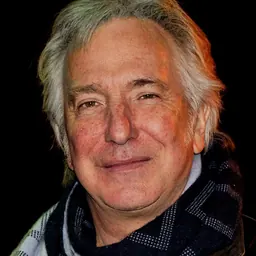
In the 2004 HBO film Something the Lord Made about the Blalock-Thomas collaboration, based on Katie McCabe's National Magazine Award winning Washingtonian magazine article of the same name, Blalock was portrayed by Alan Rickman and Thomas by Mos Def. Robert Cort produced the film, which went on to win three Emmy Awards for Outstanding Cinematography for a Miniseries or Movie, Outstanding Single-Camera Picture Editing for a Miniseries, Movie or a Special and Outstanding Made for Television Movie.
Greg Germann portrayed Blalock in the 2019 Netflix variety special Kevin Hart's Guide to Black History a guide to African-American history through re-enactments with a family sitcom set-up and archival footage.
References and bibliography
Don’t just read it —
keep it.
Full-length biographies made to live with: read them, listen on the way to work, watch them tonight.
- E-book
- Audio
- Video
Instant download · yours to keep · every purchase keeps this site free
Important facts
People in Alfred Blalock's life
Named in this biography and alive at the same time






Related people
Same field, nearest in time


Contemporaries
People whose lives overlapped Alfred Blalock's




Frequently asked questions
Who was Alfred Blalock?
American surgeon (1899–1964)
When was Alfred Blalock born?
Alfred Blalock was born on 5 April 1899 in Culloden.
When did Alfred Blalock die?
Alfred Blalock died on 15 September 1964 in Baltimore.
What was Alfred Blalock's occupation?
Alfred Blalock was a surgeon, university teacher, scientist and physician.
What nationality was Alfred Blalock?
Alfred Blalock was American.
Sources & further reading
Cite this page
APA: Biography.guide. (2026). Alfred Blalock. https://biography.guide/alfred-blalock/
MLA: "Alfred Blalock." Biography.guide, https://biography.guide/alfred-blalock/.
Chicago: "Alfred Blalock." Biography.guide. https://biography.guide/alfred-blalock/.
Data last updated: 2026-09-20 · Spot an error? Report a correction.
Page generated 2026-09-27 05:31 UTC