
About Alfred Baldwin Sloane
Lived 1872 – 1925 (aged 52). Alfred Baldwin Sloane was an American songwriter.
Alfred Baldwin Sloane, often given as A. Baldwin Sloane, (28 August 1872, Baltimore – 21 February 1925, Red Bank, New Jersey) was the most prolific songwriter for Broadway musical comedies in the United States at the beginning of the 20th century. Despite his output and success during his lifetime, none of his music has had enduring popularity. Two of his most popular songs were "When You Ain't Got No Money You Needn't Come Around" and "Coming Through the Rye". His most successful hit tune was “Heaven Will Protect the Working Girl" which was first performed by Marie Dressler in the 1910 show Tillie's Nightmare.
Early life in Baltimore Alfred Baldwin Sloane was born in Baltimore, Maryland on August 28, 1872. He was the son of Francis James Sloane and Emma Sloane (née Baldwin); both of whom came from families with musical heritage. His first music lessons were from his mother, and he also studied privately with music teachers in his native city. Despite the strong music background of his parents, they strongly objected to him pursuing a career in music.
Sloane was educated in the Baltimore City Public School System. His parents wished him to pursue a career in business, and in his youth he worked in his native city as an apprentice at a wholesale dry goods dealer. He lost his job there after spending most of his time at work surreptitiously composing music on boxes and other miscellaneous items. He also worked nights as an usher at the Academy of Music,
One of Sloane's first songs, "While Strolling Through the Forrest", was published in 1894. In 1895 he ended his connection with the PPC, and founded another amateur Baltimore performing group, the Rouge et Blanc Club. His brother, Francis James Sloane Jr., was also in the cast in the role of Antinous. A number of his songs form this work were interpolated into Rice's next musical Excelsior, Jr.. These included the songs "The Alpine Horn", "Grandpa's Hat", "Hush, Silence", "I Love You Evaline; I'm a Very Fly Conductor", and "My Little Sunday Girl" among others.
The success of Excelsior, Jr., first in Boston and later on Broadway, launched Sloane's career in the New York theatre scene. His first original score for the Broadway stage was in 1896 with the musical Jack and the Beanstalk; His most successful work as a composer in terms of quality was The Mocking Bird (1902).
While in the home of his daughter, Mrs. June H. Brackett, Alfred Baldwin Sloane died of heart disease at the age of 52 in Red Bank, New Jersey on 21 February 1925.
At the time of his death, Sloane was the president of Composers' Publishing Company and vice president of Authors and Composers Publishing Company. The Strange Adventures of Jack and the Beanstalk(also known as Jack and the Beanstalk) "fairy extravaganza in three acts" 1896 New Haven, Connecticut: Hyperion Theater, October 26, 1896 Sloane Libretto by Robert Barnet Production moved to Broadway's Casino Theatre where it opened on November 2, 1896. It subsequently had a successful tour. Simple Simon burlesque 1897 Boston: Tremont Theatre, February 8, 1897 Sloane and George Lowell Tracy Libretto by Robert Barnet Performed by The Cadets The Marquis of Michigan musical farce in three acts 1897 Washington, D.C.: Columbia Theatre, August 2, 1897 Sloane book and lyrics by Glen MacDonough and Edward W. Townsend Performed at the Collingwood Opera House in Poughkeepsie, New York and elsewhere before arriving at Broadway's Bijou Theatre on September 21, 1898 The Queen's Fan operetta in one act 1899 New York City: Proctor's Twenty-Third Street Theatre, March 6, 1899 Sloane libretto by George Totten Smith The production starred a group of three performers known as the Dresden Trio and toured the United States in performances at theaters owned by Benjamin Franklin Keith. Broadway to Tokio musical in three acts 1900 Broadway: New York Theatre, January 23, 1900 Sloane lyrics and book by George V. Hobart and Louis Harrison Ended its Broadway run at the Olympia Theatre on April 7, 1900 after 88 performances. The production then toured to Philadelphia, Boston, and Brooklyn. Aunt Hannah musical in three acts 1900 Broadway: Bijou Theatre, February 22, 1900 Sloane lyrics by Clay M. Greene; book by Matthew J. Royal Ended its Broadway run at the Bijou Theatre on March 10, 1900 after 21 performances. A Million Dollars musical in three acts 1900 Broadway: New York Theatre, September 27, 1900 Sloane lyrics by George V. Hobart; book co-authored by Hobart and Louis Harrison Ended its Broadway run on October 20, 1900 after 28 performances. Nell-Go-In "bill of a burlesque, ballet, and vaudeville in three acts" 1900 Broadway: New York Theatre, October 31, 1900 Sloane lyrics and book by George V. Hobart Ended its Broadway run on November 17, 1900 after 25 performances. Madge Smith, Attorney musical play in three acts 1900 Broadway: Bijou Theatre, December 10, 1900 Sloane, Dave Reed, Francis Bryant, Ernest Hogan, Theodore H. Northrup, and James O'Dea book by Ramsay Morris; lyrics by many authors Transferred to the Grand Opera House in Manhattan where it ended its New York run in March 1901 after 46 performances. After Office Hours 1900 December 24, 1900 Sloane Closed May 11, 1901 Staged with The Giddy Throng The Giddy Throng 1900 December 24, 1900 Sloane Closed May 11, 1901 Staged with After Office Hours In A Japanese Garden musical in one act 1901 Broadway: Casino Theatre, May 3, 1901 Sloane lyrics and book by William Gill The King's Carnival musical burlesque in two acts 1901 Broadway: New York Theatre, May 13, 1901 Sloane lyrics and book by Sydney Rosenfeld Broadway production closed on October 12, 1901 after a total of 102 performances Fun on the Beach musical in one act 1901 Broadway: Cherry Blossom Grove, August 4, 1901 Sloane lyrics and book by George V. Hobart The Supper Club musical in three acts 1901 Broadway: Winter Garden Theatre, December 23, 1901 Sloane, Mae Anwerda Sloane, J. Rosamond Johnson, Robert Cole, Ben Jerome, William Penn, Will D. Cobb and Gus Edwards book by Sydney Rosenfeld; lyrics by Sydney Rosenfeld, A. Baldwin Sloane, Mae Anwerda Sloane, J. Rosamond Johnson, Robert Cole, Ben Jerome, William Penn, Will D. Cobb and Gus Edwards Broadway production closed on January 25, 1902 after 40 performances The Hall of Fame musical in three acts 1902 Broadway: New York Theatre, February 5, 1902 Sloane lyrics by George V. Hobart; book by Sydney Rosenfeld Broadway production closed on June 4, 1902 after 137 performances The Belle of Broadway musical in one act followed by a vaudeville program 1902 Broadway: New York Winter Garden Theatre, March 15, 1902 Sloane lyrics by George V. Hobart; book by William H. Post Broadway production closed on March 29, 1902 after 17 performances The Wizard of Oz musical in three acts 1902 Chicago: Chicago Grand Opera House, June 16, 1902 Paul Tietjens and Sloane were the primary composers although others also contributed music lyrics and book by L. Frank Baum; additional lyrics contributed by others Original production toured including a lengthy run on Broadway at the Majestic Theatre where it opened on January 20, 1903. It closed there after 293 performances on October 3, 1903. The production later returned for a second Broadway run at the Majestic Theatre from March 21, 1904 – November 25, 1905 where ran for an additional 171 performances. The Mocking Bird opera in three acts 1902 Syracuse, New York: Wieting Opera House, November 7, 1902 Sloane libretto by Sydney Rosenfeld Broadway run at the Bijou Theatre from November 10, 1902 – Jun 8, 1903. Considered Sloane's best work. Sergeant Kitty opera in two acts 1903 Brooklyn, New York: Montauk Theatre, November 16, 1903 Sloane libretto by R.H. Burnside Broadway run at Daly's Theatre from January 18, 1904 – March 12, 1904 Lady Teazle comic opera in two acts 1904 Baltimore, Maryland: Academy of Music, December 19, 1904 Sloane Libretto by John Kendrick Bangs and Roderic C. Penfield based on Richard Brinsley Sheridan's The School for Scandal Broadway run at the Casino Theatre from December 24, 1904 – February 11, 1905. All Around Chicago "musical extravaganza" in twelve scenes 1905 Chicago: McVicker's Theater, April 30, 1905 Sloane book and lyrics by Frederic Ranken Never performed in New York The Gingerbread Man musical in two acts 1905 Malden, Massachusetts: Auditorium Theatre, November 15, 1905 Sloane book and lyrics by Frederic Ranken Opened on Broadway at the Liberty Theatre on Christmas Day 1905 Seeing New York comic opera in one act 1906 Broadway: Jardin de Paris, June 5, 1906 Sloane libretto by Joseph Hart and Clifton Crawford Broadway run closed on August 18, 1906 after 75 performances. The Great Decide burlesque in three scenes 1906 Broadway: Lew Fields Theatre, November 15, 1906 Gustav Kerker and Sloane book and lyrics by Joseph Herbert Parody of William Vaughn Moody's The Great Divide. Broadway run closed on December 29, 1906 after 53 performances. The Mimic and the Maid musical in three acts 1906 New Haven, Connecticut: Hyperion Theater, December 28, 1906 Sloane lyrics and book by Allen Lowe Brief Broadway run at the Bijou Theatre on January 11 and 12, 1907 Li'l Mose musical 1908 Atlantic City: April 20, 1908 Sloane lyrics and book by Owen Davis and George Totten Smith Never performed in New York Lo musical 1909 Milwaukee: August 29, 1909 Sloane book and lyrics by O. Henry (pseudonym of William Sydney Porter) & Franklin Pierce Adams Never performed in New York Tillie's Nightmare musical in two acts 1910 Chicago: Great Northern Theatre, January 2, 1910 Sloane book and lyrics by Edgar Smith Broadway run May 5, 1910 – July 9, 1910 at the Herald Square Theatre. Later returned for further performances at the Manhattan Opera House in December 1911. Later 1926 musical Peggy-Ann by Richard Rodgers and Lorenz Hart was based on this musical. The Prince of Bohemia musical in two acts 1910 Broadway: Hackett Theatre, January 14, 1910 Sloane lyrics by E. Ray Goetz; book by J. Hartley Manners Broadway run ended after 28 performances in February 1910 The Summer Widowers "musical panorama in seven views" 1910 Broadway: Broadway Theatre, June 4, 1910 Sloane libretto by Glen MacDonough Broadway run ended after 140 performances on October 1, 1910 The Hen-Pecks musical in two acts 1911 Broadway: Broadway Theatre, February 4, 1911 Sloane lyrics by E. Ray Goetz and Vincent Bryan; book by Glen MacDonough Broadway run ended after 187 performances on September 23, 1911 The Never Homes "musical comedy in six scenes"; two acts 1911 Broadway: Broadway Theatre, October 5, 1911 Sloane lyrics by E. Ray Goetz; book by Glen MacDonough Broadway run ended after 92 performances on December 23, 1911 Hanky Panky musical in two acts and 3 scenes 1911 Chicago: Lew Fields American Music Hall, October 31, 1911 Sloane lyrics by E. Ray Goetz; book by Edgar Smith Toured in 1911-1912 prior to coming to Broadway. Played at the Broadway Theatre in New York from August 5, 1912 – November 2, 1912. Hokey-Pokey (staged with Bunty, Bulls and Strings) referred to as a grouped work as "a pot-pourri of reminiscences in two acts" 1912 Broadway: Broadway Theatre, February 8, 1912 Sloane, John Stromberg, and William T. Francis lyrics by Edgar Smith and E. Ray Goetz; book by Edgar Smith Closed on May 11, 1912 after 108 performances Bunty, Bulls and Strings (staged with Hokey-Pokey) referred to as a grouped work as "a pot-pourri of reminiscences in two acts" 1912 Broadway: Broadway Theatre, February 8, 1912 Sloane lyrics by E. Ray Goetz; book by Edgar Smith Closed on May 11, 1912 after 108 performances. Contained the song "Alexander's Bag-Pipe Band" which Sloane and Goetz wrote with Irving Berlin. Without the Law (staged with Roly Poly) a "burlesque in three scenes"; one act 1912 Broadway: Weber and Fields' Broadway Music Hall, November 21, 1912 Sloane lyrics by E. Ray Goetz; book by Edgar Smith A parody of Bayard Veiller's Within The Law. Ran on Broadway until January 11, 1913 when it closed after 60 performances. Ladies First musical in three acts 1918 Broadway: Broadhurst Theatre, October 24, 1918 Sloane lyrics and book by Harry B. Smith Story adapted from Charles H. Hoyt's A Contented Woman. Broadway run transferred to the Nora Bayes Theatre where it closed on March 15, 1919 after 164 performances. The Greenwich Village Follies musical revue 1919 New York: Greenwich Village Theatre, July 15, 1919 Sloane lyrics by John Murray Anderson and Arthur Swanstrom; book by Philip Bartholomae Transferred to Broadway's Nora Bayes Theatre where it ran from September 9, 1919 - January 31, 1920 The Greenwich Village Follies of 1920 musical revue 1920 New York: Greenwich Village Theatre, August 30, 1920 Sloane lyrics by John Murray Anderson and Arthur Swanstrom; book by Thomas J. Gray Transferred to Broadway's Shubert Theatre where it ran from September 20, 1920 – March 5, 1921 China Rose operetta in two acts 1924 Boston: Hollis Street Theatre, December 24, 1924 Sloane libretto by Harry L. Cort and George E. Stoddard Opened on Broadway at the Martin Beck Theatre on January 19, 1925. Transferred to Wallack's Theatre on February 23, 1925. Ended its Broadway run at the Knickerbocker Theatre on May 9, 1925 with a collective New York run of 120 performances.
Musicals and operettas with interpolated music by Sloane Excelsior, Jr., musical; music by George Lowell Tracy; libretto by Robert Barnet; opened at Hammerstein's Olympia on November 29, 1895. Multiple songs and instrumental numbers interpolated into the show by Sloane. Stranger in New York (1897), musical; music by Richard Stahl; book and lyrics by Charles H. Hoyt. Used the two songs by Sloane: "Won't You Speak to Sister Mary?" and "Walker's Dancing School" Papa's Wife (1899) A Chinese Honeymoon (1901), musical in two acts; libretto by George Dance; music by Howard Talbot. Sloane's song "Little Street in Heaven They Call Broadway" was interpolated into the 1902 Broadway production. The Liberty Belles (1901), musical; music by John W. Bratton; lyrics and book by Harry B. Smith. Sloane contributed the songs "A Little Child Like Me", "My Filipino Pet", "Spring Hat" and "Shopping Chorus". The Little Duchess, additional music by Sloane, October 14, 1901 – April 1902 George W. Lederer's Mid-Summer Night Fancies, additional music Sloane, June 22, 1903 – July 18, 1903 Red Feather (1903), comic opera in two acts; music by Reginald De Koven, libretto by Charles Klein; lyrics by Charles Emerson Cook. Sloane contributed the song "There's A Little Street in Heaven They Call Broadway" The Girl from Dixie (1903), musical in two acts; libretto by Harry B. Smith; music by various composer. Sloane composed the music for the song "The Dissipated Kitten". Glittering Gloria (1903), musical in three acts; music by Bernard Rolt; book by Hugh Morton; lyrics by Morton and Rolt. Premiered at Wyndham's Theatre, London in 1903. The 1904 Broadway production at Daly's Theatre featured the song "Susan" with lyrics by Edward S. Abeles and music by Sloane. Girls Will Be Girls (1904), musical in three acts; music and lyrics by Joseph Hart; book by R. Melville Baker. Sloane contributed the song "Swinging" to the national touring production in 1906. The Rollicking Girl (1905), musical in three acts; music by William T. Francis; lyrics and book by Sydney Rosenfeld. Sloane contributed the song "Bored" with lyrics by Frederick Ranken. About Town (1906), musical in two acts; music by Melville Ellis and Raymond Hubbell; book and lyrics by Joseph Herbert. The opening chorus added to the production in Boston in 1907 after its Broadway run ended is attributed to Sloane. Fascinating Flora (1907), musical in two acts; music by Gustav Kerker; lyrics by: R. H. Burnside; book by R. H. Burnside and Joseph W. Herbert. Sloane's song "Romance and Reality" with lyrics by Louis Harrison was interpolated into the musical. The Beauty Spot (1909), musical in two acts; music by Reginald De Koven; book and lyrics by Joseph W. Herbert. Sloane wrote the music for the "Entrance of the Flower Girls", and his song "Foolish Questions" with lyrics by William Lee was interpolated into the show. Hello, Paris (1911), musical revue in one act; music by J. Rosamond Johnson; lyrics by J. Leubrie Hill; book by William Le Baron. Sloane contributed the song "Sentimental Tommy" with lyrics by E. Ray Goetz. All Star Gambol (1913), revue starring Marie Dressler with Dressler serving as playwright and lyricist and Frederick Schwartz as her musical director. Dressler used pre-existing songs for this show by a variety of composers. Sloane's song "Great Big Girl Like Me" with lyrics by Edgar Smith was interpolated into the show. A Fantastic Fricassee (1922), musical revue in fifteen scenes; Prologue attributed to Sloane. Sing Out, Sweet Land (1944), A Salute to American Folk and Popular Music; music arranged by Elie Siegmaster. Used Sloane's "Heaven Will Protect the Working Girl".
Filmography Soundtrack 1952: Somebody Loves Me, Toddling the Todalo lyrics by Sloane 1940: Strike Up the Band, Heaven Will Protect the Working Girl, music & lyrics by Sloane (uncredited) 1939: Frontier Marshal Heaven Will Protect the Working Girl, music & lyrics by Sloan (uncredited) Writer 1914: Tillie's Punctured Romance, Tillie's Nightmare (uncredited) Self 1914: Our Mutual Girl, Sloane plays himself (episode 10)
Selected sheet music William Pilling, New York (publisher) He Cert'ny Was Good To Me, lyrics by Jean C. Havez, music by Sloane (1898)
M. Witmark & Sons Susie, Mah Sue, music & lyrics by Sloane (lyricist) (1900) – from the musical Broadway to Tokio Lazy Bill, A Volunteer Of Rest, music by Sloane, lyrics by Glen MacDonough (1897) - from the musical The Marquis of Michigan
Joseph W. Stern & Co., New York There's a Little Street in Heaven That They Call Broadway, lyrics by James T. Waldron & Sloane, music by Sloane (1903)
Charles K. Harris, Chicago The Gingerbread Man (musical) Book & lyrics by Frederic Ranken, music by Sloane (1905) The Evil Eye The Beautiful Land of Bon Bon John Dough Moon Song
Don’t just read it —
keep it.
Full-length biographies made to live with: read them, listen on the way to work, watch them tonight.
- E-book
- Audio
- Video
Instant download · yours to keep · every purchase keeps this site free
Important facts
People in Alfred Baldwin Sloane's life
Named in this biography and alive at the same time


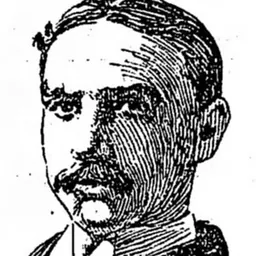




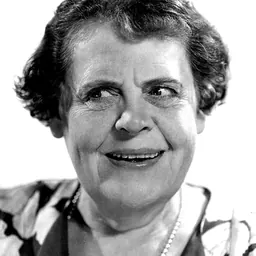
Related people
Same field, nearest in time
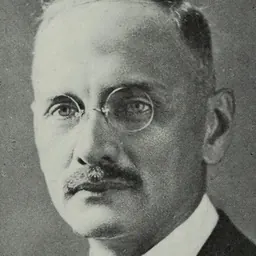
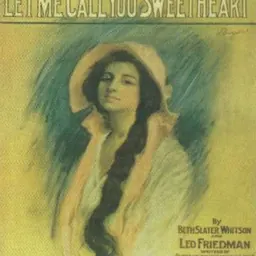
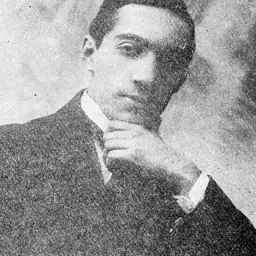

Contemporaries
People whose lives overlapped Alfred Baldwin Sloane's




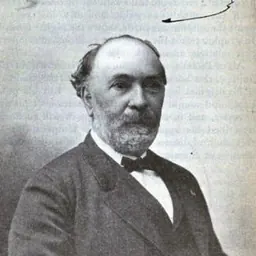

Frequently asked questions
Who was Alfred Baldwin Sloane?
American Broadway composer (1872-1925)
When was Alfred Baldwin Sloane born?
Alfred Baldwin Sloane was born on 28 August 1872 in Baltimore.
When did Alfred Baldwin Sloane die?
Alfred Baldwin Sloane died on 21 February 1925.
What was Alfred Baldwin Sloane's occupation?
Alfred Baldwin Sloane was a songwriter.
What nationality was Alfred Baldwin Sloane?
Alfred Baldwin Sloane was American.
Sources & further reading
· Wikipedia: Alfred Baldwin Sloane
· DBpedia: Alfred Baldwin Sloane
Cite this page
APA: Biography.guide. (2026). Alfred Baldwin Sloane. https://biography.guide/alfred-baldwin-sloane/
MLA: "Alfred Baldwin Sloane." Biography.guide, https://biography.guide/alfred-baldwin-sloane/.
Chicago: "Alfred Baldwin Sloane." Biography.guide. https://biography.guide/alfred-baldwin-sloane/.
Data last updated: 2026-09-20 · Spot an error? Report a correction.
Page generated 2026-09-27 05:22 UTC