
About Alexey Chernyaevsky
Lived 1840 – 1894 (aged 53–54). Alexey Chernyaevsky was a Russian teacher.
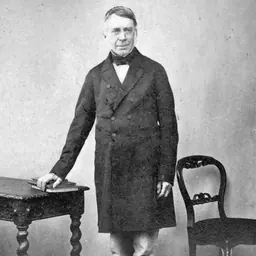
Alexei Osipovich Chernyaevsky (; 1840, Shamakhi – December 14, 1894, Tiflis) was an educator, methodologist, and pedagogue. His textbook "Vatan dili" (The Native Language) is the first Azerbaijani language textbook published for Azerbaijanis based on the syllabic method.
Life Aleksey's parents were among the first Molokans who were resettled to Azerbaijan in 1834–1835. They were settled in the Altiaghach area of the Shamakhi district. Between 1834 and 1839, their total number reached 1,681 people.
Chernyaevski, through his own efforts, learned Azerbaijani Turkish perfectly, and later, on February 1, 1857, he began working as a postman at the post office in the city of Aghsu. During this time, he had a strong interest in teaching. While working as a postman, children from nearby villages would gather around him, and he would interact with them and teach them the Russian language.
Activity in the field of education
In the 1860s, at the initiative of the Governor of Baku, Kolyubakin, several public schools were opened in Russian villages, including the first public school in the village of Mareze in 1866. Chernyaevsky began teaching at the newly opened school without any compensation. In 1867, the trustee of the Caucasus Educational District, Neverov, visited the village of Mareze to observe the school’s operations firsthand. He was highly impressed by the teaching process and provided a detailed report on the school’s activities to the Governor-General of the Caucasus. The report stated:
"The Governor of Baku — Lieutenant General M.P. Kolyubakin — assigned the management of the school in the village of Mareze, in the absence of teachers, to the station master Chernyaevski, who lived in that village. Chernyaevsky, a young man of 23 or 24 years old, had studied at the Shamakhi uezd school and had begun teaching at the school without pay... The station master managed things so well that just over a year after the school opened, I found it in a condition incomparably better than the state primary schools under our jurisdiction."
In March 1867, there were 81 students at the school. In terms of student numbers, this school was even able to rival the district schools. The main reason for the recognition of the Mareze school was its democratic principles. Education there was free, which allowed children of peasants to attend. In fact, unlike state schools, only peasant children studied there. The principle of gender segregation, strictly enforced in state schools, was not applied here. Alongside about 60 male students, girls were also educated at the Mareze school. Subjects taught included Russian language, mathematics, geography, and natural sciences. The disciplinary methods used in state and madrasa schools were not practiced in the Mareze school.
One of the most notable aspects of the Mareze school was its emphasis on visual instruction. This was a progressive pedagogical principle not only for that time but even by today’s standards. Through this approach, Chernyaevsky opposed the mechanical teaching methods commonly used by many teachers in state schools. The trustee noted that Chernyaevsky "stood against rote learning based on dead mechanical methods, where students simply memorized expressions they did not understand, and instead emphasized visual instruction and explanatory reading. In short, Chernyaevsky possessed a natural pedagogical intuition."
An interesting conversation took place between Y.M. Neverov and A.O. Chernyaevski. The trustee said that he would apply to the authorities to have Chernyaevsky rewarded. However, Chernyaevsky objected, expressing concern that the children’s parents might lose their trust in him if they heard he was being rewarded. Since Chernyaevski knew Azerbaijani Turkish very well, Neverov promised to appoint him as an Azerbaijani Turkish teacher in Tiflis.
The young teacher's interest in pedagogical knowledge was so strong that despite limited funds as a station master, he ordered and read books and textbooks for himself. Additionally, he wrote an article titled "About Public Schools in Transcaucasia", which was published in the Kavkaz newspaper. In 1867, with the help of the students' parents, Aleksey Osipovich managed to build a new school building and also opened a library there. Both children and adults used this library.
Learning about Chernyaevsky’s influence on the children and his activities at the school, the leadership of the educational institutions of Transcaucasia offered him the vacant position of preparatory class teacher at the newly opened Shamakhi district school in 1867. From that year, Chernyaevsky began fulfilling his duties in this role. A document from the Caucasus educational district notes that in May 1868, the governor visited the Mareze village school and presented a silver cup with gold inlay to the former teacher Chernyaevsky and a silver watch to the current teacher.
In 1869, at the age of 29, Chernyaevsky began working in Georgia at a closed boarding school, first as a teacher and later as an inspector. In 1870, he was appointed director of the Nikolayev primary school in Tbilisi. In 1871, he was appointed deputy head of the public schools department in Baku. Later, this position was transferred to Kuban. After working in this role for eight years, in 1879, an Azerbaijani department was established under the ZMS in the city of Gori, and the seminary director D.D. Semyonov invited A.O. Chernyaevsky to serve as the department inspector. He fulfilled the inspector role until 1893, the year of his death. Chernyaevsky frequently visited Azerbaijan and recruited young, talented Azerbaijanis to study at the seminary. He trained many educators at the seminary, who later took upon themselves the work of public enlightenment in Azerbaijan’s cities and villages.
Chernyaevsky's character is reflected in Ismayil Shykhly's novel "" ("Mad Kura"). In the film adaptation of this novel, the role of Chernyaevsky was portrayed by Vladislav Kovalikov.
In 1895, a newspaper article about Alexei Osipovich Chernyaevsky was published in the Novoye Obozreniye newspaper in Tbilisi, signed by the renowned literary critic and researcher Firidun bey Kocharli. In the article, kind words were expressed about the late educator Aleksey Osipovich Chernyaevski, who had once taught the author at the Gori Teachers’ Seminary. His teaching dignity and pedagogical talent were highly praised. The author wrote:
"The late Chernyaevsky... was an excellent pedagogue, and he spoke the Azerbaijani language—used by common people and children—very well. No one else used Azerbaijani folk sayings as aptly and naturally in conversation as he did."
Rashid bey Afandiyev, a student of Chernyaevsky, also wrote in his article titled "Who is Chernyaevsky?" that he was deeply shaken by the death of A. Chernyaevsky—the head of the Azerbaijani department of the Gori Teachers’ Seminary, an educational devotee who authored and published the first European-style national textbook for Azerbaijani children, and who dedicated his entire conscious life, talent, and skills to the development of national education. During his 40-year pedagogical career, Chernyaevsky educated more than 250 Azerbaijani intellectuals. Afandiyev highly praised the efforts of his teacher and friend, emphasizing that Alexei Osipovich was one of those rare individuals who could serve as a role model both in the field of education and in personal life. At the end of the article, the author repeated the question “Who is Chernyaevsky?” and answered it himself: "Chernyaevsky was a highly moral, well-mannered man, born in Shamakhi into a poor Russian family, who mastered the Azerbaijani language like a native Azerbaijani son."
Don’t just read it —
keep it.
Full-length biographies made to live with: read them, listen on the way to work, watch them tonight.
- E-book
- Audio
- Video
Instant download · yours to keep · every purchase keeps this site free
Important facts
Related people
Same field, nearest in time



Contemporaries
People whose lives overlapped Alexey Chernyaevsky's


Frequently asked questions
Who was Alexey Chernyaevsky?
Azerbaijani educator of Russian origin (1840–1894)
When was Alexey Chernyaevsky born?
Alexey Chernyaevsky was born in 1840 in Shamakhi.
When did Alexey Chernyaevsky die?
Alexey Chernyaevsky died on 14 December 1894 in Tbilisi.
What was Alexey Chernyaevsky's occupation?
Alexey Chernyaevsky was a teacher.
What nationality was Alexey Chernyaevsky?
Alexey Chernyaevsky was Russian.
Sources & further reading
· Wikipedia: Alexey Chernyaevsky
· DBpedia: Alexei Chernyaevsky
Cite this page
APA: Biography.guide. (2026). Alexey Chernyaevsky. https://biography.guide/alexey-chernyaevsky/
MLA: "Alexey Chernyaevsky." Biography.guide, https://biography.guide/alexey-chernyaevsky/.
Chicago: "Alexey Chernyaevsky." Biography.guide. https://biography.guide/alexey-chernyaevsky/.
Data last updated: 2026-09-25 · Spot an error? Report a correction.
Page generated 2026-09-27 05:12 UTC