
About Alexei Kitaev
Born 1963. Alexei Kitaev is a Russian physicist and university teacher, known for Magic state distillation, Periodic table of topological invariants and QIP (complexity).
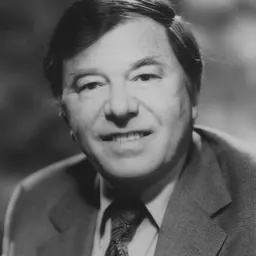
Alexei Yurievich Kitaev (; born August 26, 1963) is a Russian-American theoretical physicist.
He is currently a professor of theoretical physics and mathematics at the California Institute of Technology.
Kitaev has received multiple awards recognizing his contributions to quantum information science and condensed matter physics, particularly in quantum computation and topological phases of matter.
Life Kitaev was educated in Russia, graduating from the Moscow Institute of Physics and Technology in 1986, and with a Ph.D. from the Landau Institute for Theoretical Physics under the supervision of Valery Pokrovsky in 1989.
Research Quantum computing and complexity
Kitaev has made contributions to quantum algorithms, quantum complexity classes, and fault-tolerant quantum computation. He introduced the complexity class QMA (Quantum Merlin–Arthur) and proved that the k-local Hamiltonian problem is QMA-complete, linking ground-state energy problems for local Hamiltonians to questions in computational complexity.
He proposed using topological phases of matter and anyons for fault-tolerant quantum computation, introducing the toric code (or surface code) as a paradigmatic error-correcting code. He also contributed to threshold theorems for fault-tolerant codes and co-developed protocols such as the Gottesman–Kitaev–Preskill code and Bravyi–Kitaev magic-state distillation.
Topological phases and lattice models
Kitaev introduced exactly solvable lattice Hamiltonians that realize topologically ordered phases and anyonic excitations in two spatial dimensions. His toric code and related quantum-double models provide toy models realizing anyons and long-range entanglement.
He has also contributed to the classification of topological phases. He related two-dimensional lattice models of topological order to algebraic data describing the anyon types and their braiding, together with a bulk invariant specifying the chiral central charge. His "periodic table for topological insulators and superconductors" uses K-theory and Bott periodicity to classify gapped free-fermion phases in different symmetry classes and spatial dimensions, and in two dimensions he proposed the "16-fold way" classification of certain topological superconductors. The so-called state introduced by Kitaev appears as a basic nontrivial 2+1-dimensional invertible phase, and his ideas have been used in generalized-cohomology classifications of symmetry-protected topological phases with symmetry group G.
Kitaev has also contributed to the study of quantum chaos and holography through his work on the Sachdev–Ye–Kitaev (SYK) model.
Honors and awards
Political activism In March, 2022, he was one of 78 Breakthrough Prize Laureates whose names appeared on an "open letter" criticizing the Russian invasion of Ukraine.
Don’t just read it —
keep it.
Full-length biographies made to live with: read them, listen on the way to work, watch them tonight.
- E-book
- Audio
- Video
Instant download · yours to keep · every purchase keeps this site free
Important facts
more
Quantum spin liquid, Quantum threshold theorem, Sachdev–Ye–Kitaev model, Solovay–Kitaev theorem, Toric codePeople in Alexei Kitaev's life
Named in this biography and alive at the same time

Related people
Same field, nearest in time


Contemporaries
People whose lives overlapped Alexei Kitaev's


Frequently asked questions
Who is Alexei Kitaev?
Russian-American physicist
When was Alexei Kitaev born?
Alexei Kitaev was born on 26 August 1963 in Moscow.
What is Alexei Kitaev's occupation?
Alexei Kitaev is a physicist and university teacher.
What is Alexei Kitaev known for?
Alexei Kitaev is known for Magic state distillation, Periodic table of topological invariants, QIP (complexity), QMA, Quantum error correction and Quantum phase estimation algorithm.
What nationality is Alexei Kitaev?
Alexei Kitaev is Russian.
Sources & further reading
Cite this page
APA: Biography.guide. (2026). Alexei Kitaev. https://biography.guide/alexei-kitaev/
MLA: "Alexei Kitaev." Biography.guide, https://biography.guide/alexei-kitaev/.
Chicago: "Alexei Kitaev." Biography.guide. https://biography.guide/alexei-kitaev/.
Data last updated: 2026-09-20 · Spot an error? Report a correction.
Page generated 2026-09-27 05:32 UTC