
About Alexei Beketov
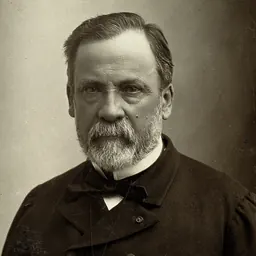
Lived 1862 – 1941 (aged 79). Alexei Beketov was a Russian architect, restorer, university teacher and painter.
Aleksey Nikolaevich Beketov (; – 23 November 1941) was a Russian Imperial and Soviet architect, who made significant contributions to the architectural landscape of Kharkov and beyond, primarily working in the Neoclassical, Neo-Renaissance, and Art Nouveau styles. He was an honorary Professor at the St. Petersburg Imperial Academy of Arts from 1894 and an Honored Artist of Ukrainian SSR (posthumously).
Biography Aleksey Nikolaevich Beketov was born on , in the city of Kharkov. The Beketov family belongs to the ancient Russian nobility and is probably of Turkic or Circassian origin. Aleksey Beketov was the son of famous Russian chemist Nikolay Beketov, a noted Professor of chemistry at the Imperial University of Kharkiv. His father came from a Russian noble family with roots from the Penza Governorate, Nikolay Beketov was born in Alferovka (now Beketovka, Penza Governorate), than moved to Kharkov. When he was elected to the St. Petersburg Academy of Sciences, he moved to St. Petersburg, where he died in 1911. His mother Elena Karlovna Milhoff (Beketova) was daughter of the St. Petersburg pharmacist. In 1882, he enrolled in the Imperial Academy of Arts, where he studied with David Grimm and ; graduating in 1888 with a degree in architecture. He graduated with a gold medal and defended his thesis on the topic "The Station at the Sea Baths on the Black Sea". During that same period, he worked with Maximilian Messmacher on several projects, including the palace of Grand Duke Michael Mikhailovich.
After his studies, he was offered a job in Russia, in particular at the St. Petersburg Academy of Arts, but he wrote that he wanted to "live and give all his strength to his hometown ... I stood, looked at the palaces and remembered our Kharkiv - I felt with all my heart that I wanted to return and give all my strength to my native city". From 1892 he taught a course in building art and architecture, and in 1898 he joined in compiling the programs and teaching a course in the history of architecture, as well as supervising the diploma and course design. In 1909, he published the book "Architecture. A Course of Lectures Given at the Kharkov Institute of Technology Named After Emperor Alexander the Third". In 1894, he was awarded the title of "Academician" for his work on Kharkov Public Library (1899–1901), what is now known as the Kharkov Korolenko State Scientific Library. His first project to be implemented was the building of the .
The Beketov family, in particular Oleksiy and his father Nikolay, were acquainted with the famous Alchevsky family of Ukrainian educators and activists. The Alchevsky family, together with Nikolay Beketov, were among the founders of the Kharkov Society "Hromada", a national and cultural center of the Ukrainian intelligentsia. Also, the buildings of Oleksiy Alchevsky's banks: Zemelny (Land) and Torgovy (Trade) were built according to his designs. To master the specifics of bank construction, the architect visited France, Italy, and Germany, inspecting the layout of operating rooms, work areas, safes, and other premises of European banks. Beketov also built a private mansion for the Alchevskys in the style of Italian villas. In the courtyard of this mansion, was erected in 1900. The author of the monument is Ukrainian-Russian sculptor Vladimir Beklemishev, who, like Beketov, graduated from the Kharkov drawing school of Maria Raevskaya-Ivanova.
Oleksiy and Hanna had four children: Khrystyna (1890-1972, graphic artist, specialized in etching. Author of memoirs about her uncle, the outstanding tenor , lived in Bulgaria), Mykola (1891-1964, by profession a sailor, died in Canada), Maria (1893-1921, died in Central Asia during an infectious epidemic), and Olena (1895-1990, served as her father's secretary and assistant, was the keeper of the archives of the Alchevsky and Beketov families. Buried in the ). His grandson (1932) became a Doctor of Physical and Mathematical Sciences, and his great-granddaughter is a well-known public figure, defender of the city's architectural heritage, volunteer during the Russian-Ukrainian war and activist.
After the Soviet occupation of Ukraine began, Beketov remained in Kharkiv. Most of his property was nationalized by the Soviet authorities. After 1920, in addition to KhTI, he worked as the main architect of the Kharkiv Art School. In 1929, he became a professor of architecture at the Kharkiv Mechanical Engineering Institute.
Until the last days of his life, the architect led an active lifestyle and played tennis. In August 1941, while the city was still under the control of the Soviet army, he submitted a request to the institute to return to teaching. Oleksiy Beketov's grave, along with some others, was moved to the , where it is located to this day. The gravestone, which was made in 1946, was also moved. Beketova Street also exists in Salavat. A commemorative plaque has been installed in 1987 on the house on Darvina Street in Kharkiv, where he lived. The old board was lost, and a new one was installed in 2001. A plaque in his honor is installed on the building of the Mechnikov Institute in Kharkiv, was built according to his design. A commemorative plaque in honor of the architect is installed on the courthouse building in Kharkiv, which was built according to his design. The museum of the Kharkiv National Academy of Urban Economy has a memorial plaque in honor of the auditorium named after Beketov. It was also planned to install several plaques on other prominent buildings in Kharkiv. Institutions named after Beketov Kharkiv National Academy of Urban Economy was named in honor of Oleksiy Beketov in 2013. In 1995, a new subway station on the Kharkiv Metro was named the Arkhitektora Beketova. Auditorium No. 501 Kharkiv National Academy of Urban Economy was named after the architect in 1987. On 30 August 2016, a monument to Oleksiy Beketov was unveiled in front of the building of the Kharkiv National Academy of Urban Economy. The authors of the monument are Oleksandr Ridny and Hanna Ivanova. In 2001, a monument to the architect with his bust was erected in the Kharkiv House of Scientists, which was built as . In 2002, a bust of Beketov was installed in the museum of the Kharkiv National Academy of Urban Economy. There is a stained glass window with his image at the "Arkhitektora Beketova" station of the Kharkiv Metro. Museums A section of the museum at the Kharkiv National Academy of Urban Economy is dedicated to the architect. His dacha in Alushta is now a museum. Some of Beketov's belongings are kept in the Kharkiv Historical and Art Museums. Other In 2010, a postage stamp "Beketov Oleksiy Mykolaovych" was issued in Ukraine. Several books have been written about Oleksiy Beketov. He also wrote his own autobiography and descriptions of his projects. In the 1920s and 1930s, several buildings were erected according to his designs in the Constructivist style. He participated in the competition for the construction of the Derzhprom building, but his project was not among the winners. In 1905–1907, in collaboration with sculptor I. Andreoletti, he created , which is now located near the entrance to V. N. Karazin Kharkiv University. Today, most of his buildings are . A significant portion of his buildings were damaged during the Russian shelling of Kharkiv after the start of the full-scale invasion in 2022–2025.
In addition to his architectural designs, he was an amateur artist, painting Crimean landscapes.
Public buildings
Sources: 18/9 Chernyshevska Street); Land Bank (1896–1898, the bank belonged to his father-in-law, now , building damaged by Russian missile strike; 28 Konstytutsiyi Square); Azov-Don Commercial Bank (1896, building damaged by Russian missile strike; 14 Konstytutsiyi Square); Church of the Nativity of the Virgin (Kaplunivska, 1896–1912, destroyed in the 1930s; Kaplunivska Street); Trade Bank (1899, the bank belonged to his father-in-law; 26 Konstytutsiyi Square); Kharkiv Public Library (1899–1901, building damaged by Russian missile strike; 18 Korolenko Lane); Building of judicial institutions (1899–1902, with the participation of architects and V. Khrustalyov, building damaged by Russian missile strike; 36 Heroiv Nebesnoi Sotni Square); Kharkiv Society of Mutual Credit (1903–1905; 20 Pavlivska Square); Volga-Kama Bank (1907, now ; 24 Konstytutsiyi Square); (1910–1911; 8 Skrypnikivsky descent); Building of the Kharkiv Medical Society (1911–1913, now the ; 14 Hryhoriya Skovorody Street); Sokolov Obstetrics and Gynecology Department of the (1912–1913;); Management of the North Donetsk Railway (1913, authors - S. Timoshenko, P. Shirshov, P. Sokolov, with consultation from O. Beketov; 4 Zbroyarska Street); Higher Women's Courses (1913–1915; 92 Myronosytska Street); Orphanage for noble orphans (1913–1915, now a building of the Yaroslav Mudryi National Law University; 84 Hryhoriya Skovorody Street); Commercial Institute (1914–1916, now Kharkiv National Technical University of Agriculture; 44 Alchevskykh Street); Shelter for elderly nobles (1914–1916; 4 Mykhaylya Semenka Street); Electrotechnical building of NTU "KhPI" (1928–1929; 2 Politekhnichna Street); Building for railway workers (1925–1936, also known as the "Liternyy House (Letter House, )", from the Ukrainian word " (Litera, Letter)"; 8/10в and 8/10a Yevhena Kotlyara Street); Residential building "Industrial Professor" (1934–1936; 17 Bahalia Street); "Voyenvid" (1938, Military Department Residential Building, , author - P. Shpara, compiled with the advice of O. Beketov; 1 Borysa Chychybabina Street).
Private buildings Sources: 10 Zhon-Myronosyts Street); Dmytro Alchevsky Mansion (1896, belonged to , later the girls' gymnasium, now a school; 13 Darvina Street); N. L. Zalesky Mansion (1897; 9 Skrypnyka Street). Sokolov Merchant's Mansion (1899, building damaged by Russian missile strike; 17 Blahovishchenska Street); Mykola Somov Mansion (1900; 13 Maksymilianivska Street); P. V. Markov Merchant's Mansion (1901; 23 ); P. V. Markov Merchant's Mansion (1902, building damaged by Russian missile strike; 8/10 ); Own house on Darwin Street (1902; 17 ); Fotiy Pisnyachevsky Mansion (1903; 21 ); The mansion of Olexander Iosefovich and the editorial office of the newspaper "Yuzhnyy kray" (1903; 13 Sumska Street) Mansion of engineer O.I. Fenin (1909; 19 Maksymilianivska Street) Ivan Yegorovich Ignatishchev Mansion (1912, now Kharkiv Art Museum, building damaged by Russian missile strike; The construction was canceled due to the outbreak of World War I. He also participated in competitions for the Derzhprom building (1925) In 1938–1939, the architect created a project to expand the library building, which was never implemented. In 1898, O. Beketov designed the reconstruction of the house of G. I. Rubinstein. The house was probably destroyed in the middle of the 20th century.
In other cities Sources:
Metallurgical Plant of the Donetsk-Yur'evsk Metallurgical Society (Alchevsk, 4 Shmidt St.; 1895. Probably lost); Own dacha (Alushta; 1896); Katerynoslav Higher Mining College (Dnipro, 19 Yavornytsky Ave.; 1901–1912. Original appearance lost); Katerynoslav Higher Mining College (Dnipro, 19/2 Yavornytsky Ave.; 1901–1903); Management of the Katerynoslav Railway (Dnipro, 108 Dmytro Yavornytskyi Ave.; 1905–1907. The building was destroyed during World War II and later rebuilt with a changed appearance.); Diocesan Women's School (Lubny, 2 General Lyaskin St.; 1907-1908); Chamber of Judicial Institutions (Novocherkassk, 72, Platovskyi Ave.; 1907–1909); Branch of Volga Kama Commercial Bank (Rostov-on-Don, 55 Bolshaya Sadova St.; 1910); Theater with a revenue building (Simferopol, 15 Pushkina St., 1911); "Villa "Marina"" (Alushta, building of the sanatorium "Sea Corner"; 1912); Lubny District Court (Lubny, 19 Kuzina Square; 1912); Ascension Church (Trostianets, 53 Voznesenska St.; 1913. The building repeats the Ozeryanska Church in Kharkiv); Diocesan Women's School (Belgorod; 1915. Destroyed); Peasant sanatorium named after VUTSVK (Khadjibey; co-author M. Pokorny, 1928–1933); 5-story residential building for employees of the Central Committee of the Communist Party of Ukraine (Bolsheviks) (Kyiv, 9 Hrushevskoho St.; 1935).
Gallery
Legacy
Don’t just read it —
keep it.
Full-length biographies made to live with: read them, listen on the way to work, watch them tonight.
- E-book
- Audio
- Video
Instant download · yours to keep · every purchase keeps this site free
Important facts
People in Alexei Beketov's life
Named in this biography and alive at the same time



Related people
Same field, nearest in time




Contemporaries
People whose lives overlapped Alexei Beketov's



Frequently asked questions
Who was Alexei Beketov?
Ukrainian architect and restorer (1862-1941)
When was Alexei Beketov born?
Alexei Beketov was born on 19 February 1862 in Kharkiv.
When did Alexei Beketov die?
Alexei Beketov died on 23 November 1941 in Kharkiv.
What was Alexei Beketov's occupation?
Alexei Beketov was an architect, restorer, university teacher and painter.
What nationality was Alexei Beketov?
Alexei Beketov was Russian.
Sources & further reading
Cite this page
APA: Biography.guide. (2026). Alexei Beketov. https://biography.guide/alexei-beketov/
MLA: "Alexei Beketov." Biography.guide, https://biography.guide/alexei-beketov/.
Chicago: "Alexei Beketov." Biography.guide. https://biography.guide/alexei-beketov/.
Data last updated: 2026-09-26 · Spot an error? Report a correction.
Page generated 2026-09-27 05:13 UTC