
About Alexandre Raymond
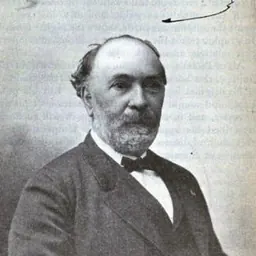
Lived 1872 – 1941 (aged 69). Alexandre Raymond was a French architect, writer, cartographer, draftsperson and illustrator.
Biography Early life
Alexandre Marc Raymond was born on 22 January 1872 in Constantinople, in Turkey, then part of the Ottoman Empire. He was the son of Marc Raymond,
Ottoman Empire (1893–1922) Architecture Between 1888 and 1892, Raymond traveled to ancient cities of Konya, Iznik, Bursa, Yenişehir and made drawings of Islamic architecture.
He partnered with his brother César who ran a bookshop, Librairie Raymond, where his written works were sold.
Reproductions of religious monuments and adornments Alongside his incoming-generating activity as an architect, from the age of 16 (1888) until 50 (1922), Raymond travelled around the Ottoman Empire and created reproductions of religious monuments and adornments. He also produced several plans of Constantinople.
Revue Technique d’Orient From 1910 to 1911, Raymond was Editor-in-chief of the Revue Technique d’Orient, a monthly technical journal in French, first published in Constantinople in September 1910. He also edited the periodical Genie Civil Ottoman, where contemporary Ottoman architectural projects were published. It was the journal of the Association des Architectes and Ingenieurs en Turquie, of which Raymond was a founding member in 1913.
In France Raymond arrived in Europe in 1922 and settled in Paris in 1927. He nonetheless retained links with the newly formed republic of Turkey, and prepared sketches for Turkey's projected participation in the 1925 International Exposition of Decorative Arts in Paris. In 1923, with the financial backing of American millionaire Charles Crane, he commissioned the printing of L’Art islamique en Orient, Deuxième Partie (Fragments d’architecture religieuse et civile) (Islamic Art in the East, Part Two (Fragments of Religious and Civil Architecture)) and L’Art islamique en Orient, Troisième Partie (Islamic Art in the East, Part Three), published in French in Prague by the Printing House Schulz. thumb
Une ville célèbre, l’Angora ou l’antique Ancyre (A Famous city, the Angora or the Antik Ancyra) In 1923, at the same time as publishing L’Art islamique, Raymond published a volume on the treasures of Turkey, Une ville célèbre, l’Angora ou l’antique Ancyre (A Famous City, Angora or Antique Ancyra) once again with Schulz. It also discusses the history of Ankara. This book is dedicated to the memory of Pierre Loti. The book was reviewed in a 1926 edition of Revue des études byzantines by L. Barral, who called it "abundantly but unevenly illustrated". He praised Raymond's plan of the town of Yeni-Chéir, and twelve plates of the Temple of Augustus and Rome, particularly two where Raymond had "attempted an interesting reconstruction of the same temple transformed into a church". thumb
Faïences décoratives de la Vieille Turquie (Decorative Faience in Ancient Turkey)
The exhibition, Visions féeriques d’Orient (Fantasy Perspectives of the East), grouped together some 172 plates: 80 plates from the Basilique de Sainte-Sophie de Constantinople (Basilica of Hagia Sophia of Constantinople) and 92 plates from L'Art Islamique en Orient (Islamic Art in the East). Raymond’s name was not mentioned on the cover of the exhibition brochure.
Mosaics Byzantine mosaics Raymond created 55 plates grouped together under the title Essai de reconstitution de mosaïques byzantines (Attempt to reproduce Byzantine mosaics). He portrayed the most famous mosaics of Greek, Italian and Turkish churches. He used photographs that he divided into segments and then scale reproduced down to the finest detail; a technique that would much later be known as “micro-mosaics”.
Theodora
Pursuing with mosaics, Raymond created 14 original illustrations of highlights of the life of Empress Theodora, his final work, which he completed on 12 March 1940.
Micro-mosaics
Raymond’s “micro-mosaics” evoked pointillism and the yet-to-come pixellation. Raymond worked with a plank of wood on his lap, a magnifying glass in one hand and a paintbrush or a dip pen in the other. He would cut the tip of the nib so he could reproduce the tesserae perfectly.
Death Raymond died in Nanterre, on 16 May 1941 at the age of 69. 2021–2022, Exhibition at the Péra Museum – November 2021 – March 2022 – of several of his originals concerning Ayia-Sophia, Theodora and Constantinople (Istanbul).
Major works Paintings, drawings and plans
Plan de l’Institut pour la Construction Séricicole de Brousse (Plan for the Institute for sericulture development in Bursa) (1893) Plan des Travaux de Parachèvement de l’Agence d’Angora (Working drawings for the completion of the Ankara Office) (1895) Plan de Construction de l’Agence à Ada Bazar (Construction plans for the Ottoman Public Debt Office in Adapazari) (1896) Sanctuaires Byzantins (Byzantine Sanctuaries) L’Art Islamique dans le Vilayet de Brousse (18 cartes et croquis) (Islamic Art in the Bursa Vilayet (18 cards and sketches) L’Art Islamique en Orient (première partie) ou Vieilles Faïences Turques (36 dessins), première édition : Alttürkishe Keramik, (Islamic Art in the East (part one) or Ancient Turkish Faience (36 drawings), first edition: Alttürkishe Keramik, Published by Apollo, Bologna, 1923, (with an introduction by Charles Wulzinger, 36 drawings (40 Plates) printed by Schulz on behalf of Librairie Raymond (bookshop) (Péra, Constantinople); second edition printed in France in Montauban. A large book planned to be the first of a set of three books with the general title L’Art Islamique en Orient (Islamic Art in the East). L’Art Islamique en Orient (deuxième partie) ou Fragments d’Architecture Religieuse et Civile (Islamic Art in the East (part two) or Fragments of Religious and Civil Architecture) printed in Prague, 1924, 52 CMY drawings, Librairie Raymond, oriental art and archaeology publications, Péra – Constantinople – Dedicated to Charles Richard Crane with a preface by the author dated 15 July 1923. L’Art Islamique en Orient – Troisième Partie (Islamic Art in the East – Part Three). It was to include 60 drawings of panelling, fountains, illuminations, of the Sokollu Mehmed Pasha Mosque in Stamboul, the Selimiye Mosque in Edirne, masterpiece of the architect Atik Sinan with timeline, plans, longitudinal and transverse sections, 12 pages of text (49 x 35.5 cm), unpublished. Faïences Décoratives de la Vieille Turquie (Decorative Faience in Ancient Turkey), Paris, Albert Morance, 1927, 29 plates including 3 double pages. Loose sketches and plans in document files, half-black canvas, first flat image illustrated in colour. La Basilique de Sainte Sophie (Αγία Σοφία) de Constantinople (The Basilica of Hagia Sophia of Constantinople), 88 drawings (ink, watercolour, gouache, gold-leaf paint): pillars, doorways, corridors, vaults, the great cupola, mosaics, plans, façades, longitudinal and transverse sections, general perspectives, marble facings, major mosaic icons. Three descriptive manuscripts by Procopius of Caesarea, by Anonymous and by the author, 1928–29. Essai de Reconstitution de la Basilique des Saints-Apôtres (Attempt to reproduce the Basilica of the Holy Apostles) 37 drawings, 1933. Mosaïques Byzantines (Byzantine Mosaics) 55 drawings, 1935. Théodora de Byzance (Theodora, Byzantine Empress) 14 drawings, 1940. Published texts L’Art du constructeur en Turquie (The Art of Construction in Turkey), 1908, Alexandria. Revue Technique d’Orient, 1910–1911, as Editor-in-Chief: miscellaneous articles. Une ville célèbre Angora (L’antique Ancyre) (A Famous City, Angora (Antique Ancyra)), Schulz, Prague, 1924.
Don’t just read it —
keep it.
Full-length biographies made to live with: read them, listen on the way to work, watch them tonight.
- E-book
- Audio
- Video
Instant download · yours to keep · every purchase keeps this site free
Important facts
People in Alexandre Raymond's life
Named in this biography and alive at the same time
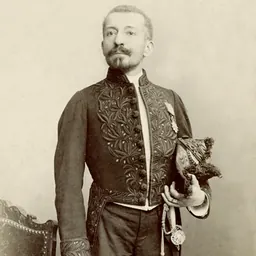
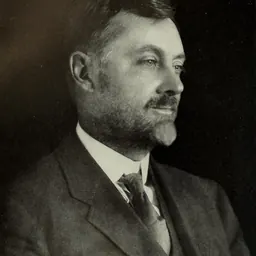



Related people
Same field, nearest in time
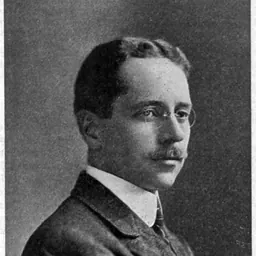


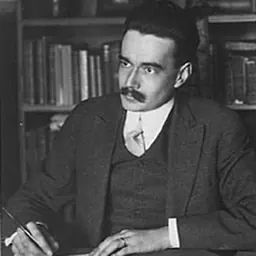
Contemporaries
People whose lives overlapped Alexandre Raymond's


Frequently asked questions
Who was Alexandre Raymond?
French orientalist architect and author (1872-1941)
When was Alexandre Raymond born?
Alexandre Raymond was born on 22 January 1872 in Constantinople.
When did Alexandre Raymond die?
Alexandre Raymond died on 16 May 1941 in Colombes.
What was Alexandre Raymond's occupation?
Alexandre Raymond was an architect, writer, cartographer, draftsperson and illustrator.
What nationality was Alexandre Raymond?
Alexandre Raymond was French.
Sources & further reading
· Wikipedia: Alexandre Raymond
Cite this page
APA: Biography.guide. (2026). Alexandre Raymond. https://biography.guide/alexandre-raymond/
MLA: "Alexandre Raymond." Biography.guide, https://biography.guide/alexandre-raymond/.
Chicago: "Alexandre Raymond." Biography.guide. https://biography.guide/alexandre-raymond/.
Data last updated: 2026-09-20 · Spot an error? Report a correction.
Page generated 2026-09-27 05:31 UTC