
About Alexander William Williamson
Lived 1824 – 1904 (aged 80). Alexander William Williamson was a British chemist and university teacher, known for Ether.
Alexander William Williamson FRS FRSE PCS MRIA (1 May 18246 May 1904) was an English chemist. He is best known today for the Williamson ether synthesis.
Life
Williamson was born on 1 May 1824 in Wandsworth, London,
In 1849, with the support of Thomas Graham, Williamson was appointed professor of analytical and practical chemistry at University College, London. From Graham's resignation in 1855 until Williamson's retirement in 1887, Williamson also held the chair of general (theoretical) chemistry. They had two children: Oliver Key (d. 1941) and Alice Maude.
Research on ethers
Williamson is credited for his research on the formation of unsymmetrical ethers by the interaction of an alkoxide with a haloalkane, known as the Williamson ether synthesis. He regarded ethers and alcohols as substances analogous to and built up on the same type as water, and he further introduced the water-type as a widely applicable basis for the classification of chemical compounds. The method of stating the rational constitution of bodies by comparison with water he believed capable of wide extension, and that one type, he thought, would suffice for all inorganic compounds, as well as for the best-known organic ones, the formula of water being taken in certain cases as doubled or tripled.
His synthesis of unsymmetrical ethers proved the theory posed by Charles Frédéric Gerhardt and Auguste Laurent that ethers have twice as many carbon atoms as alcohols and not the same amount as argued by Liebig. Similarly, his synthesis of chlorosulfuric acid in 1854 disproved the hypothesis that sulfuric acid is a compound of water (which was assumed to have formula of HO) and sulfur trioxide.
So far back as 1850 he also suggested a view which, in a modified form, is of fundamental importance in the modern theory of ionic dissociation, for, in a paper on the theory of the formation of ether, he urged that in an aggregate of molecules of any compound there is an exchange constantly going on between the elements which are contained in it; for instance, in hydrochloric acid each atom of hydrogen does not remain quietly in juxtaposition with the atom of chlorine with which it first united, but changes places with other atoms of hydrogen. A somewhat similar hypothesis was put forward by Rudolf Clausius about the same time.
Honours and awards
Williamson's grave in Brookwood Cemetery For his work on etherification, Williamson received a Royal medal from the Royal Society in 1862, of which he became a fellow in 1855, and which he served as foreign secretary from 1873 to 1889. He was twice president of the London Chemical Society, from 1863 to 1865 and from 1869 to 1871, and was elected to Honorary membership of the Manchester Literary and Philosophical Society in 1889.
Don’t just read it —
keep it.
Full-length biographies made to live with: read them, listen on the way to work, watch them tonight.
- E-book
- Audio
- Video
Instant download · yours to keep · every purchase keeps this site free
Important facts
People in Alexander William Williamson's life
Named in this biography and alive at the same time

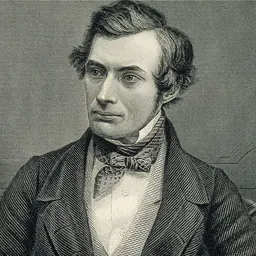

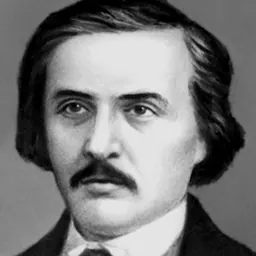

Related people
Same field, nearest in time

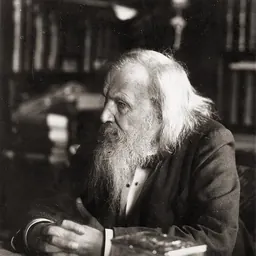

Contemporaries
People whose lives overlapped Alexander William Williamson's



Frequently asked questions
Who was Alexander William Williamson?
English scientist (1824-1904)
When was Alexander William Williamson born?
Alexander William Williamson was born on 1 May 1824 in London.
When did Alexander William Williamson die?
Alexander William Williamson died on 6 May 1904 in Hindhead.
What was Alexander William Williamson's occupation?
Alexander William Williamson was a chemist and university teacher.
What was Alexander William Williamson known for?
Alexander William Williamson was known for Ether.
What nationality was Alexander William Williamson?
Alexander William Williamson was British.
Sources & further reading
· Wikipedia: Alexander William Williamson
· DBpedia: Alexander William Williamson
Cite this page
APA: Biography.guide. (2026). Alexander William Williamson. https://biography.guide/alexander-william-williamson/
MLA: "Alexander William Williamson." Biography.guide, https://biography.guide/alexander-william-williamson/.
Chicago: "Alexander William Williamson." Biography.guide. https://biography.guide/alexander-william-williamson/.
Data last updated: 2026-09-20 · Spot an error? Report a correction.
Page generated 2026-09-27 05:20 UTC