
Alexander W. Monroe
American schoolteacher, farmer, lawyer, surveyor, military officer, politician, newspaper editor and newspaper publisher, Confederate States Army officer, and Speaker of the West Virginia House of Delegates
About Alexander W. Monroe
Lived 1817 – 1905 (aged 87). Alexander W. Monroe was an American lawyer, politician, teacher and editor.
Alexander W. Monroe (December 29, 1817 – March 16, 1905) was a prominent American lawyer, politician, and military officer in the U.S. states of Virginia and West Virginia. Monroe served as a member of the Virginia House of Delegates (1850–1851 and 1862–1865) and West Virginia House of Delegates (1875–1877 and 1879–1883) representing Hampshire County. He was the Speaker of the West Virginia House of Delegates during the 1875–1877 legislative session. Monroe also represented Hampshire County in the West Virginia Constitutional Convention of 1872.
Monroe was born in Hampshire County, Virginia (present-day West Virginia) in 1817. At the age of 18, he and his siblings were orphaned and he became a schoolteacher to provide for the education of his brothers and sisters. He later became a county surveyor, and studied jurisprudence. Monroe was elected to the Virginia House of Delegates (1850–1851), during which time he participated in the 1851 reform of the Constitution of Virginia. He was admitted to the Virginia bar in 1858 and in 1861, he purchased the Virginia Argus and Hampshire Advertiser newspaper, which he operated until the onset of the American Civil War.
In 1861, Monroe commanded the 114th Regiment of the Virginia militia with the rank of colonel; he was the oldest person in that commissioned rank within the state's militia. The 114th Regiment took part in several skirmishes in Hampshire County. Following the regiment's disbandment, Monroe volunteered and raised a battalion of cavalry within the 18th Virginia Volunteer Cavalry Regiment of the regular Confederate States Army. He later commanded the rear guard during the withdrawal of Confederate forces under the command of General Robert E. Lee from the Battle of Gettysburg in 1863, successfully protecting the -long wagon train. Monroe served in the Virginia House of Delegates throughout the Civil War.
Monroe returned to the practice of law and in 1872 was a participant in the West Virginia Constitutional Convention. From 1875 to 1877, he was a member of the West Virginia House of Delegates and was twice elected speaker. He was the first delegate to represent Hampshire County in both the Virginia General Assembly and the West Virginia Legislature. Monroe was twice appointed as a director of the West Virginia Hospital for the Insane. He again served in the West Virginia House of Delegates from 1879 to 1883. Monroe retired to his farm on the Little Cacapon River and died in 1905.
Early life and family relations Alexander W. Monroe was born on December 29, 1817, in Hampshire County, Virginia (now West Virginia), and was the oldest child of Robert and Elizabeth Monroe. His parents were of Scottish descent. Monroe's great uncle, Dr. John Monroe, was an early physician and Baptist minister in Hampshire County. Monroe had four younger brothers and two sisters: Robert W. Monroe, James W. Monroe, J. Walker Monroe, Marion Monroe, a Mrs. Snapp, and Sarah Ann Monroe Garrett. His brother, Robert W. Monroe, was later appointed by United States President Grover Cleveland as an Indian agent in Idaho.
At the age of 18, Monroe and his siblings were orphaned, and Monroe took responsibility for the rearing and education of his four younger brothers and two sisters.
Early professions and political career Monroe studied surveying and began his career in public service as the county surveyor for Hampshire County. During his tenure, he surveyed the majority of the county's land tracts. Monroe was a member of the Virginia House of Delegates during the 1851 reform of the Constitution of Virginia. Monroe was admitted to the Virginia bar in 1858 at the age of 41 and engaged in a law practice in Romney. During their joint ownership, the offices for the Virginia Argus and Hampshire Advertiser were located in an old stone building that formerly housed the Romney Academy behind the Hampshire County Courthouse. Monroe and Cookus continued serving as its editors and publishers until the Union Army closed down the Advertiser's offices in August 1861, after which the newspaper was not revived. At age 43, Monroe was the oldest colonel, by his commission, serving in the Virginia militia. The skirmish took place at present-day Blues Beach where a wire bridge carried the Moorefield and North Branch Turnpike across the South Branch Potomac River at the Lower Hanging Rocks.
Monroe was later in command of the rear guard during the withdrawal of Confederate forces under the command of General Robert E. Lee from the Battle of Gettysburg in 1863. In this capacity, Monroe successfully protected the -long wagon train.
Later political career During the Reconstruction Era, Confederate veterans were initially prohibited from holding public office or from practicing law in West Virginia without taking a test oath. The West Virginia House of Delegates passed a bill in 1868 that allowed Monroe to practice law without having to swear an oath. Following the passage of this bill, he resumed the practice of law in Romney. The election for delegates was held in August 1871, and Hampshire County elected Monroe and James Dillon Armstrong. In 1875, Monroe returned to politics when he was elected as a Democrat to represent Hampshire County in the West Virginia House of Delegates for one two-year term. It was during this legislative session that Monroe served as Speaker of the West Virginia House of Delegates. He was the first delegate to represent Hampshire County in both the Virginia General Assembly and the West Virginia Legislature. In June 1876 at the state Democratic convention in Charleston, Monroe was selected as a delegate from West Virginia's 2nd congressional district to attend the 1876 Democratic National Convention in St. Louis.
Monroe again served as a member of the House of Delegates representing Hampshire County from 1879 to 1883. In 1881, Monroe was a member of the Joint Revisory Committee, which was charged with amending the laws and statutes of the West Virginia Code.
Throughout his political career, Monroe continued to engage in the practice of law in Romney. In 1887 he and Samuel Lightfoot Flournoy were the defense attorneys for Annie Offner, who had been accused of murdering her lover Benjamin Brooks.
Business pursuits On February 23, 1871, the West Virginia Legislature passed an act incorporating the South Branch Railway Company, responsible for the construction and operation of a branch line connecting Romney with the Baltimore and Ohio Railroad main line at Green Spring. Monroe was named by the legislature as one of the commissioners of the South Branch Railway Company, charged with the responsibility of signing up investors to purchase capital stock in the company.
Later life and death
During his later years, Monroe resided on his farm on the Little Cacapon River in the Barnes Mill community of Hampshire County. Monroe was survived by his second wife Margaret and their four children.
Marriage and children In 1852, Monroe married his first wife, Sarah A. French, daughter of John and Eleanor French. Monroe and his wife Sarah had one son, James W. Monroe. Sallie Elizabeth Monroe Haines (born October 20, 1869), married Charles William Haines on January 31, 1893 Ellen G. Monroe Tharp, married Wilbur L. Tharp on November 29, 1899 Annie H. Monroe
Don’t just read it —
keep it.
Full-length biographies made to live with: read them, listen on the way to work, watch them tonight.
- E-book
- Audio
- Video
Instant download · yours to keep · every purchase keeps this site free
Important facts
People in Alexander W. Monroe's life
Named in this biography and alive at the same time


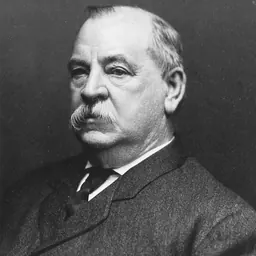
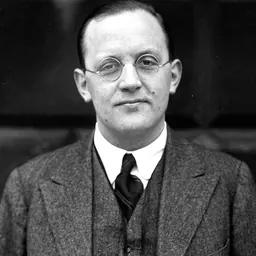
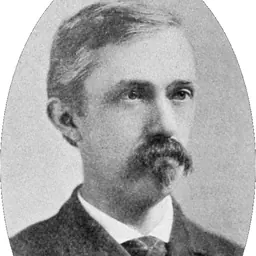
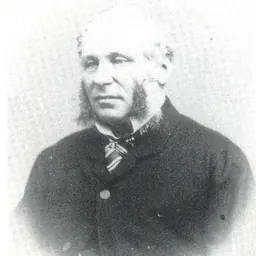

Related people
Same field, nearest in time



Contemporaries
People whose lives overlapped Alexander W. Monroe's

Frequently asked questions
Who was Alexander W. Monroe?
American schoolteacher, farmer, lawyer, surveyor, military officer, politician, newspaper editor and newspaper publisher, Confederate States Army officer, and Speaker of the West Virginia House of Delegates (1817–1905)
When was Alexander W. Monroe born?
Alexander W. Monroe was born on 29 December 1817 in Hampshire County.
When did Alexander W. Monroe die?
Alexander W. Monroe died on 16 March 1905 in Hampshire County, West Virginia, West Virginia.
What was Alexander W. Monroe's occupation?
Alexander W. Monroe was a lawyer, politician, teacher and editor.
What nationality was Alexander W. Monroe?
Alexander W. Monroe was American.
Sources & further reading
· Wikipedia: Alexander W. Monroe
· DBpedia: Alexander W. Monroe
Cite this page
APA: Biography.guide. (2026). Alexander W. Monroe. https://biography.guide/alexander-w-monroe/
MLA: "Alexander W. Monroe." Biography.guide, https://biography.guide/alexander-w-monroe/.
Chicago: "Alexander W. Monroe." Biography.guide. https://biography.guide/alexander-w-monroe/.
Data last updated: 2026-09-25 · Spot an error? Report a correction.
Page generated 2026-09-27 05:12 UTC