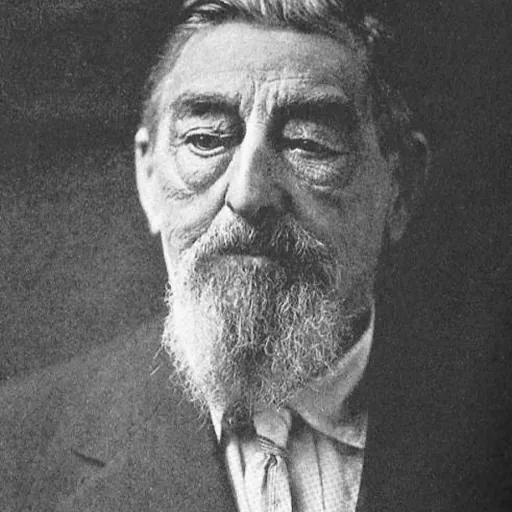
Alexander Toponce
American pioneer
About Alexander Toponce
Lived 1839 – 1923 (aged 83).
Alexander Toponce (November 10, 1839 – May 13, 1923) was an American pioneer in the Intermountain West region of the United States. His family immigrated to the United States from Belfort, France when he was seven and Alexander left home about three years later. He worked as a laborer for several years, mostly in the logging and lumber business, before becoming a teamster, stagecoach driver and freight handler. Toponce headed west when he was about fifteen years old, first to Missouri and then to the northern Intermountain West. There, he ran freight and stagecoach outfits, owned livestock herds, sometimes tried his hand at mining, and invested in all manner of development projects. He is credited with opening or improving many early freight and stage routes throughout the region. Later in life, he mostly invested in mining properties while holding interests in land development companies. Over his lifetime, Toponce made and lost several fortunes, the result of bad weather, Indian raids, unpredictable prices and dishonest partners.
Toponce knew, and was known to, a remarkable number and range of pioneers in Utah, Idaho, Montana, Wyoming and Nevada. In his heyday, he could obtain thousands of dollars in credit on little more than a word and a handshake. At the urging of friends, around 1919 he dictated his Reminiscences, which his wife published after his death. He kept no diary, so he spoke a great deal from memory, with some checking of other sources. A few of his dates are shaky, but Toponce did play a major role in the development of the upper Intermountain West. Moreover, he remained active until just a few months before his death, planning an irrigation and hydroelectric power project.
Early life Alexander Toponce was born in Belfort, France, a town located about ten miles from the border with Switzerland. In 1846, his father, Peter, moved the family to the United States. One of Alex's earliest memories concerned the large French stagecoach, known as a diligence, that took them through Paris to the port of Le Havre. Toponce said that, west of Paris, the diligence was unhitched from the team and lifted aboard a railway flatcar. The passengers got back in and the train carried them to the end of the rail line. According to the history of rail transport in France, in 1846 the tracks would have run as far as Rouen. There, the diligence was unloaded and hitched to a new team for the run into Le Havre.
Alex got his first lessons in English from sailors on the ship coming over, including “all the cuss-words in the language.” After their arrival in New York City, they took a packet up the Hudson River and linked with a boat on the Erie Canal. They finally settled in Jefferson County, New York. As the second son in the family, Alex found his prospects at home very poor. He attained a better situation chopping wood for another family in the county, a family he identified only as “Carmen.” Then he worked at a logging camp and sawmill for several years, also learning to handle a team of horses. They must have seen an opportunity to supply ties to the railroad and lumber for the towns likely to spring up along the route. So they leased a sawmill and began producing planks and timber.
There were apparently lulls in demand, because Toponce also found other work during this period. He made two trips to New Orleans to act as a French interpreter for a Tipton dealer in mules and Negro slaves. Toponce also made two trips as a “bullwhacker” on the Santa Fe Trail. He worked for the firm of Russell, Majors and Waddell, for a time the largest freight outfit in the West. A few years later, the company would operate the famous but short-lived Pony Express. Toponce also helped build stage stations that would later be used by the Butterfield Overland Mail.
The Utah Expedition By 1857, Toponce had moved further west as an assistant wagonmaster for Russell, Majors and Waddell, working under contract to the U. S. Army. This was after a couple months early in the year riding an express mail route out of Fort Kearny in Nebraska Territory. The transport firm had responded to an urgent request – order, actually – from the Army to assemble a massive supply train for a column headed to Utah. The expedition had been dispatched from Fort Leavenworth, Kansas to enforce Federal authority in Utah Territory. Among other changes, President James Buchanan planned to replace Brigham Young as governor of the Territory. Young was also president of the Church of Jesus Christ of Latter-day Saints, commonly known as the Mormons. After some early confusion, Colonel (later General) Albert Sidney Johnston was placed in command of the force. Although no actual battles were fought, the dispute came to be called the Utah War or the Mormon War.
On October 5, 1857, Mormon raiders burned most of the supply train while it was still eighty miles from Utah. Toponce later asked Lot Smith, the leader of the raiders, why he burned the supplies rather than hauling them back to Utah. Smith said they were afraid the Army would catch them,
During the Army's long wait for fresh supplies and better weather, cooler heads prevailed and were well on their way to a peaceful solution. When Johnston finally moved in early June, an agreement had been reached and the troops met no resistance. They then established Camp Floyd about thirty miles south of Salt Lake City. The force at Camp Floyd grew slowly, both to keep an eye on the Mormons and to protect the mail route to California. Oddly enough, he was also a pioneer connected later with Corinne, Utah. Thus, in 1868, McNassar partnered with General Patrick Edward Connor to build the steamer Kate Connor (named for Connor's daughter) to haul supplies across the Great Salt Lake to and from Corinne. As Toponce recalled, the Kate was the first steamboat built to navigate the lake. He also states that he and his wife enjoyed an excursion on the boat, although his “early 80's” date recollection is incorrect, since the Kate was out of service by 1873.
From his Colorado venture, Toponce salvaged just two mules, three horses, a wagon and enough supplies for a long trip. A considerable train, with over 160 gold-seekers, had assembled in Denver and they elected Toponce to be their captain. Although he was just twenty-three years old, he had been doing a man's job for almost a decade. Despite the winter weather – they started in early February – everyone was anxious to reach the Montana gold fields, which they had heard were rich beyond anything in Colorado.
The train pointed north first, avoiding the higher ranges until they entered Wyoming Territory. Toponce then described a route that would have crossed the divide at Bridger Pass, a point about twenty miles southwest of the modern town of Rawlins, Wyoming. They joined the normal Oregon Trail route near Fort Bridger. The train generally followed the Trail until they were south of old Fort Hall, where they left the main route to head north. They crossed to the west side of the Snake River near the mouth of the Blackfoot River,
The train, which had grown to about 180 people, arrived at Bannack, Montana on May 14, 1863. Quite a few pioneers who were later prominent in Western development accompanied Toponce on this journey. Perhaps the most famous was Enos A. Wall, who was just a year older than Alex. Originally from North Carolina, Wall later successfully operated gold and silver mines in Montana, Idaho and Utah. In 1882, he served a term in the Idaho legislature. But Wall made his fortune in Utah copper mining, and later sold his holdings for $2.7 million. He died in 1920, three years before Toponce.
All the best ground around Bannack was claimed, so Toponce followed the rush to Alder Gulch, where Virginia City, Montana was soon founded. The returns from his Alder Gulch claim were very good, but not spectacular. Thus, in the fall he and Enos Wall packed supplies and their gold dust on two wagons and headed south to Utah.
Shortly after Toponce returned to Montana, the Montana Vigilantes began their efforts to suppress rampant crime. He apparently did not witness the execution of George Ives, but heard much about it. Then, having disposed of his goods and most of his teams, he headed south again. While Toponce took no part in the hangings, he considered them necessary. In fact, in his Reminiscences, he stated categorically that they had not done enough. He said that fully half of those who were only banished should have also been hung right then. In fact, many were hung later, when they began to prey on crews building the transcontinental railroad.
After a tough winter-time trip, Toponce led a new supply train to Montana in the spring of 1864. Turning that over during the summer, he tried to make another trip in the fall. However, he was delayed in getting started and ended up losing 175 head of cattle to bad weather. While not disastrous, the loss crippled his profits for the year. By then, gold had been discovered further north in what was called Last Chance Gulch. The resulting gold camp soon took the name Helena, Montana. So Toponce recouped some of his losses by hacking a road over a local divide to deliver the first large train of supplies for the miners there.
With Helena as a destination, Toponce looked for opportunities to haul freight from ports on the upper Missouri River. Fort Benton, Montana was the closest steamboat landing, but low water often blocked boat traffic to it. Alex's first contract called for him to haul government supplies from Fort Buford, over four hundred miles further down the river. His first venture went very well, with added profit from carrying supplies for the local Indian agent on into Helena.
His second trip, again with a government contract, also went well, except for one episode of potentially deadly danger. Toponce's initial success had attracted competitors, one of them being the Diamond R transport company. “Colonel” Charles Arthur Broadwater was manager of the Diamond R train. He had been known in Colorado and then in Virginia City before being appointed to lead the train.
At the time, he was also courting the young lady he would later marry, and Alex knew both of them. With their trains moving along well, Broadwater wanted to raced ahead, traveling only at night to avoid possible Indian parties. All went well until, not having seen any sign of Indians, they rode a leg during the day and ran into a considerable band. They put on a bold face, so the warriors only made them trade their outstanding saddle horses for a couple of scrawny scrubs. Broadwater later became a prominent leader in Montana politics (Broadwater County is named for him), railroad building and banking. He also promoted the famous Broadwater Hotel and Natatorium in Helena. Many Gentile merchants that Alex had dealt with were left “holding the bag” on goods they could not sell.
Two of them, one being the Utah Territorial Governor Charles Durkee, approached Toponce for help. Alex bought a one-third interest in the goods and then peddled them to stores all over central Utah. Self-sufficiency might be good in theory, but these storekeepers simply could not pass up the chance. Mostly, he took cattle or local goods in trade since hardly anyone had much cash or even gold dust on hand. He ended up with about 6,000 head of cattle, which he and a crew then trailed into Nevada. He sold most of the cattle to a consortium of butchers who served the camps of the Comstock Lode. He also sold a pair of fine trotting horses to William Sharon, manager of the local Bank of California branch and later U. S. Senator for the state of Nevada. In May, 1868, Toponce settled up and returned to Salt Lake City. He and his partners figured they were good to the tune of $100,000 each.
With plenty of capital to work with, Toponce now began selling railroad ties, beef and other supplies to the Union Pacific. The eastern leg of the transcontinental railroad was then into Wyoming and would cross the Utah border in late 1868. Alex himself was there at the Golden Spike ceremony when the two leg met on May 10, 1869. In fact, he borrowed a shovel and threw some dirt on the ties for the final-day stretch “just to tell about it afterward.” In 1878–1881, the Utah and Northern Railway finally connected northern Utah with Butte, Montana. During the years of construction, the railroad steadily took business away from the animal-powered freight companies. father of William Randolph Hearst. Toponce had known Hearst in connection with the Ontario silver mine in Park City, Utah. Although the Ontario eventually made a fortune for Hearst, the initial development costs severely strained his resources. Toponce was one of those who loaned him money when, as Alex put it, “the rent came round.” Around the turn of the century, Toponce tried to make a splash with a big livestock deal. He bought up over 2,600 horses, plus 150 mules, in Nevada, paying rock-bottom prices because most of the animals were totally wild and poorly fed. He planned to drive them east into Nebraska or Kansas, moving slowly enough so they could fatten on the grassy plains. Along the way, they would be broken to riding and harness. “Broke” horses and mule were worth ten to fifty times what Alex had paid for them.
But Alex seems to have been seriously injured on this venture and, for a man of sixty years, the aftereffects may have been very serious. Toponce did not mention these events in his Reminiscences, but it was quite some time before his name appeared in the newspapers again.
Most of Toponce's projects in his final years involved irrigation and hydroelectric power. Thus, in 1920, a reporter marveled at Toponce's energy in pursuing a substantial water project at the age of eighty-one. That was about two years after Alex began dictating the Reminiscences for his wife to record. According to the original edition, he completed the effort before his eightieth birthday, but encountered obstacles in getting it published. He apparently never fully recovered and died on May 13, 1923.
Legacy Toponce Creek, located about twenty miles east of Pocatello, Idaho, was named for Alexander after he ranged cattle in the area.
His memoir is titled The Reminiscences of Alexander Toponce. A Google Scholar search for “Alexander Toponce” generated nearly sixty hits. The range of books and articles that cited his document includes several “Old West” histories, Episcopal Church history, mining history, Camp Floyd in Utah, vigilante activities, water resources, early freighting, and much, much more.
Don’t just read it —
keep it.
Full-length biographies made to live with: read them, listen on the way to work, watch them tonight.
- E-book
- Audio
- Video
Instant download · yours to keep · every purchase keeps this site free
Important facts
People in Alexander Toponce's life
Named in this biography and alive at the same time

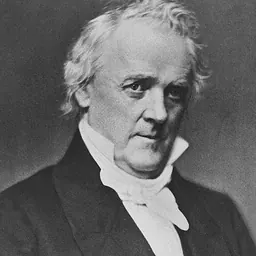

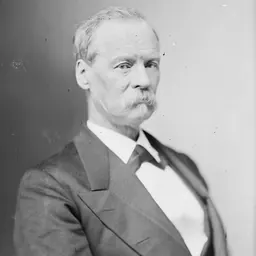
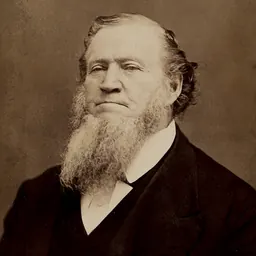


Contemporaries
People whose lives overlapped Alexander Toponce's

Frequently asked questions
Who was Alexander Toponce?
American pioneer (1839-1923)
When was Alexander Toponce born?
Alexander Toponce was born on 10 November 1839.
When did Alexander Toponce die?
Alexander Toponce died on 13 May 1923 in Utah.
Sources & further reading
· Wikipedia: Alexander Toponce
Cite this page
APA: Biography.guide. (2026). Alexander Toponce. https://biography.guide/alexander-toponce/
MLA: "Alexander Toponce." Biography.guide, https://biography.guide/alexander-toponce/.
Chicago: "Alexander Toponce." Biography.guide. https://biography.guide/alexander-toponce/.
Data last updated: 2026-09-21 · Spot an error? Report a correction.
Portrait: Wikimedia Commons · author & licence
Page generated 2026-09-27 04:59 UTC