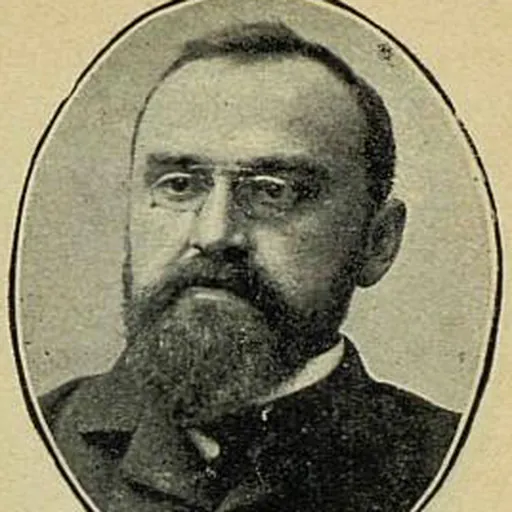
About Alexander Sipiagin
Lived 1875 – 1941 (aged 65). Alexander Sipiagin was a Russian politician, catholic priest and cleric.
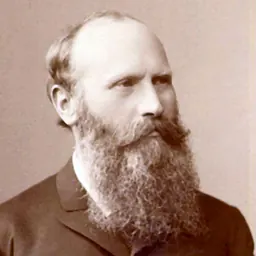
Archpriest Alexander Sipiagin (; August 17, 1875 – January 16, 1941) was a politician, a priest of the Catholic Church and a member of Russian apostolate.
Biography
Sipiagin was born into a noble family in Tbilisi. His father was in the military and his uncle was the Interior Minister Dmitry Sipyagin. In 1894 he entered the University of Kharkov, then studied geology at the University of Vienna. Sipiagin after taught at Sevastopol and Kharkiv. In 1906 the Constitutional Democratic Party elected him deputy of the 1906 Russian legislative election. The sudden death of the wife nullifies the previous plans, Sipiagin converted to Catholicism from Russian Orthodoxy and in 1909 became a priest. Influenced his choice acquaintance with Bishop Eduard von der Ropp, who instructed Sipyagin to teach at Roman Catholic seminary in Saratov. At the beginning of the Russian Civil War, he was sent to Constantinople, where he establishes contact with the International Red Cross and deals with the fate of Russian prisoners. Then Sipyagin worked at Saint George Boarding for Russian children. In 1924 received the title of Monsignor. From 1929 he worked at the Commission on the establishment of the Code of Canon Law of the Eastern Churches, taught in " Russicum "in publishing and research activities in the monastery of Grottaferrata. Sipyagin published his articles in the Catholic periodical: " Faith and Life "," Faith and the Church, "" To the compound: Russian Catholic magazine, "" Faith and Fatherland "," Ringing of church bells and the magazine " Kitezh (magazine). " Sipiagin was not only a talented journalist, but as a researcher and systematizer of Catholic publications in Russian. In 1935 in Harbin went up by it "Catalogue of Catholic literature in Russian." Sipiagin donated to the Russicumlibrary about 200 books.
From 1930 he taught at the missionary Institute at the John Paul II Catholic University of Lublin, Poland. In October 1933 Sipyagin participated in Rome in a meeting of Russian Catholic clergy.
Death
Alexander Sipyagin died in Rome and was buried at the Campo Verano cemetery.
Don’t just read it —
keep it.
Full-length biographies made to live with: read them, listen on the way to work, watch them tonight.
- E-book
- Audio
- Video
Instant download · yours to keep · every purchase keeps this site free
Important facts
People in Alexander Sipiagin's life
Named in this biography and alive at the same time




Related people
Same field, nearest in time




Contemporaries
People whose lives overlapped Alexander Sipiagin's

Frequently asked questions
Who was Alexander Sipiagin?
Russian Roman Catholic (1875-1941)
When was Alexander Sipiagin born?
Alexander Sipiagin was born on 17 August 1875.
When did Alexander Sipiagin die?
Alexander Sipiagin died on 16 January 1941.
What was Alexander Sipiagin's occupation?
Alexander Sipiagin was a politician, catholic priest and cleric.
What nationality was Alexander Sipiagin?
Alexander Sipiagin was Russian.
Sources & further reading
· Wikipedia: Alexander Sipiagin
Cite this page
APA: Biography.guide. (2026). Alexander Sipiagin. https://biography.guide/alexander-sipiagin/
MLA: "Alexander Sipiagin." Biography.guide, https://biography.guide/alexander-sipiagin/.
Chicago: "Alexander Sipiagin." Biography.guide. https://biography.guide/alexander-sipiagin/.
Data last updated: 2026-09-22 · Spot an error? Report a correction.
Portrait: Wikimedia Commons · author & licence
Page generated 2026-09-27 05:04 UTC