
About Alexander Serov
Lived 1820 – 1871 (aged 51). Alexander Serov was a Russian composer, music critic, jurist and music educator.
Alexander Nikolayevich Serov (, – ) was a Russian composer and music critic. He is notable as one of the most important music critics in Russia during the 1850s and 1860s and as the most significant Russian composer in the period between Dargomyzhsky's Rusalka and the works of Rimsky-Korsakov, Mussorgsky, and Tchaikovsky.
Alexander Serov was the father of Russian artist Valentin Serov.
Biography Grave of Alexander Serov in Tikhvin Cemetery in Saint Petersburg. Alexander Serov was born in St. Petersburg on 11 January 1820, the son of Nikolai Ivanovich Serov, a Finance Ministry official. Serov's maternal grandfather, Carl Ludwig Hablitz, was a naturalist of German-Jewish origin who was born in Königsberg and moved to Russia in childhood when his father was hired to be inspector of Moscow University's printing department. In Russia, Hablitz became a member of the Russian Academy of Sciences among other high official posts. Serov's father Nikolai wanted him to become a lawyer as well and enrolled him in the inaugural class of the Imperial School of Jurisprudence. who eventually became a famous art critic.
Serov completed his studies in 1840 and started working as a lawyer in the government bureaucracy in St. Petersburg as well as in Pskov and in Simferopol, capital of Crimea. Eventually, his interest in music prevailed, and in 1850 he quit his job and began to compose music and to write music journalism. He also gave music lectures, though neither activity provided well for him financially. though excerpts have occasionally appeared in concert performances. A CD recording of Judith (with some cuts) was made in 1991 by the orchestra and choir of the Bolshoi Theatre under conductor Andrey Chistiakov. Rogneda and The Power of the Fiend were recorded in shortened versions in the 1940s.
Whereas Serov was an acclaimed critic and composer, his relations with fellow intellectuals were sometimes far from ideal. For example, he and Stasov became enemies over the relative values of Glinka's two operas. Serov's admiration for Richard Wagner likewise did not endear him to The Mighty Handful, then a rising group of Russian composers, mainly due to efforts of the younger competing critic César Cui, who, like Stasov, had been on better terms with Serov earlier.
Operas Judith (Юдифь, 1861–63) Rogneda (Рогнеда, 1863–65) The Power of the Fiend (Вражья сила, 1867–71)
Don’t just read it —
keep it.
Full-length biographies made to live with: read them, listen on the way to work, watch them tonight.
- E-book
- Audio
- Video
Instant download · yours to keep · every purchase keeps this site free
Important facts
People in Alexander Serov's life
Named in this biography and alive at the same time

Related people
Same field, nearest in time
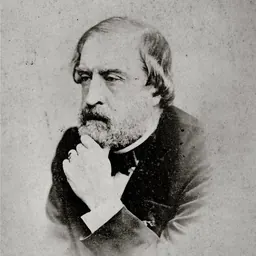

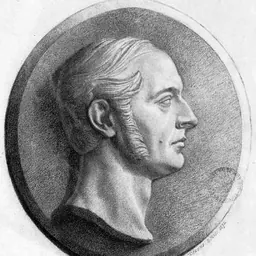
Contemporaries
People whose lives overlapped Alexander Serov's

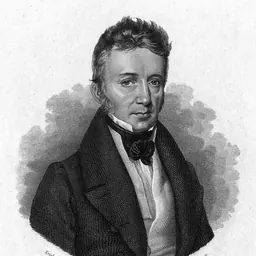



Frequently asked questions
Who was Alexander Serov?
Russian composer (1820–1871)
When was Alexander Serov born?
Alexander Serov was born on 23 January 1820 in Saint Petersburg.
When did Alexander Serov die?
Alexander Serov died on 1 February 1871 in Saint Petersburg.
What was Alexander Serov's occupation?
Alexander Serov was a composer, music critic, jurist and music educator.
What nationality was Alexander Serov?
Alexander Serov was Russian.
Sources & further reading
Cite this page
APA: Biography.guide. (2026). Alexander Serov. https://biography.guide/alexander-serov/
MLA: "Alexander Serov." Biography.guide, https://biography.guide/alexander-serov/.
Chicago: "Alexander Serov." Biography.guide. https://biography.guide/alexander-serov/.
Data last updated: 2026-09-20 · Spot an error? Report a correction.
Page generated 2026-09-27 05:22 UTC