
About Alexander S. Williams
Lived 1839 – 1917 (aged 77). Alexander S. Williams was a police officer, known for Gas House district, Lexow Committee and Tenderloin, Manhattan.
Alexander S. Williams (July 9, 1839 – March 25, 1917) was an American law enforcement officer and police inspector for the New York City Police Department. One of the more colorful yet controversial figures of the NYPD, popularly known as "Clubber Williams" or "Czar of the Tenderloin", he oversaw the Tenderloin and Gas House districts as well as breaking up a number of the city's street gangs, most notably, the Gas House Gang in 1871. He, along with William "Big Bill" Devery and Thomas F. Byrnes, were among several senior NYPD officials implicated by the Lexow Committee during the 1890s.
Early life Alexander S. Williams was born in Cape Breton, Nova Scotia, Canada on July 9, 1839. His father was a native of Nova Scotia and his mother was Scottish. He emigrated to the United States as a child and was apprenticed as a ship's carpenter for the New York-based shipbuilding firm W.H. Webb & Co. for several years. As a young man, he visited several countries including Mexico and Japan among others. He was reportedly the first Westerner to lay the keel of a sailing ship in Japan. Returning to the United States, he was employed by the government and was engaged in raising a sunken ship off the coast of Florida.
First years with the NYPD Williams officially joined the New York Police Department on August 23, 1866. According to popular lore, Williams originally approached NYPD Police Commissioner John Bergen at the Metropolitan Police Headquarters to personally request a commission as a patrolman. Bergen however, without any way to confirm his identity, pointed this fact out remarking that "You may be a convict from Sing Sing for all I know". Williams angrily told the commissioner he could keep the job and stormed out of his office. Impressed with Williams show of force, he sent for Williams to be brought back and was immediately given a position as a patrolman. In his first three years in the district, it was said that "it was a dull day that did not find him with at least one row in his hands". He was made a roundsman on July 10, 1871, and then appointed to sergeant on September 23 whereupon he was assigned to lead the then newly formed "mounted squad". The area would later become known as the "Tenderloin district" which was attributed to this remark.
He remained in the Tenderloin for two years, Max F. Schmittberger and James K. Price both serving as his wardmen, and was briefly detailed as Superintendent of Street Cleaning until his return on June 15, 1881. Despite being brought up on charges eighteen times, Williams was always acquitted by the Board of Police Commissioners and remained in charge of the district until his promotion to inspector in August 1887. In response to frequent criticism of excessive force, Williams once said "There is more law in the end of a policeman's nightstick than in a decision of the Supreme Court".
Lexow Committee inquiry In 1894, a legislative investigation headed by Senator Clarence Lexow was established to investigate corruption within the NYPD. One of the main examinations of the Lexow Committee was Williams' administration in the Tenderloin district. Claims that Williams had received money from gamblers and brothel keepers were supported by testimony from Max Schmittenberger, now a Chief Inspector, who stated before the committee that he himself had collected regular payments and turned it over to Williams.
His involvement in other underworld "interests" were uncovered during the investigation and Williams was called to testify. He claimed that he had acted against some "disorderly houses", but was unable to recall the names or addresses, while he had allowed others to continue operating because they were "fashionable". Among his personal finances and properties included a house at Cos Cob, Connecticut, a yacht and other property. When asked how he had acquired these on a policeman's salary, he answered "I bought real estate in Japan and it has increased in value".
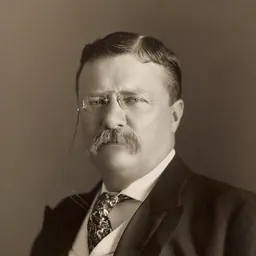
Retirement and later life In the aftermath of the Lexow investigation, it was widely speculated that Williams would be charged with corruption. Williams was never brought to trial, but a meeting of the three Police Commissioners headed by Theodore Roosevelt on May 24, 1895 decided that Williams would be retired on a yearly pension of $1,750. In the fall, Williams unsuccessfully ran for State Senator in the Twelfth District where he had formerly been an inspector. He later went into the insurance business where he was said to have been very successful.
In 1912, Williams lashed out against Mayor William Jay Gaynor who had used his nickname "Clubber Williams" in a derogatory fashion towards his police record. Williams issued a public statement in defense of his near 30-year career on the force. "Just ask the Mayor if he can point to a single person I ever clubbed that did not deserve it. He can't name one and he knows it".
Williams died at his West 95th Street home on the afternoon of March 25, 1917. He was survived by his wife and two sons, all of whom were with him at the time of his death, and he was buried at Woodlawn Cemetery.
Don’t just read it —
keep it.
Full-length biographies made to live with: read them, listen on the way to work, watch them tonight.
- E-book
- Audio
- Video
Instant download · yours to keep · every purchase keeps this site free
Important facts
People in Alexander S. Williams's life
Named in this biography and alive at the same time


Related people
Same field, nearest in time



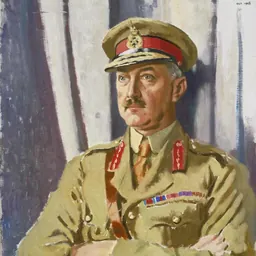
Contemporaries
People whose lives overlapped Alexander S. Williams's
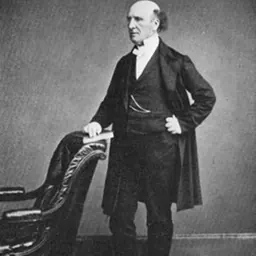
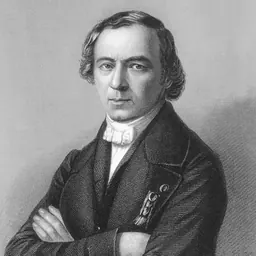


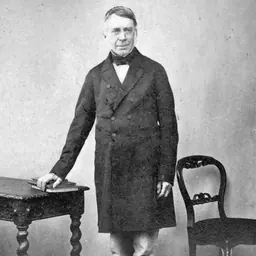
Frequently asked questions
Who was Alexander S. Williams?
NYPD police inspector (1839-1917)
When was Alexander S. Williams born?
Alexander S. Williams was born on 9 July 1839 in Cape Breton.
When did Alexander S. Williams die?
Alexander S. Williams died on 25 March 1917 in Manhattan.
What was Alexander S. Williams's occupation?
Alexander S. Williams was a police officer.
What was Alexander S. Williams known for?
Alexander S. Williams was known for Gas House district, Lexow Committee and Tenderloin, Manhattan.
What nationality was Alexander S. Williams?
Alexander S. Williams's recorded nationality: Canadian-American.
Sources & further reading
· Wikipedia: Alexander S. Williams
· DBpedia: Alexander S. Williams
Cite this page
APA: Biography.guide. (2026). Alexander S. Williams. https://biography.guide/alexander-s-williams/
MLA: "Alexander S. Williams." Biography.guide, https://biography.guide/alexander-s-williams/.
Chicago: "Alexander S. Williams." Biography.guide. https://biography.guide/alexander-s-williams/.
Data last updated: 2026-09-22 · Spot an error? Report a correction.
Page generated 2026-09-27 05:32 UTC