
About Alexander Rives
Lived 1806 – 1885 (aged 79). Alexander Rives was an American lawyer and judge.
Alexander Rives (June 17, 1806 – September 17, 1885) was a Virginia attorney, politician and plantation owner. He served in both houses of the Virginia General Assembly, as a justice of the Supreme Court of Virginia and as a United States district judge of the United States District Court for the Western District of Virginia.
Early and family life
Born on June 17, 1806, in Oak Ridge, Nelson County, Virginia, to the former Margaret (Peggy) Cabell (c. 1770–1815) and her husband Robert Rives (1764–1845), Rives was related to the First Families of Virginia through his mother and later wife. His father Robert Rives of Sussex County had served in the patriot army during the final Yorktown campaign, then became a commission merchant (first operating as Robert Rives and Company and later as Brown, Rives and Company), with Thomas Jefferson as one of his clients. He built a plantation, Oak Hill, in Nelson County in 1802, where he would bury his wife, and later be buried. On his death in 1845, the personal estate of Rives Sr. would be valued at $100,000 (~$ in ) and included lands in Albemarle, Buckingham, Campbell and Nelson Counties. His elder brother William C. Rives would become a Virginia and federal legislator as well as twice U.S. Minister to France, and Robert Rives Jr. (1798–1869) would also serve in the Virginia House of Delegates. His distant nephew Alexander Brown wrote books about the early history of Virginia as well as The Cabells and their Kin. Rives graduated from Hampden–Sydney College in 1825 and from the University of Virginia in 1829. A decade later, Rives owned 17 enslaved men and boys and 13 enslaved women and girls. In the 1850 federal census, Rives owned 69 slaves in Albemarle County. In the final prewar census, Rives owned 66 slaves in Albemarle County. His brother or nephew Robert Rives Jr. owned 43 slaves in Albemarle County in 1850. and 70 slaves a decade later. His other brother William C. Rives owned slightly more enslaved people in the county's Frederickville section. Following the war, Judge Rives continued to operate the farms using paid labor until entering the federal judicial service in 1871, as described below. Albemarle County voters elected him to the Virginia Senate in 1857, and he served one term in that part-time position. Following the American Civil War, Rives became the ninth Rector of the University of Virginia from 1865 to 1866.
In 1870, Rives ran for the United States House of Representatives as a Republican, but lost to Richard Thomas Walker Duke. Duke's son later said that Rives "had 'ratted' and became a 'scalawag' republican." Nonetheless, Rives had obtained a pardon for his opponent, to remove Duke's disability from seeking office, without charging Rives's usual fee of up to $500.
Federal judicial service
President Ulysses S. Grant on February 3, 1871 nominated Rives to the United States District Court for the Western District of Virginia, a new seat authorized by 16 Stat. 403. The Virginia General Assembly passed a resolution denouncing the Reynolds decision, and demanding an appeal. The Supreme Court agreed in principle with Rives, in three decisions issued on March 1, 1880, but overruled his reasoning in Virginia v. Rives, ordering him to return jurisdiction over the petitioners to the Commonwealth. However, in Ex parte Virginia the court confirmed federal authority to enforce African Americans' rights to serve on juries, and in Strauder v. West Virginia the court declared states could not limit jury service to white men. Over 100 years later, the Supreme Court ruled that even the use of peremptory challenges where exclusion was made on the basis of race was unconstitutional, in Batson.
Later years, death and legacy
Rives lived in Charlottesville until 1833; then at "Carlton" on Monticello until 1873, and spent his final years at "Eastbourne Terrace" in Charlottesville. > Rives died on September 17, 1885, in Charlottesville, Virginia.
Some of Rives' papers before 1875 are held by the University of Virginia library.
The Rives family estate where Rives was born, Oak Ridge in Nelson County, was sold in 1867, but remains today as an event and wedding venue. It was renovated beginning in 1901 by magnate Thomas Fortune Ryan, and more recently by John Holland Sr. and his son John Holland Jr.
Don’t just read it —
keep it.
Full-length biographies made to live with: read them, listen on the way to work, watch them tonight.
- E-book
- Audio
- Video
Instant download · yours to keep · every purchase keeps this site free
Important facts
People in Alexander Rives's life
Named in this biography and alive at the same time



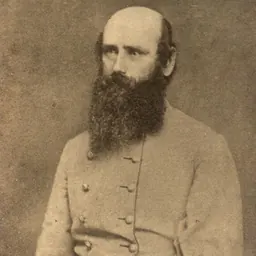
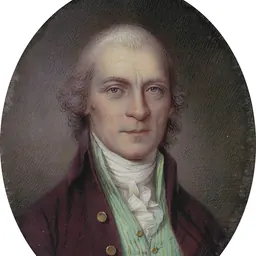
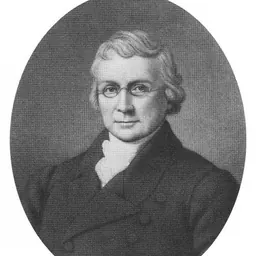
Related people
Same field, nearest in time




Contemporaries
People whose lives overlapped Alexander Rives's





Frequently asked questions
Who was Alexander Rives?
American judge (1806-1885)
When was Alexander Rives born?
Alexander Rives was born on 17 June 1806 in Nelson County.
When did Alexander Rives die?
Alexander Rives died on 17 September 1885 in Charlottesville.
What was Alexander Rives's occupation?
Alexander Rives was a lawyer and judge.
What nationality was Alexander Rives?
Alexander Rives was American.
Sources & further reading
Cite this page
APA: Biography.guide. (2026). Alexander Rives. https://biography.guide/alexander-rives/
MLA: "Alexander Rives." Biography.guide, https://biography.guide/alexander-rives/.
Chicago: "Alexander Rives." Biography.guide. https://biography.guide/alexander-rives/.
Data last updated: 2026-09-20 · Spot an error? Report a correction.
Page generated 2026-09-27 05:25 UTC