
About Alexander Meyrick Broadley
Lived 1847 – 1916 (aged 68). Alexander Meyrick Broadley was a British barrister, writer, historian and jurist.
Alexander Meyrick Broadley (19 July 1847 – 16 April 1916), also known as Broadley Pasha, was a British barrister, author, company promoter and social figure. He is best known for being the defence lawyer for Ahmed 'Urabi after the failure of the 'Urabi Revolt.
Early life
Broadley was the son of the Rev. Alexander Broadley, vicar of Bradpole, in Dorset, and his wife Frances Jane, daughter of Thomas Meyrick of Pembroke. He was educated at Lord Weymouth's Grammar School, Warminster, and Marlborough Grammar School. He entered Lincoln's Inn as a law student in 1866 and after taking the examination to enter the Indian Civil Service, went in 1869 to India, where he became Assistant Magistrate and Collector of Patna, Bengal. In 1872 he conducted a survey of the ruins of the Nálanda monasteries at Burgàon, and formed a magnificent collection of sculptures from the region, going on to establish a museum for the collection. The colonial administrator and explorer Sir Harry H. Johnston noted that Broadley was "very orthodox on account of his father" and "was led into rude interruptions of any speech which traversed the belief that the Earth was only six or seven thousand years old".
In 1871 Broadley delivered a public lecture English Legislation for India. He also put forward the view that imprisonment for civil debts should be abolished.
In 1872 he spoke at a large meeting on education in Bengal, where he condemned the educational policy of the Indian Government. He was not punished, but later that year he spoke at a public meeting of the Dacca People's Association. His remarks on educational policy and on the Criminal Procedure Code, which were reported in newspapers and created angry discussions, were objected to by the Lieutenant-Governor of Bengal, Sir George Campbell and officially denied. Broadley applied for leave, which Campbell rejected, demanding an explanation.
In May 1872 it was reported that charges of a serious nature had been brought against Broadley: he was suspended and sent to Patna pending an investigation. The following month he was reported to have been posted to Noynabad, and ordered to remain there, having been invested with the power to try cases arising from riots of the Muslim Ferazi sect. In November the Calcutta Gazette reported him as being officially on leave and transferred to Chittagong by Campbell's order. When a warrant for his arrest for homosexual offences was issued, Broadley absconded. One report stated that "his reputation was known to every Englishman who ever lived in India", and his presence was taboo in European clubs in Malta and Egypt.
Due to the scandal he was unable to return immediately to England. He moved to Tunis, where he worked as a lawyer and as a correspondent for The Times.
Given Broadley's knowledge of Muslim law, and the fact he was "abnormally clever", Broadley was paid 10,000 guineas, and was henceforth nicknamed 'Broadley Pasha' by his friends, the press, and English Society.
Return to England
Following the trial Broadley returned to England as the agent and legal adviser of the ex-Khedive Ismail. Of his 40th birthday party in 1887 one newspaper recorded: "Princes and princesses, peers and peeresses, bishops and baronets, diplomatists and doctors, members of Parliament and musicians, authors and artists, actors and actresses availed themselves of the opportunity of offering birthday congratulations".
An Indian official suggested that Broadley had not been compelled to return to India to answer the charges against him, as such a threat hanging over the head of the editor of an important society newspaper guaranteed that he would not publish anything of embarrassment to those in high places. According to one report "he had the faculty of attaching himself to and 'running' whomsoever was the most amusing and useful person of the hour". They included the 'nitrate king' John Thomas North and would-be national leader General Georges Boulanger. It was at Broadley's Regents Park home, Cairo Cottage at 2 Beta Place, that Boulanger made his London debut.
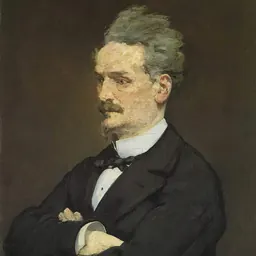
Broadley's social ascendency continued until 1889 when his portrait by Spy appeared in the magazine Vanity Fair. Edward VII, then Prince of Wales, whose sons' portraits had also appeared in the magazine, and who had knowledge of Broadley's reputation in India, took offence at his inclusion. After making enquiries at Scotland Yard, the magazine's owner Edmund Yates dismissed Broadley, and published an apology. Le Figaro later alleged that Broadley had taken Boulanger and his propagandist Henri Rochefort to the brothel; the allegation was dismissed by Boulanger's right-hand man Count Dillon. On the witness stand the rentboy John Saul stated that he had briefly secured employment in the 1889 production The Royal Oak at Drury Lane, which was during Broadley's time there.
Exile
Broadley moved to Paris and then Brussels, where he edited the English language newspaper The Belgian News. In August 1890 it was reported of Broadley that "he has been guilty here of all the practices charged to him and others in Cleveland Street. His last line of operations was to invite young boys and scholars attending school to his rooms to supper." One of the boys informed his mother of the lavishness of these meals provided by a "benevolent old gentleman", which included "stupefying cordials". Broadley was placed under police surveillance.
It was subsequently reported that to confirm his identity, the English Club of Brussels went to the trouble of procuring the back number of Vanity Fair which had featured the infamous portrait.
Final return to England
In 1894, Broadley quietly returned to England to manage the estates and general affairs of Viscount Cantelupe, who succeeded in 1896 as 8th Earl de la Warr. In April 1896 Broadley met the serial financial fraudster Ernest Terah Hooley, and subsequently worked to promote his investment schemes. Later in court Broadley freely admitted that he advised Hooley on nearly all his projects. "Broadley made a beautiful witness", one report suggested, "brimming over with benevolence and pathos. He threatened to commit suicide, too, unless Hooley did something or other, and Hooley seems to have believed him..." Hooley stated on the witness stand that Broadley had intercepted money intended for others, and that he had made a further £80,000 acting as Hooley's promoter, accusations Broadley denied.
With Broadley again the subject of publicity, in the House of Commons the Home Secretary was asked by a parliamentarian whether Broadley was the same person against whom there was an outstanding warrant for a criminal offence in India, did such warrants apply in England, and if so, why had it not been actioned. The reply was that they did apply, but that he had no other information on the matter.
Broadley was denounced by Robert Wright, Justice of the Court of the Queen's Bench, as the real author and organiser of Hooley's deceitful schemes, but escaped bankruptcy and fashioned himself as a country gentleman.
Last years
The last fifteen years of Broadley's life were devoted to writing and book collecting, Napoleon and his age being at the heart of it, but also a large collection of works on criminal jurisprudence. He made significant acquisitions of manuscript material, accumulating original letters and documents, as his book Chats on Autographs related. His library included 135 works he had "grangerized" by adding additional illustrations, amounting to about 600 volumes. He also became a prolific author of books on historical topics. In 1906 he even penned a work on the boyhood of his nemesis Edward VII titled The Boyhood of a Great King. It drew at least one scathing review under the headline 'Scissors and Snobbery' which stated: "this stitching together of stale tattle from the Royal nursery may be 'good business': it is not an undertaking which enlists our sympathy. Mr Broadley's record as an ex-Indian Civilian, ex-barrister, ex-journalist, and ex-company promoter is well known. This volume does not alter our estimate of the writer or the man."
Broadley also became a great supporter of the Bath Historical Pageant, including appearing one year as Beau Nash, when he was recorded as holding 'kingly sway' and was "pre-eminently the great success of the ball".
In 1911 Broadley made a pilgrimage with friends over the route followed by Charles II during his wanderings in late 1651, and wrote a history The Royal Miracle, an interest sparked by the play The Royal Oak.
Never married, Broadley died, in the middle of the First World War, on 16 April 1916 in Gerrards Cross, Buckinghamshire.
By the time of his death, Broadley's crimes had been largely forgotten, and his obituary in The Times and those elsewhere made no mention of them. This prompted novelist and U.S. newspaper columnist Marguerite Cunliffe-Owen to restate them with the observation: "Of course all this is old and forgotten, and if I recall it, it is merely in order to show how very unreliable obituaries are apt to be, and the facility with which even such men as Broadley, if possessed of sufficient cleverness, and of impudence, are able to blind their citizens to their past infamies and to die in the odor of respectability, if not of sanctity" who put his collection up for sale; the Napoleana was purchased en bloc by Lord Curzon, who bequeathed it to Oxford University. It now resides in the Bodleian with 332 of his grangerized books. Other repositories of his grangerized volumes include the Theatre Collection at Westminster City Archives, which holds four scrapbooks Annals of the Haymarket (1911), and the Royal Society, which owns a multivolume copy of Charles Richard Weld's History of the Royal Society.
The contents of Broadley's museum in Bihár have been relocated to the collections of the Indian Museum in Kolkata.
A phonograph recording of Broadley delivering a toast in 1888 to Edmund Yates and Arthur Sullivan survives.
Works English Legislation For India, 1871
Don’t just read it —
keep it.
Full-length biographies made to live with: read them, listen on the way to work, watch them tonight.
- E-book
- Audio
- Video
Instant download · yours to keep · every purchase keeps this site free
Important facts
People in Alexander Meyrick Broadley's life
Named in this biography and alive at the same time




Related people
Same field, nearest in time
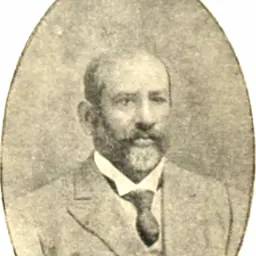

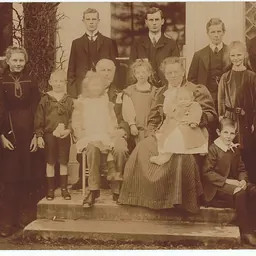
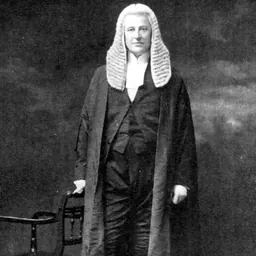
Contemporaries
People whose lives overlapped Alexander Meyrick Broadley's

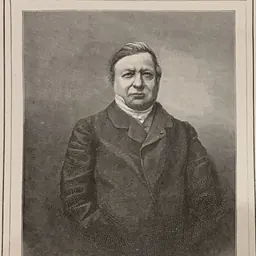


Frequently asked questions
Who was Alexander Meyrick Broadley?
British barrister and historian (1847–1916)
When was Alexander Meyrick Broadley born?
Alexander Meyrick Broadley was born on 19 July 1847 in Bradpole.
When did Alexander Meyrick Broadley die?
Alexander Meyrick Broadley died on 16 April 1916 in Gerrards Cross.
What was Alexander Meyrick Broadley's occupation?
Alexander Meyrick Broadley was a barrister, writer, historian and jurist.
What nationality was Alexander Meyrick Broadley?
Alexander Meyrick Broadley was British.
Sources & further reading
· Wikipedia: Alexander Meyrick Broadley
· DBpedia: Alexander Meyrick Broadley
Cite this page
APA: Biography.guide. (2026). Alexander Meyrick Broadley. https://biography.guide/alexander-meyrick-broadley/
MLA: "Alexander Meyrick Broadley." Biography.guide, https://biography.guide/alexander-meyrick-broadley/.
Chicago: "Alexander Meyrick Broadley." Biography.guide. https://biography.guide/alexander-meyrick-broadley/.
Data last updated: 2026-09-25 · Spot an error? Report a correction.
Page generated 2026-09-27 05:12 UTC