
About Alexander McAulay
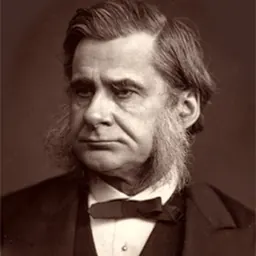
Lived 1863 – 1931 (aged 67). Alexander McAulay was a British and Australian mathematician, physicist, scientist and university teacher, known for Quaternion.
Alexander McAulay (9 November 1863 – 5 July 1931) was a mathematician and physicist who was the first professor of mathematics and physics at the University of Tasmania, Hobart, Australia. He was also a proponent of dual quaternions, which he termed "octonions" or "Clifford biquaternions".
Life McAulay was born on 9 November 1863 and attended Kingswood School in Bath. He proceeded to Caius College, Cambridge, there taking up a study of the quaternion algebra. In 1883 he published an article "Some general theorems in quaternion integration". McAulay took his degree in 1886, and began to reflect on the instruction of students in quaternion theory. In an article "Establishment of the fundamental properties of quaternions", he suggested improvements to the texts then in use. He also wrote a technical article on integration.
Departing for Australia, he became a lecturer and tutor in mathematics at Ormond College, University of Melbourne, from 1888 to 1895, being appointed first lecturer of mathematics in 1893. In 1893 his book Utility of Quaternions in Physics was published. A. S. Hathaway contributed a positive review and Peter Guthrie Tait praised it in these terms:
In 1896, McAulay took up the position of first professor of mathematics and physics at the newly-founded University of Tasmania. He ceased teaching in 1924 due to incipient blindness and was selected as research professor until his retirement in 1929.
McAulay died from cerebral haemorrhage on 5 July 1931, in his home at Sandy Bay, Tasmania, and was buried in Hobart.
Works 1893: Utility of Quaternions in Physics, link from Project Gutenberg. 1898: Octonions: a development of Clifford's Biquaternions, link from Internet Archive 1900: "Notes on the Electromagnetic Theory of Light", Philosophical Magazine 49(5):228–242.
Don’t just read it —
keep it.
Full-length biographies made to live with: read them, listen on the way to work, watch them tonight.
- E-book
- Audio
- Video
Instant download · yours to keep · every purchase keeps this site free
Important facts
People in Alexander McAulay's life
Named in this biography and alive at the same time
Related people
Same field, nearest in time
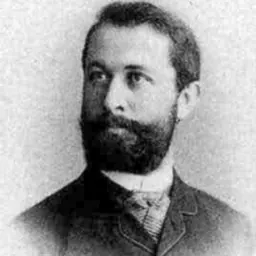
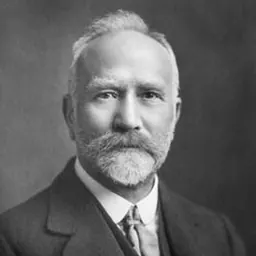
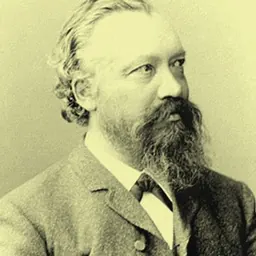
Contemporaries
People whose lives overlapped Alexander McAulay's

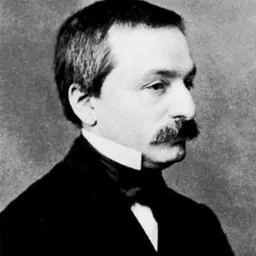



Frequently asked questions
Who was Alexander McAulay?
British mathematician and physicist (1863-1931)
When was Alexander McAulay born?
Alexander McAulay was born on 9 December 1863 in Luton.
When did Alexander McAulay die?
Alexander McAulay died on 6 July 1931 in Hobart.
What was Alexander McAulay's occupation?
Alexander McAulay was a mathematician, physicist, scientist and university teacher.
What was Alexander McAulay known for?
Alexander McAulay was known for Quaternion.
What nationality was Alexander McAulay?
Alexander McAulay was British and Australian.
Sources & further reading
· Wikipedia: Alexander McAulay
Cite this page
APA: Biography.guide. (2026). Alexander McAulay. https://biography.guide/alexander-mcaulay/
MLA: "Alexander McAulay." Biography.guide, https://biography.guide/alexander-mcaulay/.
Chicago: "Alexander McAulay." Biography.guide. https://biography.guide/alexander-mcaulay/.
Data last updated: 2026-09-20 · Spot an error? Report a correction.
Page generated 2026-09-27 04:59 UTC